Jerusalem
تشغل قاعة صلاة الجماعة الرئيسية في المسجد الأقصى الجانب الجنوبي المواجه للقبلة من الحرم في القدس. وتُعرف بالعربية باسم الجامع القبلي (الجامع القبلي)، وقد…
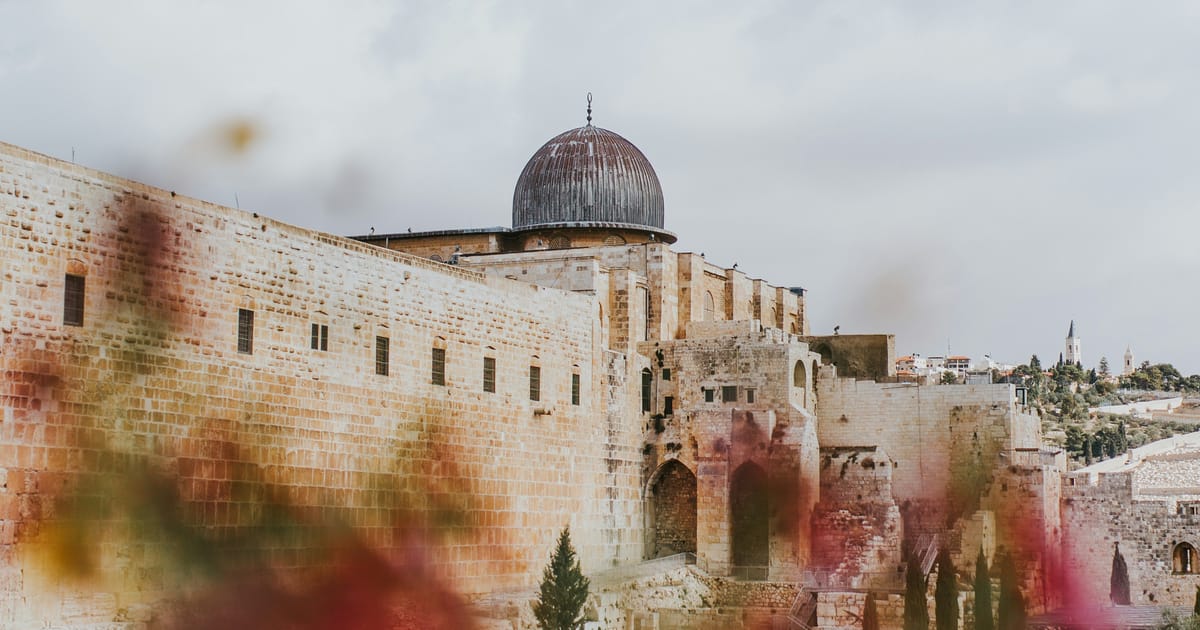
The main congregational prayer hall of Masjid al-Aqsa occupies the sanctuary’s southern, qiblah-facing side in Jerusalem. Known in Arabic as al-Jami‘ al-Qibli (الجامع القبلي), it takes its name from the qiblah, the direction of prayer towards the Ka‘bah in Makkah. Masjid al-Qibli is one building within Masjid al-Aqsa: the Qur’anic name encompasses the entire sacred enclosure, including the Dome of the Rock, prayer halls, gates, courtyards and other structures. The Night Journey to Masjid al-Aqsa Masjid al-Aqsa was the destination of al-Isra, the Night Journey in which the Prophet Muhammad ﷺ was taken from al-Masjid al-Haram in Makkah to the blessed sanctuary in Jerusalem. The journey links al-Aqsa directly with the Seerah of the Prophet ﷺ and with the gathering of the earlier Prophets, whom he led in prayer at Bayt al-Maqdis. Jerusalem was also the first qiblah of the Muslim community. The name “al-Qibli” distinguishes this southern prayer hall from the wider sanctuary without limiting Masjid al-Aqsa to the building itself. From Sayyiduna Umar to the Umayyad mosque After Jerusalem entered Muslim rule in 15 AH/638 CE, Sayyiduna Umar ibn al-Khattab (RA), the second caliph, established a prayer structure on the southern part of the sanctuary. The monumental congregational mosque later took shape under the Umayyad caliphs Abd al-Malik ibn Marwan and his son al-Walid ibn Abd al-Malik, whose work was completed in the early eighth century. Earthquakes repeatedly altered the building. After severe damage in the eighth century, the Abbasid caliphs al-Mansur and al-Mahdi oversaw rebuilding. Another earthquake in 424 AH/1033 CE led the Fatimid caliph al-Zahir to reconstruct the mosque in 425 AH/1034 CE, giving the prayer hall much of its present seven-aisled arrangement. Salahuddin al-Ayubi and the minbar of Nur al-Din Following the capture of Jerusalem in 1099 CE, the building was adapted for church, residential and military uses. When Salahuddin al-Ayubi recovered Jerusalem in 583 AH/1187 CE, he restored Masjid al-Qibli for Muslim prayer and installed the minbar commissioned years earlier by Nur al-Din Zangi in Aleppo. The minbar, a pulpit used for the Friday sermon, had been completed in 564 AH/1168–69 CE for the anticipated recovery of Jerusalem. It was destroyed in the fire that damaged Masjid al-Qibli on 21 August 1969. A meticulously reconstructed minbar, produced using traditional woodworking methods, was installed in its historic position in 2007.