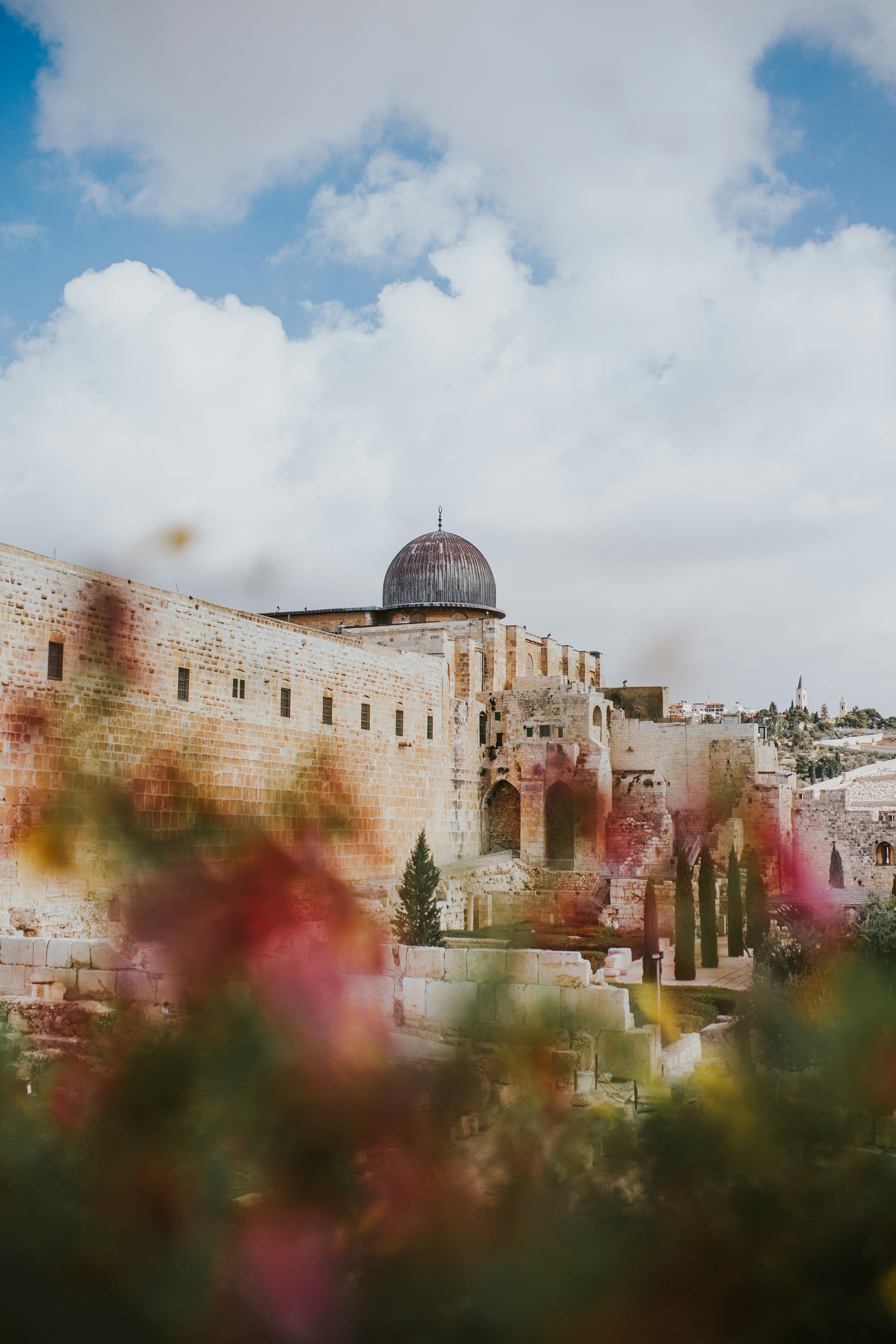
The main congregational prayer hall of Masjid al-Aqsa occupies the sanctuary’s southern, qiblah-facing side in Jerusalem. Known in Arabic as al-Jami‘ al-Qibli…
The main congregational prayer hall of Masjid al-Aqsa occupies the sanctuary’s southern, qiblah-facing side in Jerusalem. Known in Arabic as al-Jami‘ al-Qibli (الجامع القبلي), it takes its name from the qiblah, the direction of prayer towards the Ka‘bah in Makkah. Masjid al-Qibli is one building within Masjid al-Aqsa: the Qur’anic name encompasses the entire sacred enclosure, including the Dome of the Rock, prayer halls, gates, courtyards and other structures. The Night Journey to Masjid al-Aqsa Masjid al-Aqsa was the destination of al-Isra, the Night Journey in which the Prophet Muhammad ﷺ was taken from al-Masjid al-Haram in Makkah to the blessed sanctuary in Jerusalem. The journey links al-Aqsa directly with the Seerah of the Prophet ﷺ and with the gathering of the earlier Prophets, whom he led in prayer at Bayt al-Maqdis. “Glory be to the One Who took His servant ˹Muḥammad˺ by night from the Sacred Mosque to the Farthest Mosque whose surroundings We have blessed, so that We may show him some of Our signs. Indeed, He alone is the All-Hearing, All-Seeing.” Surah al-Isra 17:1 Jerusalem was also the first qiblah of the Muslim community. The name “al-Qibli” distinguishes this southern prayer hall from the wider sanctuary without limiting Masjid al-Aqsa to the building itself. From Sayyiduna Umar to the Umayyad mosque After Jerusalem entered Muslim rule in 15 AH/638 CE, Sayyiduna Umar ibn al-Khattab (RA), the second caliph, established a prayer structure on the southern part of the sanctuary. The monumental congregational mosque later took shape under the Umayyad caliphs Abd al-Malik ibn Marwan and his son al-Walid ibn Abd al-Malik, whose work was completed in the early eighth century. Earthquakes repeatedly altered the building. After severe damage in the eighth century, the Abbasid caliphs al-Mansur and al-Mahdi oversaw rebuilding. Another earthquake in 424 AH/1033 CE led the Fatimid caliph al-Zahir to reconstruct the mosque in 425 AH/1034 CE, giving the prayer hall much of its present seven-aisled arrangement. Salahuddin al-Ayubi and the minbar of Nur al-Din Following the capture of Jerusalem in 1099 CE, the building was adapted for church, residential and military uses. When Salahuddin al-Ayubi recovered Jerusalem in 583 AH/1187 CE, he restored Masjid al-Qibli for Muslim prayer and installed the minbar commissioned years earlier by Nur al-Din Zangi in Aleppo. The minbar, a pulpit used for the Friday sermon, had been completed in 564 AH/1168–69 CE for the anticipated recovery of Jerusalem. It was destroyed in the fire that damaged Masjid al-Qibli on 21 August 1969. A meticulously reconstructed minbar, produced using traditional woodworking methods, was installed in its historic position in 2007.