Masjid al-Aqsa is the blessed sanctuary in al-Quds where the Prophet Muhammad ﷺ arrived during al-Isra and led the assembled Prophets in prayer before…
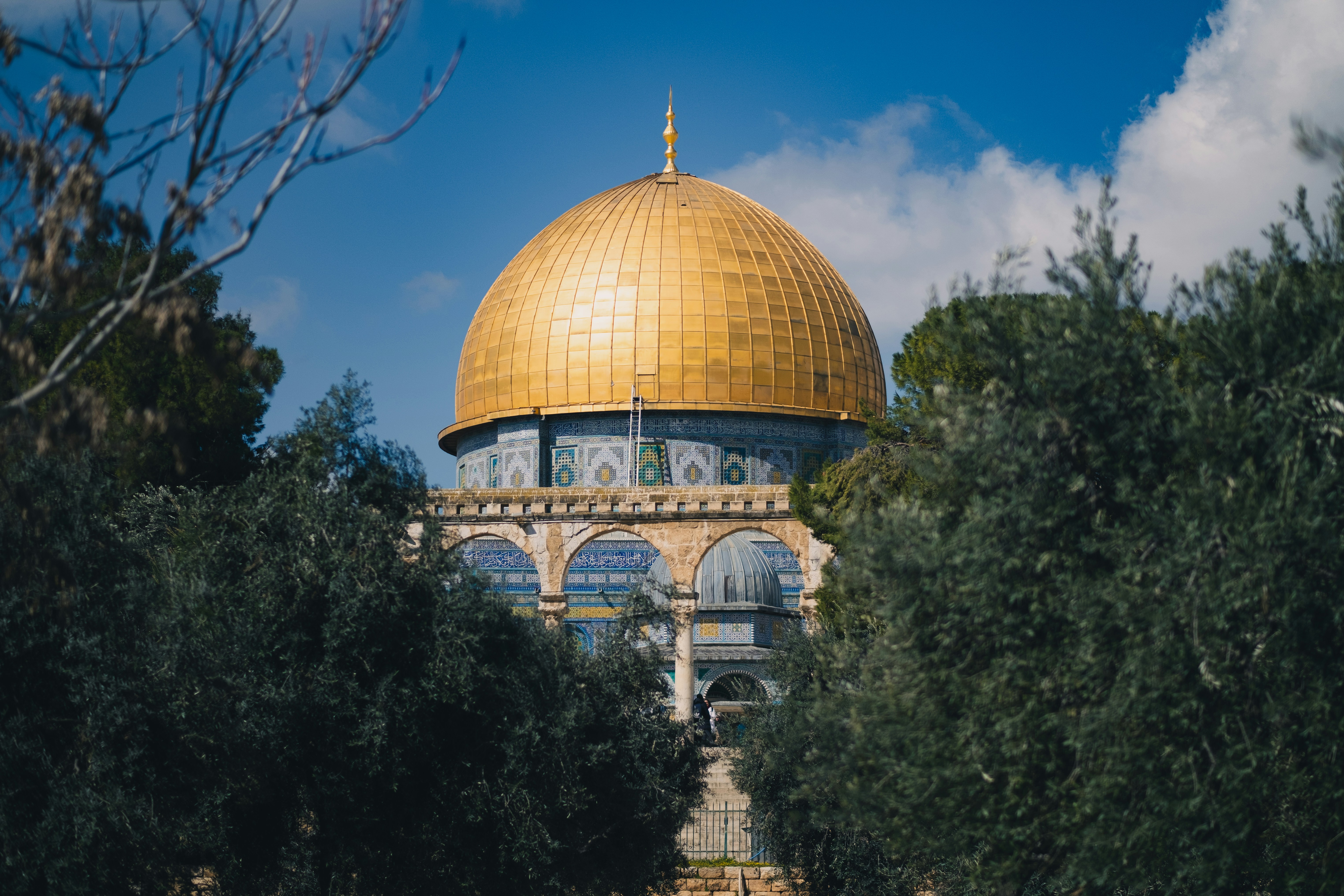
Masjid al-Aqsa is the blessed sanctuary in al-Quds where the Prophet Muhammad ﷺ arrived during al-Isra and led the assembled Prophets in prayer before al-Mi‘raj. Its Arabic name, المسجد الأقصى, means “the Farthest Mosque.” In Islamic usage, Masjid al-Aqsa encompasses the entire sacred compound in Jerusalem’s Old City, including the Qibli Mosque, the Dome of the Rock, prayer halls, gates, courtyards, minarets and other structures within its walls. The Qibli Mosque at the southern end is therefore one part of Masjid al-Aqsa, rather than the whole sanctuary. The destination of al-Isra The Qur’an names Masjid al-Aqsa as the destination of the Prophet Muhammad’s ﷺ miraculous Night Journey from al-Masjid al-Haram in Makkah. Allah describes the surroundings of the sanctuary as blessed: “Glory be to the One Who took His servant ˹Muḥammad˺ by night from the Sacred Mosque to the Farthest Mosque whose surroundings We have blessed, so that We may show him some of Our signs. Indeed, He alone is the All-Hearing, All-Seeing.” Surah al-Isra 17:1 Accounts of al-Isra wa’l-Mi‘raj relate that the Prophets were assembled at Bayt al-Maqdis and that the Prophet Muhammad ﷺ led them in prayer. The event joined Makkah and Jerusalem within a single journey and placed Masjid al-Aqsa within the Seerah of the Prophet Muhammad ﷺ. Bayt al-Maqdis was also the first qibla, the direction faced in salah, of the Muslim community. After the hijra to Madinah, the Prophet Muhammad ﷺ and the Companions (RA) prayed towards Jerusalem for sixteen or seventeen months before Allah commanded that the qibla be turned towards the Ka‘bah. A mosque of the Prophets Sayyiduna Abu Dharr al-Ghifari (RA) asked the Prophet Muhammad ﷺ which mosque was established first upon the earth. He named al-Masjid al-Haram, followed by Masjid al-Aqsa, with forty years between them. This places the sanctuary’s origin far earlier than its surviving buildings and within the history of worship established by the Prophets. “I said, ‘O Allah’s Messenger (ﷺ)! Which mosque was first built on the surface of the earth?’ He said, ‘Al-Masjid-ul-Haram.’ I said, ‘Which was built next?’ He replied, ‘The mosque of Al-Aqsa.’ I said, ‘What was the period of construction between the two?’ He said, ‘Forty years.’” Sahih al-Bukhari 3366 Nabi Sulaiman ibn Dawud (AS) is closely joined to Bayt al-Maqdis. The Prophet Muhammad ﷺ related that when Nabi Sulaiman (AS) completed the building of the mosque, he asked Allah for judgement agreeing with His judgement, a dominion granted to no one after him, and forgiveness for the person who came there intending only prayer. Masjid al-Aqsa is one of the three mosques named together by the Prophet Muhammad ﷺ, alongside al-Masjid al-Haram in Makkah and the Prophet’s Mosque in Madinah. Its sanctity therefore rests upon the Qur’an, the Sunnah and its place in the lives of the Prophets. From Sayyiduna Umar to the Umayyads When Jerusalem entered Muslim rule in 15 AH/637 CE, Sayyiduna Umar ibn al-Khattab (RA), the second caliph, came to the city. The Jerusalem historian Mujir al-Din al-Ulaymi records that Sayyiduna Umar (RA) cleared the sanctuary and established a place of prayer on its southern side, facing the Ka‘bah. The Umayyad caliphs later gave the sanctuary its first great Islamic monumental form. Caliph Abd al-Malik ibn Marwan began the building programme in the late first Islamic century, including the Dome of the Rock, completed in 72 AH/691–692 CE. The congregational mosque on the southern side was developed under Abd al-Malik and his son al-Walid ibn Abd al-Malik. Earthquakes repeatedly damaged the Qibli Mosque. Abbasid caliphs, including Abu Ja‘far al-Mansur and al-Mahdi, rebuilt parts of it, while the Fatimid caliph al-Zahir undertook another major reconstruction after the earthquake of 425 AH/1033 CE. These works contributed substantially to the form inherited by later Muslim dynasties. Salahuddin al-Ayubi and the return of the minbar After Jerusalem was taken by the Crusaders in 492 AH/1099 CE, buildings within Masjid al-Aqsa were adapted to other purposes. The Qibli Mosque was used as a royal residence and later by a military order, while the Dome of the Rock was converted into a church. Salahuddin al-Ayubi restored Masjid al-Aqsa to Muslim worship after the recovery of Jerusalem in 583 AH/1187 CE. He ordered the sanctuary cleansed and renewed, installed a mihrab in the Qibli Mosque and brought to Jerusalem the celebrated minbar commissioned years earlier by Nur al-Din Mahmud Zangi. Nur al-Din had ordered the minbar to be made in Aleppo while preparing for the recovery of Jerusalem, but he died before entering the city. Salahuddin al-Ayubi fulfilled that intention by placing it beside the mihrab of Masjid al-Aqsa. The minbar was destroyed in the fire of 1969, which also damaged the Qibli Mosque’s southern section; surviving pieces entered the collection of the Islamic Museum within the sanctuary. A reconstructed minbar was installed in 2007. A sanctuary shaped by successive Muslim dynasties Ayyubid, Mamluk and Ottoman patrons added madrasas, zawiyas—lodges for worship, teaching and retreat—arcades, gates, fountains, minarets and endowed institutions around Masjid al-Aqsa. Mamluk building was especially concentrated along the western and northern edges, joining places of learning and worship directly to the sanctuary. Ottoman sultans sponsored repairs and renewed elements of the compound, including works under Sultan Sulayman al-Qanuni in the sixteenth century. Later restoration programmes conserved the Qibli Mosque, the Dome of the Rock and other structures across the sanctuary. Masjid al-Aqsa remains an active mosque under the care of the Islamic waqf, an endowment established to maintain religious property and its institutions.