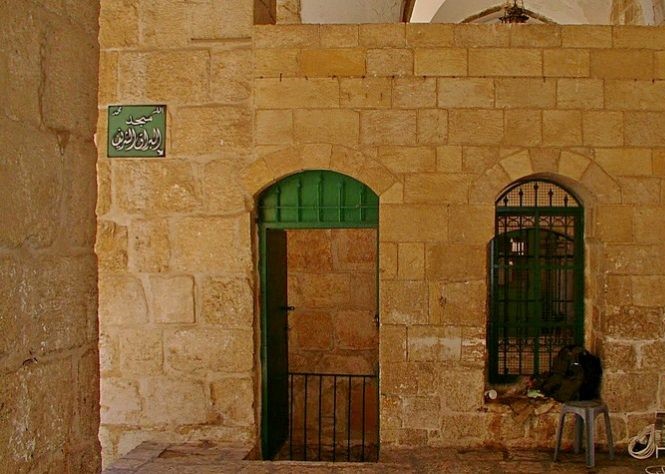
This underground musalla marks the place where the Prophet Muhammad ﷺ tethered al-Buraq on the Night Journey to Masjid al-Aqsa. Known in Arabic as مسجد…
This underground musalla marks the place where the Prophet Muhammad ﷺ tethered al-Buraq on the Night Journey to Masjid al-Aqsa. Known in Arabic as مسجد البراق, Masjid al-Buraq lies beside the western wall near the south-western corner of the Masjid al-Aqsa compound in Jerusalem, Palestine. It occupies part of an earlier vaulted gateway passage beneath the area of Bab al-Magharibah. Al-Buraq and the Night Journey During al-Isra wa’l-Mi‘raj, the Night Journey and Ascension, the Prophet Muhammad ﷺ travelled from al-Masjid al-Haram in Makkah to Masjid al-Aqsa upon al-Buraq. The animal is described in the hadith as white, larger than a donkey and smaller than a mule, with each stride reaching as far as its sight. “I mounted it and came to the Temple (Bait Maqdis in Jerusalem), then tethered it to the ring used by the prophets. I entered the mosque and prayed two rak'ahs in it.” Sahih Muslim 162a Tradition holds that the fastening place preserved within the musalla is connected with this moment. The name al-Buraq therefore joins the chamber directly to the Prophet’s ﷺ arrival in Jerusalem before his ascent through the heavens. An early place of remembrance within al-Aqsa The Muslim geographer Ibn al-Faqih recorded the tethering place of al-Buraq in Jerusalem by the early tenth century. The musalla later occupied the inner passage of an old western gate after that entrance was closed. Studies of the structure connect its early fabric with the Umayyad period, while the chamber in its present arrangement was renewed during the Mamluk period. It forms part of the network of passages and prayer spaces along the southern and western edges of Masjid al-Aqsa.