The Zamzam well from Sayyida Hajar and Prophet Ismaʿil to ʿAbd al-Muttalib's rediscovery, the caliphs, and today's supply from a closed well.
Zamzam is the well that lies a short distance east of the Kaʿbah, beneath the white marble floor where pilgrims perform ṭawāf.1 Its story begins long before the Masjid al-Haram existed, when Prophet Ibrahim (peace be upon him) left his wife Sayyida Hajar and their infant son, Prophet Ismaʿil, in the valley of Makkah. The Qurʾān records Prophet Ibrahim's prayer for them:2
رَّبَّنَآ إِنِّىٓ أَسْكَنتُ مِن ذُرِّيَّتِى بِوَادٍ غَيْرِ ذِى زَرْعٍ عِندَ بَيْتِكَ ٱلْمُحَرَّمِ رَبَّنَا لِيُقِيمُوا۟ ٱلصَّلَوٰةَ فَٱجْعَلْ أَفْـِٔدَةً مِّنَ ٱلنَّاسِ تَهْوِىٓ إِلَيْهِمْ وَٱرْزُقْهُم مِّنَ ٱلثَّمَرَٰتِ لَعَلَّهُمْ يَشْكُرُونَ “Our Lord, I have settled some of my descendants in an uncultivated valley near Your sacred House, our Lord, that they may establish prayer. So make hearts among the people incline toward them and provide for them from the fruits that they might be grateful.”
This article follows the well through every stage of its history: its first appearance, its burial by the tribe of Jurhum, its rediscovery by ʿAbd al-Muttalib, its place in the life of the Prophet ﷺ, the work of the caliphs and sultans, and the modern changes that closed the well to view and carry its water by pipe across Makkah. Where the sources give differing reports, each is set out with the source that gives it.
The fullest account of Zamzam's beginning is the long hadith of Ibn ʿAbbas in Sahih al-Bukhari. Prophet Ibrahim left Sayyida Hajar and Prophet Ismaʿil near the site of the Kaʿbah, by a tree above the place of Zamzam, with a bag of dates and a skin of water. When the water ran out, Sayyida Hajar ran between the hills of Safa and Marwa seven times looking for help, and the hadith gives this as the origin of the saʿy between them. On the last run she heard a voice:3
فَإِذَا هِيَ بِالْمَلَكِ، عِنْدَ مَوْضِعِ زَمْزَمَ، فَبَحَثَ بِعَقِبِهِ ـ أَوْ قَالَ بِجَنَاحِهِ ـ حَتَّى ظَهَرَ الْمَاءُ، فَجَعَلَتْ تُحَوِّضُهُ وَتَقُولُ بِيَدِهَا هَكَذَا، وَجَعَلَتْ تَغْرِفُ مِنَ الْمَاءِ فِي سِقَائِهَا، وَهْوَ يَفُورُ بَعْدَ مَا تَغْرِفُ “And behold! She saw an angel at the place of Zamzam, digging the earth with his heel (or his wing), till water flowed from that place. She started to make something like a basin around it, using her hand in this way, and started filling her water-skin with water with her hands, and the water was flowing out after she had scooped some of it.”
The Prophet ﷺ then said:3
يَرْحَمُ اللَّهُ أُمَّ إِسْمَاعِيلَ لَوْ تَرَكَتْ زَمْزَمَ ـ أَوْ قَالَ لَوْ لَمْ تَغْرِفْ مِنَ الْمَاءِ ـ لَكَانَتْ زَمْزَمُ عَيْنًا مَعِينًا “May Allah bestow Mercy on Ishmael's mother! Had she let the Zamzam (flow without trying to control it) (or had she not scooped from that water) (to fill her water-skin), Zamzam would have been a stream flowing on the surface of the earth.”
Ibn Ishaq's account, transmitted by Ibn Hisham, names the angel as Jibril, who struck the ground with his heel so that the water appeared. It adds that Sayyida Hajar, fearing wild animals, hurried back to find Prophet Ismaʿil scraping at the water beneath his cheek and drinking, and that she made it into a small pool.4 The editors' notes to Ibn Hisham record that the well was therefore also called Hamzat Jibril, and they mention different explanations of the name Zamzam: al-Masʿudi's, that the Persians used to come to it in ancient times and murmur over it, zamzama being a sound made through the nose when drinking, and another, that it was hemmed in with earth (zummat) to stop the water spreading.4
The well soon drew people to the empty valley. In al-Bukhari's hadith, a party of the tribe of Jurhum saw a bird circling and realised there must be water. They asked Sayyida Hajar for permission to settle:3
فَقَالُوا أَتَأْذَنِينَ لَنَا أَنْ نَنْزِلَ عِنْدَكِ فَقَالَتْ نَعَمْ، وَلَكِنْ لاَ حَقَّ لَكُمْ فِي الْمَاءِ. قَالُوا نَعَمْ “They asked her, 'Do you allow us to stay with you?" She replied, 'Yes, but you will have no right to possess the water.' They agreed to that.”
Prophet Ismaʿil grew up among Jurhum, learnt Arabic from them and married from among them, and in the same hadith he is later found sharpening his arrows under a tree near Zamzam when Prophet Ibrahim comes to build the Kaʿbah.3
According to Ibn Ishaq, guardianship of the House passed after Prophet Ismaʿil to his son Nabit and then to Jurhum, until Jurhum were driven out of Makkah by Banu Bakr and Ghubshan. Before leaving, their chief buried the well:45
فخرج عمرو بن الحارث بن مضاض الجرهمي بغزالي الكعبة وبحجر الركن، فدفنها في زمزم، وانطلق هو ومن معه من جرهم إلى اليمن “ʿAmr ibn al-Harith ibn Mudad al-Jurhumi went out with the two gazelles of the Kaʿbah and the Stone of the Corner, buried them in Zamzam, and set off for Yemen with those of Jurhum who were with him.”
For generations afterwards the place of Zamzam was lost. Quraysh dug other wells across Makkah, and Ibn Hisham lists them one by one, from al-Tawi dug by ʿAbd Shams to the wells of the other clans.6 Ibn Ishaq's account, as Ibn Kathir quotes it, says that once Zamzam was dug again it surpassed all of these other wells.7
The well was found again by ʿAbd al-Muttalib ibn Hashim, the grandfather of the Prophet ﷺ, who held the office of giving water and food to the pilgrims after his uncle, al-Muttalib ibn ʿAbd Manaf.8 Ibn Ishaq transmits the account from Sayyiduna Ali ibn Abi Talib, who reported ʿAbd al-Muttalib's own words. Over four nights he was told in his sleep to dig Tayba, then Barra, then al-Madnuna, and on the fourth night Zamzam:9
إني لنائم في الحجر إذ أتاني آت فقال: احفر طيبة. قال: قلت: وما طيبة؟ قال: ثم ذهب عني … فجاءني فقال: احفر زمزم. قال: قلت: وما زمزم؟ قال: لا تنزف أبدا ولا تذم، تسقي الحجيج الأعظم، وهي بين الفرث والدم، عند نقرة الغراب الأعصم، عند قرية النمل “I was asleep in the Hijr when someone came to me and said, ‘Dig Tayba.’ I said, ‘And what is Tayba?’ Then he left me … Then he came to me and said, ‘Dig Zamzam.’ I said, ‘And what is Zamzam?’ He said, ‘It will never run dry and never be found wanting. It will give water to the great throng of pilgrims. It lies between the dung and the blood, where the white-winged crow pecks, by the nest of the ants.’”
Ibn Ishaq also gives a second report, which he introduces with "they claim", in which ʿAbd al-Muttalib asked where the well was and was told, "By the nest of the ants, where the crow will peck tomorrow." He ends with "God knows best which of the two it was."10 In that account ʿAbd al-Muttalib went with his only son at the time, al-Harith, and found the ants' nest and the crow pecking beside it, between Isaf and Naʾila, the two idols where Quraysh slaughtered their sacrifices. Quraysh refused to let him dig there, and he told al-Harith to keep them away from him while he dug. When they saw he would not stop, they left him alone, and before long he reached the stone lining of the old well and cried out "Allahu akbar".10
The sources also differ on when this happened. Ibn Ishaq's account places the digging before the birth of the Prophet ﷺ, while al-Azraqi places it after the episode of the Elephant, which would make it after his birth.11
As soon as ʿAbd al-Muttalib reached the old stonework, Quraysh claimed a share, saying it was the well of their father, Prophet Ismaʿil, and that they had a right to it. He refused, saying this had been given to him alone, and they agreed to take the matter to the soothsayer of Banu Saʿd Hudhaym in the uplands of Syria.12 In the desert between the Hijaz and Syria, ʿAbd al-Muttalib's party ran out of water and the clans of Quraysh with them refused to share theirs. Each man dug his own grave and they sat waiting to die, until ʿAbd al-Muttalib decided they should keep moving. As his camel rose, a spring of fresh water burst out from beneath its hoof. He called the other clans to drink, and they gave up their claim:1213
قد والله قضي لك علينا يا عبد المطلب، والله لا نخاصمك في زمزم أبدا، إن الذي سقاك هذا الماء بهذه الفلاة لهو الذي سقاك زمزم، فارجع إلى سقايتك راشدا “By God, judgement has been given for you against us, O ʿAbd al-Muttalib. By God, we will never dispute with you over Zamzam again. The One who gave you this water to drink in this wilderness is the One who gave you Zamzam, so go back to your giving of water, rightly guided.”
They turned back without reaching the soothsayer. In the version Ibn Ishaq gives next, Quraysh disputed again over what ʿAbd al-Muttalib found in the well as he dug deeper: the two golden gazelles that Jurhum had buried, and swords and coats of mail. Arrows were cast before Hubal, the idol inside the Kaʿbah, and the gazelles fell to the Kaʿbah and the swords and armour to ʿAbd al-Muttalib, with nothing for Quraysh.106
فضرب عبد المطلب الأسياف بابا للكعبة، وضرب في الباب الغزالين من ذهب. فكان أول ذهب حليته الكعبة، فيما يزعمون. ثم إن عبد المطلب أقام سقاية زمزم للحجاج “ʿAbd al-Muttalib beat the swords into a door for the Kaʿbah and set the two gazelles of gold into the door. That was the first gold with which the Kaʿbah was adorned, as they claim. Then ʿAbd al-Muttalib established the giving of Zamzam water to the pilgrims.”
Ibn al-Diya' adds that during the hardship he faced from Quraysh, ʿAbd al-Muttalib vowed that if he were granted ten sons he would sacrifice one of them. When the lot later fell on his son ʿAbdullah, the father of the Prophet ﷺ, he cast lots between ʿAbdullah and a hundred camels, the lot fell on the camels, and he sacrificed them instead.14
Zamzam appears at several turning points in the life of the Prophet ﷺ. Before his ascension to the heavens, his chest was washed with its water:15
فُرِجَ عَنْ سَقْفِ بَيْتِي وَأَنَا بِمَكَّةَ، فَنَزَلَ جِبْرِيلُ فَفَرَجَ صَدْرِي، ثُمَّ غَسَلَهُ بِمَاءِ زَمْزَمَ “While I was at Mecca the roof of my house was opened and Gabriel descended, opened my chest, and washed it with Zamzam water.”
When Abu Dharr came to Makkah to meet the Prophet ﷺ, he lived for thirty days and nights with nothing to eat but Zamzam. He told the Prophet ﷺ that he had grown fat and felt no hunger, and the Prophet ﷺ replied:16
إِنَّهَا مُبَارَكَةٌ إِنَّهَا طَعَامُ طُعْمٍ “He said: It is blessed (water) and it also serves as food.”
On the day of the conquest of Makkah, the Prophet ﷺ set aside the claims of the pre-Islamic age but kept the two honoured offices of the Kaʿbah in place:17
أَلاَ إِنَّ كُلَّ مَأْثُرَةٍ كَانَتْ فِي الْجَاهِلِيَّةِ تُذْكَرُ وَتُدْعَى مِنْ دَمٍ أَوْ مَالٍ تَحْتَ قَدَمَىَّ إِلاَّ مَا كَانَ مِنْ سِقَايَةِ الْحَاجِّ وَسِدَانَةِ الْبَيْتِ “Take note! All the merits mentioned in pre-Islamic times, and the claim made for blood or property are under my feet, except the supply of water to the pilgrims and the custody of the Ka'bah.”
The water-giving was held by ʿAbd al-Muttalib's son, Sayyiduna al-ʿAbbas. His son Ibn ʿAbbas describes the Prophet ﷺ coming to the water-giving, drinking from it, and then going on to the well itself:18
ثُمَّ أَتَى زَمْزَمَ، وَهُمْ يَسْقُونَ وَيَعْمَلُونَ فِيهَا، فَقَالَ " اعْمَلُوا، فَإِنَّكُمْ عَلَى عَمَلٍ صَالِحٍ ـ ثُمَّ قَالَ ـ لَوْلاَ أَنْ تُغْلَبُوا لَنَزَلْتُ حَتَّى أَضَعَ الْحَبْلَ عَلَى هَذِهِ ". ـ يَعْنِي عَاتِقَهُ ـ وَأَشَارَ إِلَى عَاتِقِهِ “then went to the Zamzam (well) and there the people were offering water to the others and working at it (drawing water from the well). The Prophet (ﷺ) then said to them, "Carry on! You are doing a good deed." Then he said, "Were I not afraid that other people would compete with you (in drawing water from Zamzam), I would certainly take the rope and put it over this (i.e. his shoulder) (to draw water)." On saying that the Prophet (ﷺ) pointed to his shoulder.”
One of the best-known sayings about Zamzam is the hadith of Jabir in Sunan Ibn Majah:19
مَاءُ زَمْزَمَ لِمَا شُرِبَ لَهُ “The water of Zamzam is for whatever it is drunk for.”
The earliest detailed description of the well comes from al-Azraqi's history of Makkah, quoted by Ibn al-Diya'. He gives its depth as sixty cubits, until its water fell and it was dug nine cubits deeper. After that, the forty cubits from the mouth down to the rock were all built masonry, and the remaining twenty-nine cubits were cut into the rock. The rim stood two cubits and a span high, and the mouth measured eleven cubits around and three and two-thirds cubits across.21 He also records who first built over it:21
وأول من عمل الرخام على زمزم وعلى الشباك وفرش أرضها بالرخام أمير المؤمنين أبو جعفر في خلافته ثم عملها المهدي في خلافته ثم غيرت في خلافة أمير المؤمنين المعتصم بالله سنة عشرين ومائتين، وكانت مكشوفة قبل ذلك إلا قبة صغيرة على موضع البئر “The first to set marble on Zamzam and on its grille, and to pave its floor with marble, was Abu Jaʿfar in his caliphate. Then al-Mahdi worked on it in his caliphate, then it was changed in the caliphate of al-Muʿtasim billah in the year 220. Before that it had been open, except for a small dome over the place of the well.”
The work on the well was changed again in the caliphate of al-Wathiq in 229 AH.21 At times the water fell low. Al-Azraqi records that in 223 and 224 AH the water dropped so far that the well was dug nine cubits deeper, until heavy rains in 225 AH filled it again. Salim ibn al-Jarrah had already deepened it in the caliphates of al-Mahdi and Harun al-Rashid, as had ʿUmar ibn Mahan, and when the water was low a man from Taʾif working in it said, "I prayed at its bottom."1120 Some decades later the opposite happened. Abu Muhammad al-Khuzaʿi reports that after great floods in 279 and 280 AH the water rose in 281 AH to within about seven cubits of the top, and became so sweet that he and many people of Makkah preferred it to every other water in the city.22
Ibn al-Diya' names three springs feeding the well at its bottom: one facing the corner of the Hajar al-Aswad, one facing Safa and Abu Qubays, and one facing Marwa.20
The well's darkest day came in the Hajj of 317 AH, when the Qarmatians under Abu Tahir attacked Makkah, killed pilgrims in the Masjid al-Haram and threw the bodies of the dead into the well of Zamzam. Ibn Kathir records that the dome over Zamzam was demolished in the same attack, when the Hajar al-Aswad was also carried away.2324 The full story is told in our article When the Hajar al-Aswad Was Stolen from the Holy Kaʿbah.
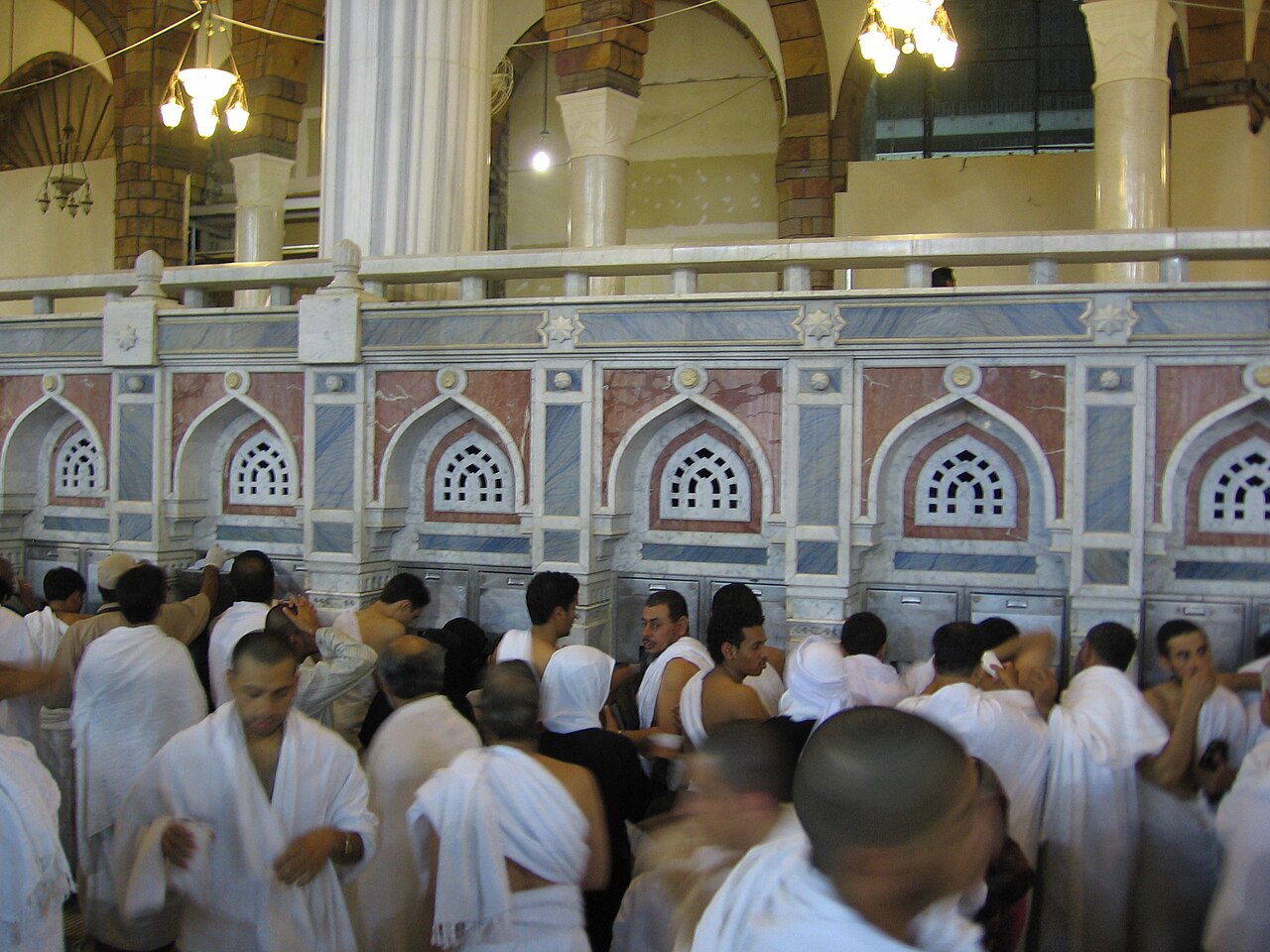
Writing in the ninth century AH, Ibn al-Diya' describes the well in his own day as housed in a square, roofed chamber with nine basins in its walls, filled from the well for people to make wuduʾ. The room beside it had been rebuilt in its present form in 807 AH.2125 Next to it stood the Siqaya of al-ʿAbbas, a square room under a large brick dome with iron windows facing the mosque. A large pool inside it was filled with Zamzam water carried along a wooden channel and an underground conduit, and it was rebuilt in 807 AH after its dome collapsed.25
Wikipedia's account of the later buildings gives the following:26
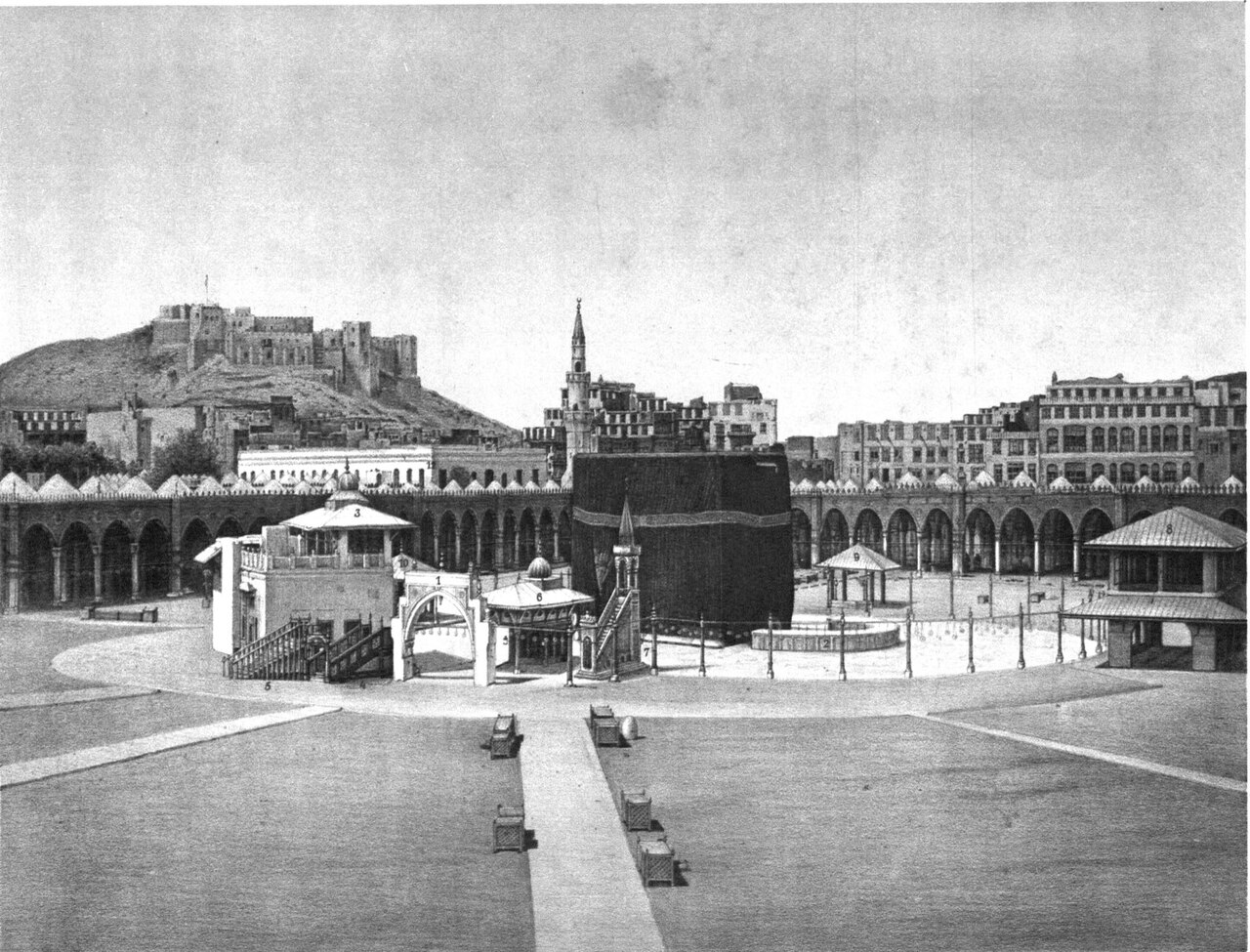
The domed Zamzam building of the late Ottoman period can be seen beside the Kaʿbah in photographs from the 1880s.
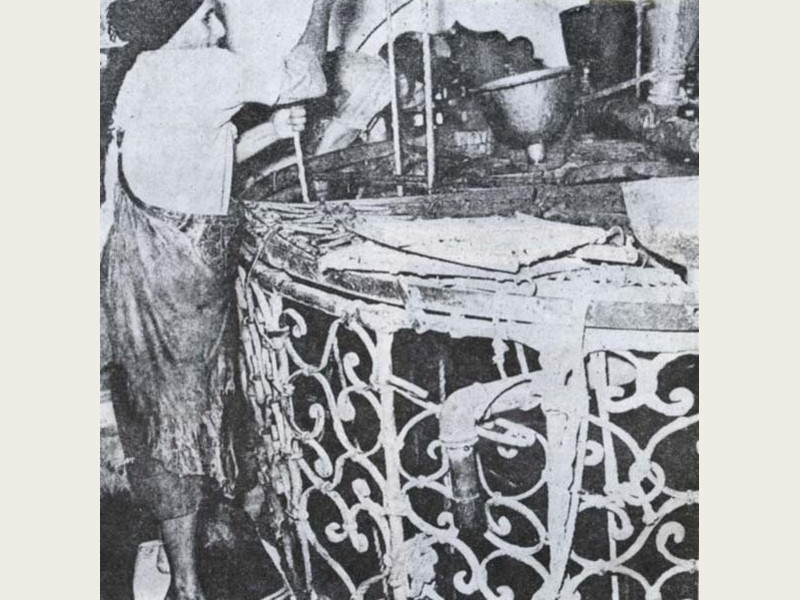
The modern history of the well follows the expansions of the Masjid al-Haram.
Wikipedia describes the well as opening into a basement room that is closed to the public, where it can be seen behind glass panels.26
Today the well lies about 21 metres east of the Kaʿbah, beneath the mataf. It is about 30 metres deep (Al Jazeera gives 31 metres): the upper half passes through sandy ground lined with stone, and the lower half through bedrock. Its water comes from rain absorbed in Wadi Ibrahim and run-off from the surrounding hills.126 Electric pumps have replaced the rope and bucket. Pumping is stopped if the water level falls below a set point so that the well can recover, and the well itself is closed to the public.1
From the well, the water is pumped about five kilometres south to the King Abdullah bin Abdulaziz Zamzam Water Project at Kudai, where it is filtered, treated with ultraviolet light, stored and distributed.26 The sources give different dates for the project's opening. Saudipedia, the Saudi Gazette and Wikipedia date it to 2010, while Arab News gives 2013.28292630 A reservoir of 10,000 cubic metres at Kudai feeds the drinking fountains of the Masjid al-Haram.3029 Water for the Prophet's Mosque in Madinah is carried by tanker. Arab News and Wikipedia place the King Abdulaziz Sabeel reservoir in Madinah, while the Saudi Gazette describes the Sabeel tank as part of the project, from which the trucks for Madinah are filled.302629
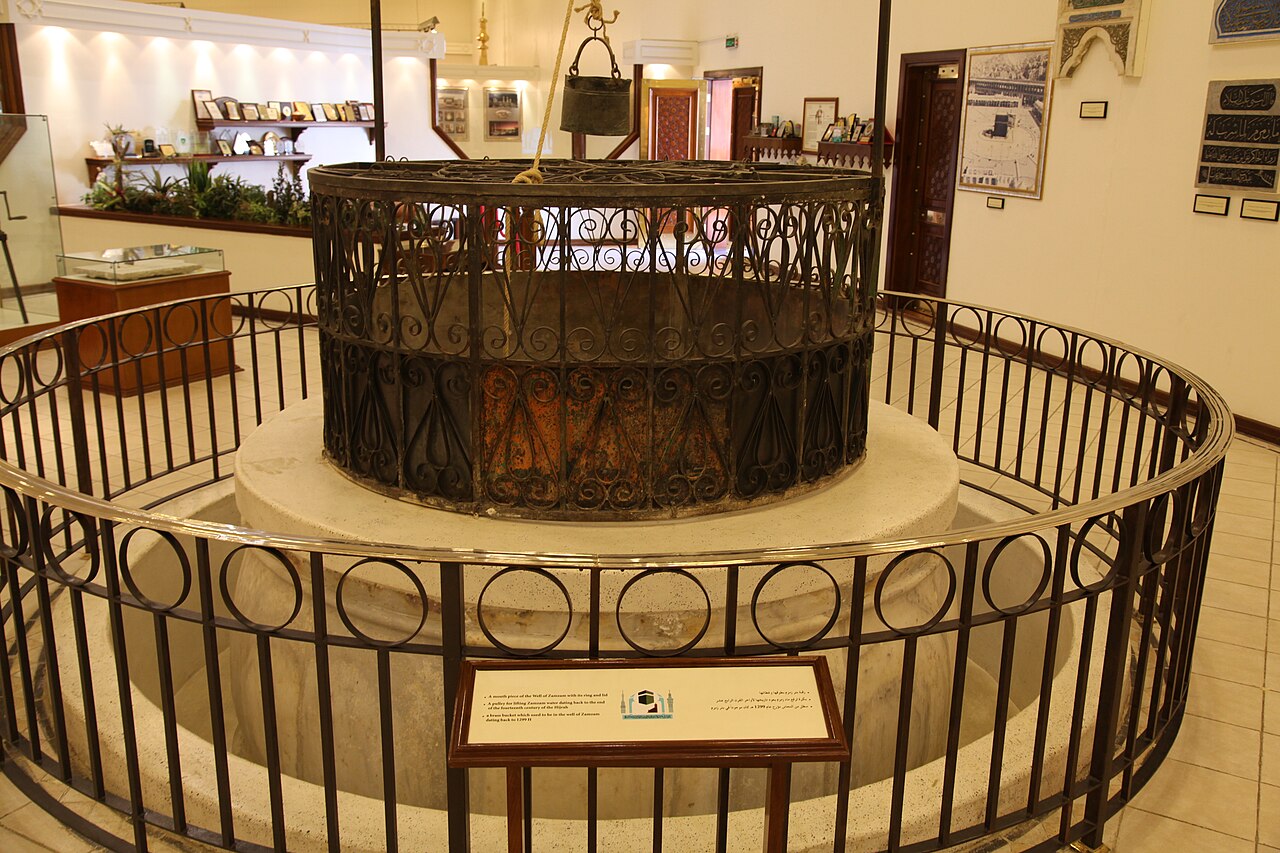
In 2018 King Salman approved the completion of the well's rehabilitation, including disinfection, debris removal and environmental monitoring.27 Wikipedia notes that the work cleared concrete and steel debris from the old cellar.26 The old mouth of the well, with its railing, pulley and a brass bucket dated 1299 AH, is now displayed in the Zamzam hall of the Exhibition of the Two Holy Mosques Architecture in Makkah.31