
How the Qarmatians took the Hajar al-Aswad (Black Stone) from the Kaʿbah in 317 AH, the attack on the pilgrims, the ransom attempts and its return.
The Hajar al-Aswad, the Black Stone set in the eastern corner of the Kaʿbah, is where every circuit of ṭawāf begins. For twenty-two years in the tenth century it was not there. In the Hajj season of 317 AH, in January 930, an army of the Qarmatians entered Makkah on the day of Tarwiya, killed pilgrims inside the Masjid al-Haram, pulled the Hajar al-Aswad out of the wall of the Kaʿbah and carried it away to eastern Arabia.12 It came back only in 339 AH, in the spring of 951.3
The historians agree on the main events, but they differ on several details: how the amir of Makkah was killed, how long the attackers stayed, where the Stone was kept, and whether anything was paid to get it back. Where they differ, this article gives each report and who made it.
The Qarmatians of Bahrayn were a movement that ruled much of eastern Arabia from their capital at Hajar, in the region of al-Ahsa. Their leader at this time was Abu Tahir Sulayman ibn al-Hasan al-Jannabi.42 In the years before 317 he had raided Basra by night and attacked the pilgrim caravans travelling from Iraq. In 312 AH they fell on the Iraqi caravan and many pilgrims died of hunger and thirst after being robbed; in 313 the caravan had to turn back; and in 314 no one from Iraq went on Hajj at all, while many people of Makkah left the city out of fear of them.45
In 317 AH the Iraqi caravan, led by Mansur al-Daylami, reached Makkah safely. Then on the day of Tarwiya, the 8th of Dhu al-Hijja, Abu Tahir arrived with his men. They plundered the pilgrims and killed them in the streets of Makkah, in the Masjid al-Haram and even inside the Kaʿbah itself.1 Ibn Kathir describes pilgrims cut down as they performed ṭawāf, and others clinging to the coverings of the Kaʿbah and killed where they held on, while Abu Tahir sat at the door of the Kaʿbah.6
The numbers are reported differently. Ibn al-Diya', quoting al-Dhahabi, says Abu Tahir came with nine hundred men and that seventeen hundred people were killed in the mosque, and he adds a report, introduced with "it was said", that the dead in the valleys and outskirts of Makkah numbered around thirty thousand.5 Accounts also differ on how long the attackers stayed: Ibn al-Diya' gives six days, while modern accounts give between eight and eleven days.52
The bodies were thrown into the well of Zamzam, and the rest were buried in the Masjid al-Haram where they fell, without being washed, shrouded or prayed over. The dome over Zamzam was demolished, the door of the Kaʿbah was torn off and its covering, the kiswa, was divided among Abu Tahir's men. A man was sent up to wrench off the water-spout, the mizab, but he fell and died, and the attempt was abandoned. The homes of the people of Makkah were looted.16 No one performed the Hajj that year.5

The amir of Makkah was killed, but the historians tell it in two ways. In Ibn al-Athir's account the amir, whom he calls Ibn Mahlab, came out with a group of the Ashraf to ask for their property, and when Abu Tahir refused, they fought him and were all killed.1 Ibn Kathir's account has the amir following Abu Tahir as he left Makkah with the Hajar al-Aswad, offering him all his wealth to return it, and being killed with most of his family and men.6 Ibn al-Diya' gives the amir's name as Ibn Muharib.5
Abu Tahir then ordered the Hajar al-Aswad to be removed. Ibn Kathir describes a man striking it with a heavy implement and calling out, "Where are the birds in flocks? Where are the stones of baked clay?", mocking the words of Surat al-Fil, which tells how the army of the Elephant was destroyed when it marched against the Kaʿbah. The Stone was then pulled out and taken away with the plunder.6 In al-Dhahabi's account, cited by Ibn al-Diya', a Qarmatian struck the Hajar al-Aswad with a mace and broke a piece from it before it was pulled out.5
The reports also differ on where the Hajar al-Aswad was kept. Ibn al-Athir says it was sent to Hajar, the Qarmatian capital, and al-Qazwini says it was taken to al-Ahsa in Bahrayn, the region in which Hajar lay.17 A different account, given by Ibn Jama'a and recorded by Ibn al-Diya', says that Abu Tahir hung it on the seventh pillar of the mosque of Kufa, believing that the Hajj would move there.5 Some modern historians think Abu Tahir set it up in his own mosque in an attempt to draw the Hajj away from Makkah.8
The journey was hard on the camels that carried it. Ibn Kathir says they broke down beneath it. Ibn al-Diya' puts the number that perished at forty, and mentions other reports of three hundred and of five hundred.91011
The Muslims regarded what had happened as a terrible outrage.9 Ibn al-Athir reports that even the Fatimid ruler in North Africa, Ubayd Allah al-Mahdi, wrote to Abu Tahir condemning him. He told him that his deed had branded their followers with unbelief, and that unless he returned the Hajar al-Aswad to its place, the kiswa and what he had taken from the people of Makkah and the pilgrims, he would disown him in this world and the next. In Ibn al-Athir's account, Abu Tahir sent back what wealth he could recover, saying that the kiswa and the pilgrims' goods had been shared out and he could not take them back.1 Ibn Kathir, citing Ibn al-Athir, says Abu Tahir wrote back promising to obey.6
Attempts to buy the Stone back failed. The Turkish commander Bajkam, who held power in Baghdad, offered the Qarmatians fifty thousand dinars for it, and they refused.39 Their answer, as Ibn Kathir gives it, was that they had taken it by a command and would return it only by a command from the one who had commanded them to take it.9 Abu Tahir himself died of smallpox in Ramadan 332 AH, years before the Hajar al-Aswad came home.1210
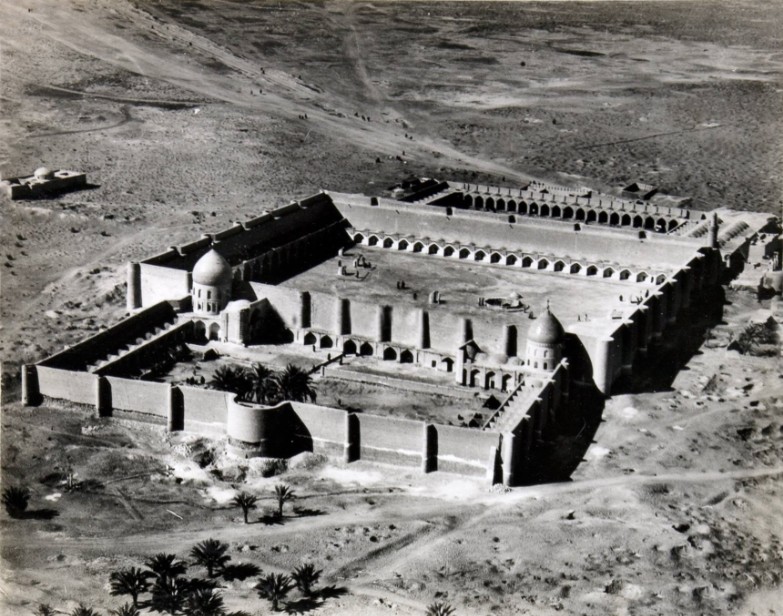
In Dhu al-Qa'da 339 AH the Qarmatians returned the Hajar al-Aswad, saying, "We took it by a command, and we have returned it by a command." They first carried it to Kufa and hung it in the Grand Mosque there so that people could see it, and then took it on to Makkah.3 Ibn Kathir adds that it was hung on the seventh pillar of the mosque, and that Abu Tahir's brother wrote that they had taken the Stone by a command and returned it by a command so that the people's Hajj and rites could be complete. It was sent on to Makkah on a young camel, and the Muslims rejoiced greatly at its return.9 Ibn al-Diya' adds that the lean young camel that carried it back grew fat beneath it.10 Another account, given in modern summaries, says the Hajar al-Aswad was wrapped in a sack and thrown into the mosque of Kufa with a note.8
Whether anything was paid for it is also reported differently. Ibn al-Athir and Ibn Kathir both say it was returned free.39 Ibn Jama'a, recorded by Ibn al-Diya', says the Abbasid caliph al-Muti' bought it back for thirty thousand dinars; Ibn al-Diya' objected that Abu Tahir had died before al-Muti' became caliph.510 Al-Qazwini writes that the Sharif Abu Ali Umar ibn Yahya al-Alawi mediated between al-Muti' and the Qarmatians in 335 AH, and that they took a large sum of money and returned it.7 Al-Juwayni, as cited in modern summaries, says the Qarmatians held the Stone for ransom and tried to make the Abbasids pay a large sum.8
The length of its absence is given as twenty-two years by Ibn al-Athir and Ibn Kathir, as twenty-two years less four days by al-Musabbihi, and as twenty-two years less a month by Ibn Jama'a.39105
The return gave people a rare chance to see the Stone out of its setting. Al-Musabbihi records that Nafi' ibn Muhammad al-Khuza'i went into the Kaʿbah with those who entered to look at it after its return. He saw that only its head was black and the rest of it was white, and he judged its length to be about that of a forearm. Ibn al-Diya' notes that others gave it a greater length.1011

Today the Hajar al-Aswad is held in a silver frame in the eastern corner of the Kaʿbah, where pilgrims begin each circuit of ṭawāf.8 A visitor to the Masjid al-Haram stands where the events of 317 took place, and the well of Zamzam, into which the bodies were thrown, still gives water to the pilgrims. In Iraq, the Grand Masjid of Kufa is the mosque where the Stone was hung for people to see on its way home in 339.3
