Ramla
إلى الشمال الغربي من بلدة يبنا الفلسطينية، وعلى بُعد نحو خمسة عشر كيلومترًا جنوب غربي الرملة، يحمل مقام أبي هريرة رضي الله عنه اسم الصحابي الذي روى عن النبي…
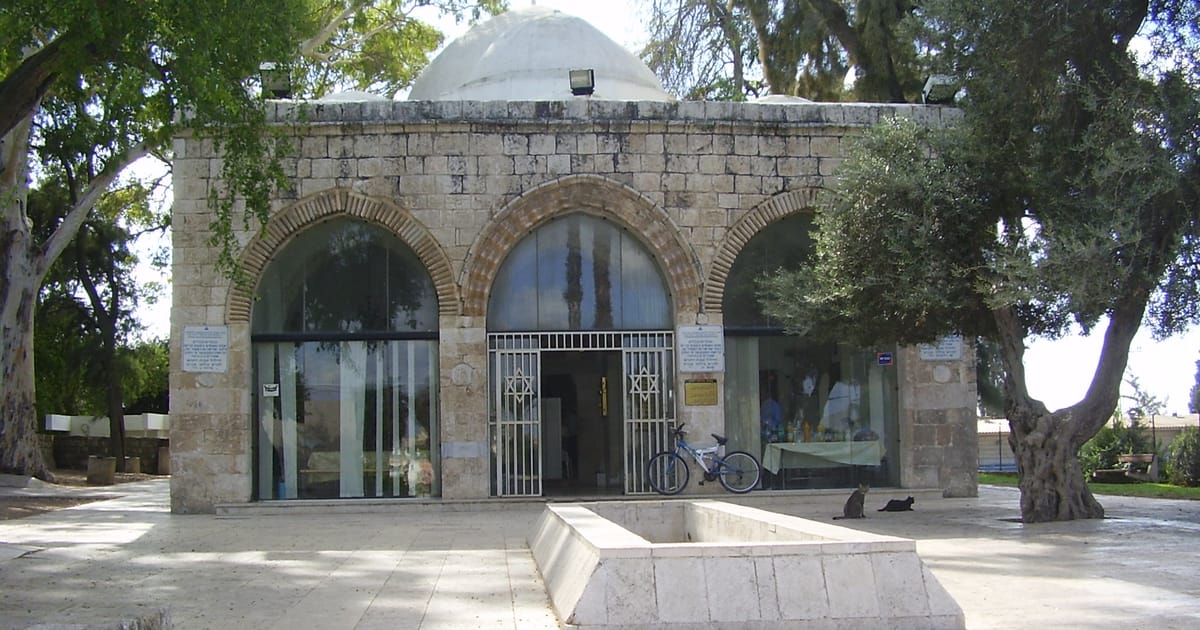
Northwest of the Palestinian town of Yibna, about fifteen kilometres southwest of Ramla, the Maqam of Abu Hurayra (RA), مقام أبي هريرة, carries the name of the Companion who transmitted more hadith from the Prophet Muhammad ﷺ than any other narrator. The Companion whose memory was answered for Abu Hurayra (RA) was of the Daws, a tribe of Yemen. He came to Madinah and accepted Islam in 7 AH, joining the Prophet ﷺ at the time of Khaybar, and from that day he stayed close to him. He took no trade and held no land; he was one of the Ahl al-Suffa, the poor Companions who lived on the shaded platform beside the Prophet's Mosque and gave their days to learning. Those three or four years beside the Prophet ﷺ produced the largest body of narration in Islam. He asked the Prophet ﷺ for help remembering what he was hearing. He later served as governor of Bahrayn under Sayyiduna Umar ibn al-Khattab (RA) and as deputy governor of Madinah, and he taught there until his death in the late 50s AH. He is buried at al-Baqi in Madinah. Why Companions are remembered across Palestine The maqams of Companions in this country date from the conquest of Bilad al-Sham. The Muslim armies moved north from the Hijaz in the years after the Prophet's ﷺ death, and when Bayt al-Maqdis surrendered, Sayyiduna Umar (RA) came in person to receive the city and to grant its people the covenant that carries his name. Companions came with those armies, settled in the towns of the coastal plain, and were buried or commemorated there. Yibna, on the road between Ramla and Asqalan, was one of those towns and became an early Muslim administrative and scholarly centre. The Jerusalem chronicler Mujir al-Din al-Ulaymi explained Yibna's connection by writing that a descendant of Abu Hurayra (RA) was buried here. Muslim geographers recorded the association long before the present building: al-Harawi mentioned a grave connected with the Companion, and Yaqut al-Hamawi wrote in the early thirteenth century that Yibna held the grave of a Companion of the Prophet ﷺ. The Mamluk maqam The surviving complex grew around an earlier grave chamber. In 673 AH/1274 Sultan al-Zahir Baybars commissioned a riwaq, a covered portico, whose dedicatory inscription names him and describes it as the blessed riwaq of Abu Hurayra (RA). Sultan al-Ashraf Khalil enlarged the complex in 691–692 AH/1292. The documented plan is a square grave chamber with a mihrab facing Makkah, and an entrance hall divided into domed bays. The surrounding ground served as Yibna's Muslim graveyard into the twentieth century. After 1948 the building was redesignated as a Jewish prayer site associated with Rabban Gamaliel; its Arabic inscriptions and Mamluk fabric preserve its recorded history as Maqam Abu Hurayra (RA).