Muslim Maps

The Hejaz Railway: The Pilgrims' Line to Madinah

The Hejaz Railway: The Pilgrims' Line to Madinah

The Ottoman railway that carried pilgrims from Damascus to Madinah from 1908, and the stations, bridges and museums that survive in Saudi Arabia today.

Author

The pilgrims' railway

The Hejaz Railway was built by the Ottoman state between 1900 and 1908 to carry pilgrims from Damascus to Madinah. Its narrow-gauge track ran for about 1,300 km, from Damascus through what is now Jordan and into the north-west of the Arabian Peninsula, and the first trains reached Madinah in the late summer of 1908.12

The line carried pilgrims for less than ten years, but much of what was built in Saudi Arabia is still standing. Stone stations, posts, water tanks and bridges mark the old route from the border with Jordan through Tabuk and Al-Ula to Madinah, where the terminus has been restored as a museum. In 2015 Saudi Arabia placed the railway on UNESCO's Tentative List, together with the older Syrian Hajj road whose caravans it was built to replace.23

The restored stone engine shed of the Hejaz Railway station at Hegra, with its tall arched doors
The engine shed of the Hegra station. Photo: Imam Khairul Annas, CC BY-SA 4.0, via Wikimedia Commons

Before the railway

For centuries pilgrims from Syria, Anatolia and the lands beyond travelled to the Hijaz with the great caravan that set out from Damascus each year. The Syrian Hajj road ran for about 1,307 km to Madinah, by way of Ma'an, Tabuk, al-Hijr and Al-Ula, and the journey took around forty days.34

Along the road stood forts beside the wells and pools where the caravans watered and rested. Several of them still stand in Saudi Arabia, among them Dhat al-Hajj, al-Mu'azzam, al-Hijr, Zumurrud, Assoura, Hadiyyah, Jadda'a and al-Hafirah, and the railway would later follow much the same line, with many of its stations built close to the old forts.3

Building the line

Sultan Abdulhamid II ordered the railway in 1900, and work began that year at al-Muzayrib in the Hauran, south of Damascus.24 He presented it as a work for the whole Muslim world and appealed for donations, which came from Muslims across the empire and far beyond it. A state bank lent the first funds, no foreign capital was taken, and the whole line was estimated to cost around four million Ottoman lira.1

The construction was directed by the German engineer Heinrich August Meissner, who had built railways in the Ottoman lands since the 1880s.5 The track was laid to a narrow gauge of 1,050 mm. It reached Dar'a in 1901, Ma'an in 1904 and Tabuk in 1906, and arrived at Al-Ula in 1907.21

Stations were built about every twenty kilometres, usually solid buildings of local stone with a well or water tank, and many were walled to protect the line. Around two thousand bridges and culverts carried the track across the valleys, and most of them still stand.2

South of Al-Ula the line entered the approaches to Madinah, where only Muslims could work. The last stretch was therefore built by Muslim engineers and workers alone, under the Ottoman engineer Hajji Mukhtar Bey.1
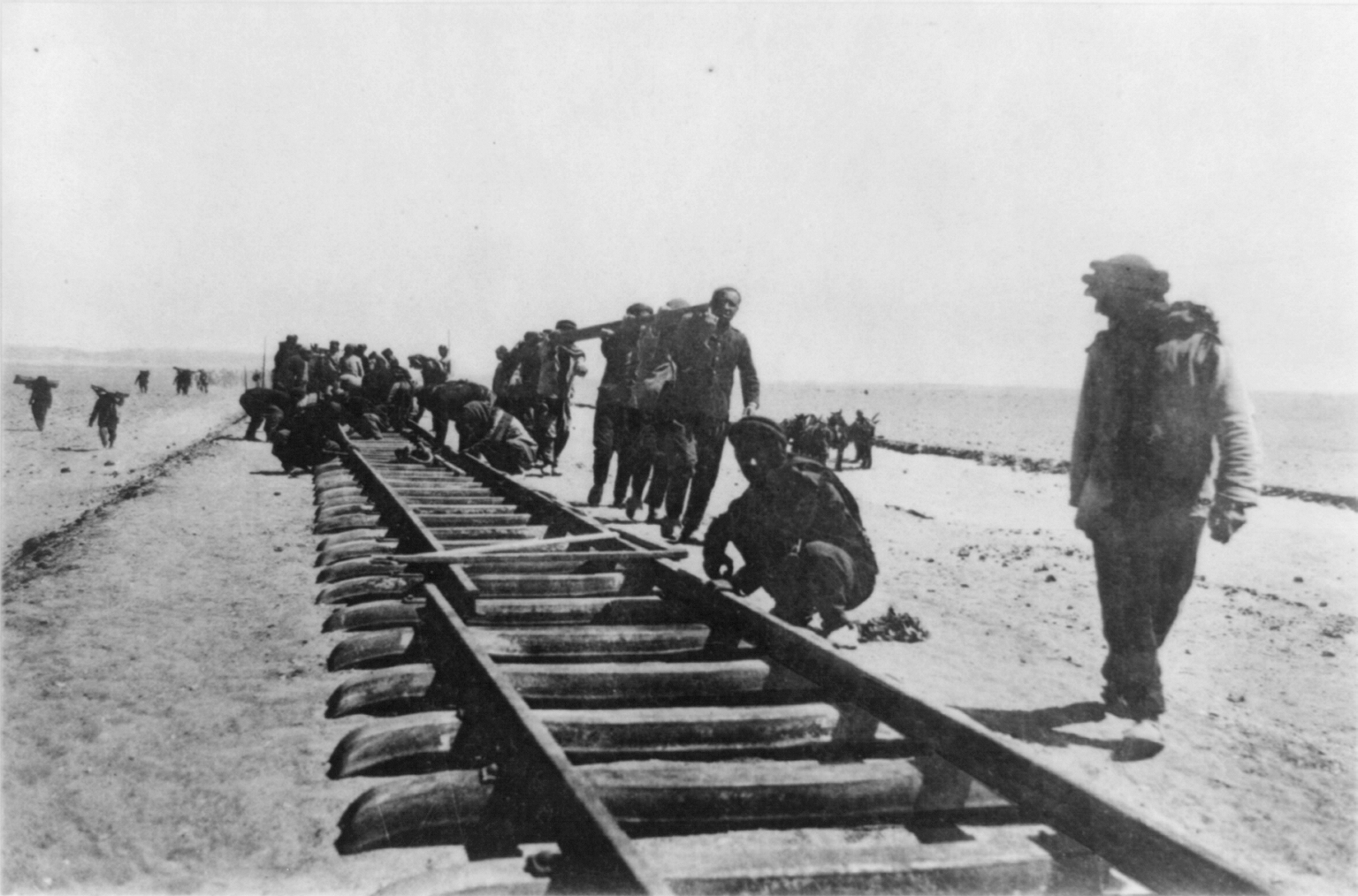
Workers laying the track of the Hejaz Railway in the desert near Tabuk in 1906
Laying track near Tabuk in 1906. Photo: Bernhard Moritz, public domain, via Wikimedia Commons

Arrival in Madinah

The railway reached Madinah at the end of August 1908, and it was formally opened on 1 September 1908, the anniversary of the Sultan's accession.21 Its terminus, known locally as the Istasyon, stood outside the western side of the old city at al-Anbariyyah,4 and Masjid al-Anbariyyah was built beside it at the same time.

The journey from Damascus to Madinah, which had taken the caravans around forty days, could now be made in about five.41 The plan was to carry the line a further 400 km to Makkah, but it never went beyond Madinah.1

The Hejaz Railway station in Madinah in 1914, with its long arcade and the domes and minarets of Masjid al-Anbariyyah behind
The Madinah station and Masjid al-Anbariyyah in 1914. Photo: public domain, Library of Congress, via Wikimedia Commons

The end of the line

Trains ran to Madinah for less than a decade. During the First World War the line through the Hijaz was cut again and again in the fighting, and after the war its southern section was never brought back into use. By 1920 it had been abandoned.12

A plan to rebuild the line in the 1960s was dropped before it was finished, and the stations, bridges and track were left to the desert.1

What survives today

In Madinah the terminus, with its long stone arcades, has been restored as a museum. Restored locomotives, carriages and workers' tools are shown in their own building, and galleries in the station tell the history of Madinah from its earliest times. The station and its annexes cover about 90,000 square metres.4 The museum has closed at times for refurbishment, so it is worth checking before you go.6 See Hejaz Railway Station Museum and Masjid al-Anbariyyah.

At Hegra, the ancient city of al-Hijr north of Al-Ula, the railway built a complex of sixteen buildings spread over about 400 metres: offices and stores, a police post, a hospital, workers' houses and a large engine shed where the locomotives were maintained. Most of the buildings were restored in the 1980s.7 Part of the complex is now a hotel, and a restored locomotive stands in the engine shed.68 The Ottoman pilgrim fort of al-Hijr is close by. See Hegra Hejaz Railway Station.

The Al-Ula station stands at al-Manshiyah on the edge of the town and can be seen from outside its fence, while the Tabuk station has been restored as a small museum with a locomotive and carriages. See Al-Ula Hejaz Railway Station and Tabuk Hejaz Railway Station.

Between them, and on towards Madinah, dozens of smaller stations stand in the open desert, many of them within sight of the road. At Hadiyyah and al-Buwayr, railway enthusiasts have recorded locomotives and wagons left on the old line.8

The long arched stone bridge of the Hejaz Railway at Hadiyyah crossing a dry valley
The railway bridge at Hadiyyah. Photo: Clemens Schmillen, CC BY-SA 4.0, via Wikimedia Commons

Map of the line

The map shows 40 points on the railway in Saudi Arabia, numbered from the border with Jordan in the north to Madinah in the south. Thirty-nine are the stations, posts and bridges in the official inventory that Saudi Arabia submitted to UNESCO, and the train at Hadiyyah is taken from Adnan Şensoy's map of the Hejaz Railway.29

The stations at Tabuk, Hegra, Al-Ula and Madinah have their own pages on Muslim Maps, and several others stand beside forts of the old Hajj road that are listed too. Most of the smaller stations are ruins in the open desert, and the points mark the station sites rather than a way in from the road.

Hejaz Railway points in Saudi Arabia, numbered north to south. Sources: Saudi heritage inventory submitted to UNESCO (2015); Adnan Şensoy, www.ADNANSENSOY.com.

  1. Halat Ammar — At the border with Jordan.
  2. Bir ibn Hirmas
  3. Al-Haradha Bridge
  4. Al-Hazm
  5. Al-Muhtatib
  6. Tabuk Hejaz Railway Station — Restored as a small museum with a locomotive and carriages.
  7. Al-Ithli
  8. Al-Barak
  9. Qurayn al-Ghazal
  10. Al-Mustabgha
  11. Khumaysah
  12. Khanzirah
  13. Al-Mu'azzam Fort and Pool — Beside the Ottoman fort and pool of al-Mu'azzam on the old Hajj road.
  14. Khashm San'a
  15. Al-Thamayil
  16. Al-Dar al-Hamra
  17. Al-Mutalla'
  18. Abu Taqah
  19. Hegra Hejaz Railway Station
  20. Al-Hijr Fort — Sixteen buildings over about 400 metres, now partly a hotel, with a locomotive in the engine shed. The al-Hijr pilgrim fort is close by.
  21. Al-Uthayb
  22. Al-Ula Hejaz Railway Station — Station buildings at al-Manshiyah, seen from outside the fence.
  23. Al-Bada'i'
  24. Mashhad
  25. Mutran Bridge
  26. Sahl Mutran
  27. Zumurrud Fort and Pool — Built where the Zumurrud fort and pool of the old Hajj road stand.
  28. Assoura Fort — Near Assoura Fort on the old Hajj road.
  29. Al-Tubrah
  30. Al-Mudarraj
  31. Hadiyyah Fort — Long arched stone bridge; Hadiyyah Fort is nearby.
  32. Hadiyyah train remains — A locomotive and wagons left on the line near Hadiyyah station.
  33. Jadda'a Fort — Near the Jadda'a fort of the old Hajj road.
  34. Abu al-Na'am
  35. Istabl Antar
  36. Al-Buwayr — Railway enthusiasts have recorded a derailed locomotive and wagons here.
  37. Bir Nasif — Walled station about 74 km north of Madinah, photographed in 1910.
  38. Buwat
  39. Al-Hafirah Fort — The last fort of the old Hajj road before Madinah stands at the station.
  40. Mukhayyit
  41. Hejaz Railway Station Museum
  42. Masjid al-Anbariyyah — The terminus, restored as the railway museum, beside Masjid al-Anbariyyah.

All stations & route points (40)

  1. Halat Ammar railway post. At the border with Jordan.
  2. Bir ibn Hirmas station.
  3. Al-Haradha Bridge.
  4. Al-Hazm station.
  5. Al-Muhtatib station.
  6. Tabuk station. Restored as a small museum with a locomotive and carriages. See Tabuk Hejaz Railway Station.
  7. Al-Ithli railway post.
  8. Al-Barak station.
  9. Qurayn al-Ghazal station.
  10. Al-Mustabgha station.
  11. Khumaysah station.
  12. Khanzirah station.
  13. Al-Mu'azzam station. Beside the Ottoman fort and pool of al-Mu'azzam on the old Hajj road. See Al-Mu'azzam Fort and Pool.
  14. Khashm San'a station.
  15. Al-Thamayil station.
  16. Al-Dar al-Hamra station.
  17. Al-Mutalla' station.
  18. Abu Taqah station.
  19. Al-Hijr (Hegra) station. Sixteen buildings over about 400 metres, now partly a hotel, with a locomotive in the engine shed. The al-Hijr pilgrim fort is close by. See Hegra Hejaz Railway Station and Al-Hijr Fort.
  20. Al-Uthayb station.
  21. Al-Ula station. Station buildings at al-Manshiyah, seen from outside the fence. See Al-Ula Hejaz Railway Station.
  22. Al-Bada'i' station.
  23. Mashhad station.
  24. Mutran Bridge.
  25. Sahl Mutran station.
  26. Zumurrud station. Built where the Zumurrud fort and pool of the old Hajj road stand. See Zumurrud Fort and Pool.
  27. Bir al-Jadid station. Near Assoura Fort on the old Hajj road. See Assoura Fort.
  28. Al-Tubrah station.
  29. Al-Mudarraj station.
  30. Hadiyyah Bridge. Long arched stone bridge; Hadiyyah Fort is nearby. See Hadiyyah Fort.
  31. Hadiyyah train remains. A locomotive and wagons left on the line near Hadiyyah station.
  32. Jadda'a station. Near the Jadda'a fort of the old Hajj road. See Jadda'a Fort.
  33. Abu al-Na'am station.
  34. Istabl Antar station.
  35. Al-Buwayr station. Railway enthusiasts have recorded a derailed locomotive and wagons here.
  36. Bir Nasif station. Walled station about 74 km north of Madinah, photographed in 1910.
  37. Buwat station.
  38. Al-Hafirah station. The last fort of the old Hajj road before Madinah stands at the station. See Al-Hafirah Fort.
  39. Mukhayyit station.
  40. Madinah (al-Anbariyyah) station. The terminus, restored as the railway museum, beside Masjid al-Anbariyyah. See Hejaz Railway Station Museum and Masjid al-Anbariyyah.
A two-storey stone station building of the Hejaz Railway at Hadiyyah in the desert
The station at Hadiyyah, typical of the smaller stations on the line. Photo: Clemens Schmillen, CC BY-SA 4.0, via Wikimedia Commons

Visiting the railway

The Madinah museum is a short walk west of Masjid al-Nabawi, beside Masjid al-Anbariyyah. In Tabuk the station museum stands on King Abdulaziz Road in the city; entry is free, and it usually opens from Sunday to Thursday. The Hegra station lies within the Hegra heritage site north of Al-Ula, which is visited on booked tours.

Most of the other stations can only be reached by car, and many lie some way from the road across open desert. Take plenty of water, travel in the cooler months if you can, and treat the ruins with care, as many of the buildings are fragile and some sites are fenced off.

The restored Hejaz Railway station in Madinah, a long stone building with arched arcades
The restored Madinah station in 2020. Photo: Richard Mortel, CC BY 2.0, via Wikimedia Commons

References

  1. "Hejaz railway", Wikipedia, en.wikipedia.org
  2. "Hejaz Railway", Tentative List submitted by Saudi Arabia, 8 April 2015, UNESCO World Heritage Centre
  3. "Syrian Hajj Road", Tentative List submitted by Saudi Arabia, 8 April 2015, UNESCO World Heritage Centre
  4. "The Railway Museum", Saudipedia, saudipedia.com
  5. "Heinrich August Meissner", Wikipedia, en.wikipedia.org
  6. "Hejaz Railway Museum", Wikipedia, en.wikipedia.org
  7. Javid Hassan and P.K. Abdul Ghafour, "Move Under Way to Restore Madain Saleh Railway Station", Arab News, 22 June 2006, arabnews.com
  8. Thomas Kautzor, list of surviving Hejaz Railway locomotives in Saudi Arabia, International Steam, internationalsteam.co.uk
  9. Adnan Şensoy, map of Ottoman and Islamic sites including the Hejaz Railway, adnansensoy.com

The Hejaz Railway and the Syrian Hajj road

View on Muslim Maps