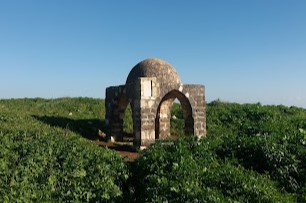
The Well of Nabi Yusuf (AS), known in Arabic as Jubb Yusuf (جُبّ يوسف), marks the place where tradition holds that Nabi Yusuf (AS) was cast into a pit by his…
The Well of Nabi Yusuf (AS), known in Arabic as Jubb Yusuf (جُبّ يوسف), marks the place where tradition holds that Nabi Yusuf (AS) was cast into a pit by his brothers. “And so, when they took him away and decided to throw him into the bottom of the well, We inspired him: ‘˹One day˺ you will remind them of this deed of theirs while they are unaware ˹of who you are˺.’” Surah Yusuf 12:15 Nabi Yusuf and the journey to Egypt Nabi Yusuf (AS) was the son of Nabi Yaqub (AS). After his brothers placed him in the well, a travelling caravan found him and carried him to Egypt, where he was sold. Allah later granted Nabi Yusuf (AS) authority in the land and reunited him with his family after years of separation. The well lies south-east of Safed and north-west of Lake Tiberias, beside the historic route that linked the Galilee with Damascus. The surrounding Palestinian village took the name Jubb Yusuf and was also called Arab al-Suyyad. The mosque and caravan khan The Muslim traveller Ibn Battuta recorded Jubb Yusuf during his passage through Palestine, describing a large, deep well within the courtyard of a small mosque. Its position on a major road later made the site a recognised stopping point for caravans. A khan, an inn built for travellers and their animals, stood beside the well by the late fifteenth century. Ottoman records from 1005 AH/1596 list Jubb Yusuf as a village in the Jira subdistrict of Safed, whose inhabitants cultivated wheat, barley and fruit and kept goats and beehives. When the Damascene scholar Abd al-Ghani al-Nabulsi travelled through the area in the early eighteenth century, he recorded the covered well, the neighbouring mosque and the strongly built khan. The surviving site preserves the name by which this place was known to Muslim travellers, villagers and chroniclers: Jubb Yusuf.