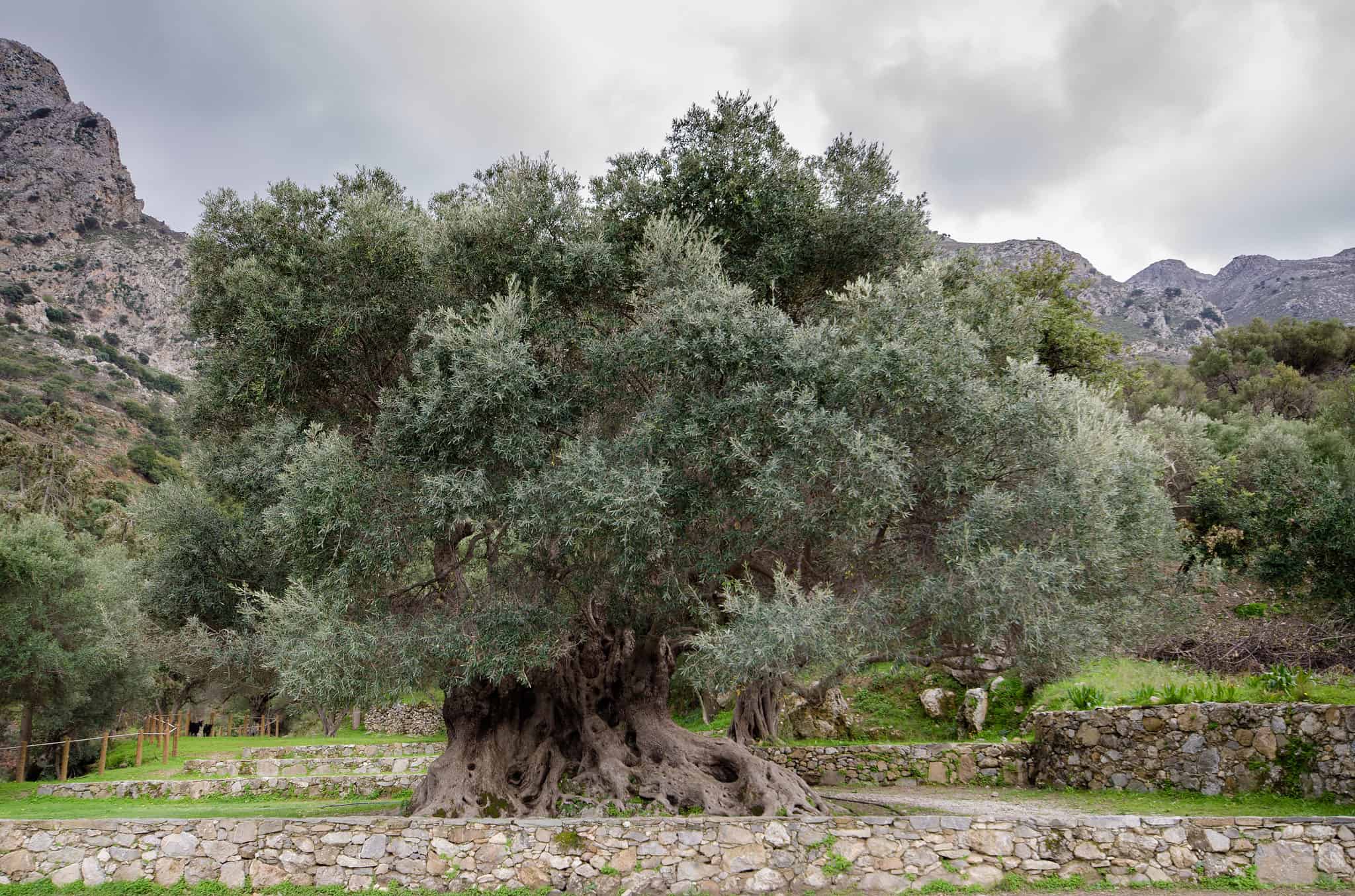
The Tree of Ahmad al-Badawi is an ancient olive tree in al-Walaja, named for Shaykh Ahmad al-Badawi, who local tradition holds spent time beneath its…
The Tree of Ahmad al-Badawi is an ancient olive tree in al-Walaja, named for Shaykh Ahmad al-Badawi, who local tradition holds spent time beneath its branches. Known in Arabic as Shajarat al-Badawi (شجرة البدوي), it grows in the Wadi Jwaiza area of al-Walaja, southwest of Jerusalem and within the Bethlehem Governorate. The tree belongs to the Abu Ali family, who cultivate the surrounding land and oversee its care and harvest. An olive tree counted in millennia The Palestinian Ministry of Agriculture estimates the tree’s age at around 5,000 years. Assessments reported from Italian and Japanese researchers have placed it within a broader range of approximately 3,000 to 5,500 years, making it one of Palestine’s oldest known olive trees. The Ministry’s recorded dimensions give the tree a height of about 13 metres, with branches covering roughly 250 square metres. Despite its age, it continues to bear olives. Salah Abu Ali, a member of the owning family, has served as its appointed caretaker. Shaykh Ahmad al-Badawi Shaykh Ahmad al-Badawi was born in Fez in 596 AH / 1199 CE. His family later travelled east, and he spent part of his youth in Makkah before journeying to Iraq and eventually settling in Tanta in Egypt. He became one of the best-known Muslim spiritual teachers of the thirteenth century and died in Tanta in 675 AH / 1276 CE, where he is buried. The al-Walaja tradition holds that Shaykh Ahmad al-Badawi stayed and worshipped beneath this tree during his travels through the region. Its name preserves that association, joining the life of the ancient olive to the memory of a scholar whose students and followers became especially numerous in Egypt.