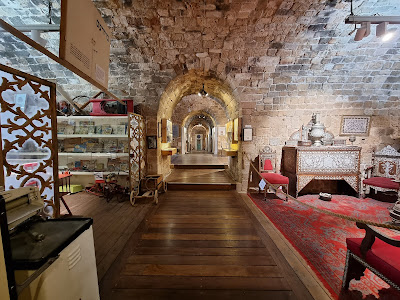
Treasures in the Walls Museum preserves the crafts and household culture of Acre and western Galilee inside an Ottoman military position built into the city…
Treasures in the Walls Museum preserves the crafts and household culture of Acre and western Galilee inside an Ottoman military position built into the city walls. Known in Arabic as متحف كنوز على الأسوار, it occupies Burj al-Kumandar in the northeastern defences of the Old City. Acre’s markets supported metalworkers, leatherworkers, carpenters, hatmakers, pharmacists and other trades serving the port city and its surrounding villages. The museum reconstructs several of these workshops using original tools and objects, documenting forms of skilled work that shaped urban life during the late nineteenth and early twentieth centuries. From garrison quarters to museum galleries Burj al-Kumandar formed part of the fortifications associated with Ahmad Pasha al-Jazzar, the Ottoman governor who ruled from Acre. Following the failure of Napoleon Bonaparte’s siege in 1799, the city’s defences were strengthened. The chambers now used as galleries once housed soldiers stationed beside the cannon positions on the walls. The museum is divided between displays of traditional trades and collections drawn from homes in Acre and Galilee. Alongside the reconstructed workshops are furniture, clocks, vessels, textiles, books and other domestic objects. Together they record differences in occupation and household wealth across the communities that lived in the region. The setting links these collections to two chapters of Acre’s history: the fortified Ottoman city defended from Burj al-Kumandar and the commercial city whose craftspeople worked in the nearby markets.