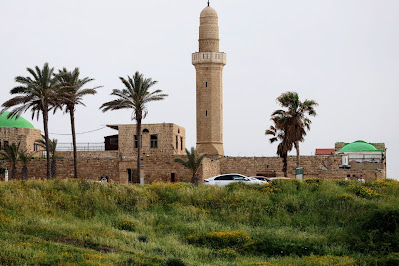
The grave of Abu al-Hasan Ali ibn Alil, known as Ibn Alim, lies within this historic mosque on Palestine’s Mediterranean coast. Known in Arabic as مسجد سيدنا…
The grave of Abu al-Hasan Ali ibn Alil, known as Ibn Alim, lies within this historic mosque on Palestine’s Mediterranean coast. Known in Arabic as مسجد سيدنا علي, the mosque gave its name to the Palestinian village of al-Haram, also called al-Haram Sayyidna Ali. The site stands north of Jaffa, beside the medieval city of Arsuf and within the present-day boundaries of Herzliya. Ali ibn Alim and the visit of Sultan Baybars The Jerusalem historian Mujir al-Din al-Ulaymi names Ali ibn Alim among the renowned righteous men of Palestine. He records his lineage through Sayyiduna Abdullah ibn Umar (RA) to Sayyiduna Umar ibn al-Khattab (RA), the second caliph. An inscription at the mosque dates Ali ibn Alim’s death to 474 AH/1081. Mujir al-Din also relates that Sultan al-Zahir Baybars visited the grave in 663 AH/1265 while campaigning against the Crusader stronghold at nearby Arsuf. Baybars prayed there before his army captured the fortified city, joining the story of the maqam to a decisive stage in the Mamluk recovery of Palestine’s coast. The mosque and al-Haram The mosque developed around the grave and became the centre of the village that bore Sayyidna Ali’s name. Ottoman records from the sixteenth century assign part of Arsuf’s revenues to the waqf, an endowed property established for the support of the religious site. Al-Haram belonged to the Jaffa district and was depopulated in 1948. The mosque was restored through a Muslim community campaign in the late 1980s. Archaeological documentation records a large courtyard bordered by rooms, with the grave and its inscription in the southern part of the complex and a well to the north.