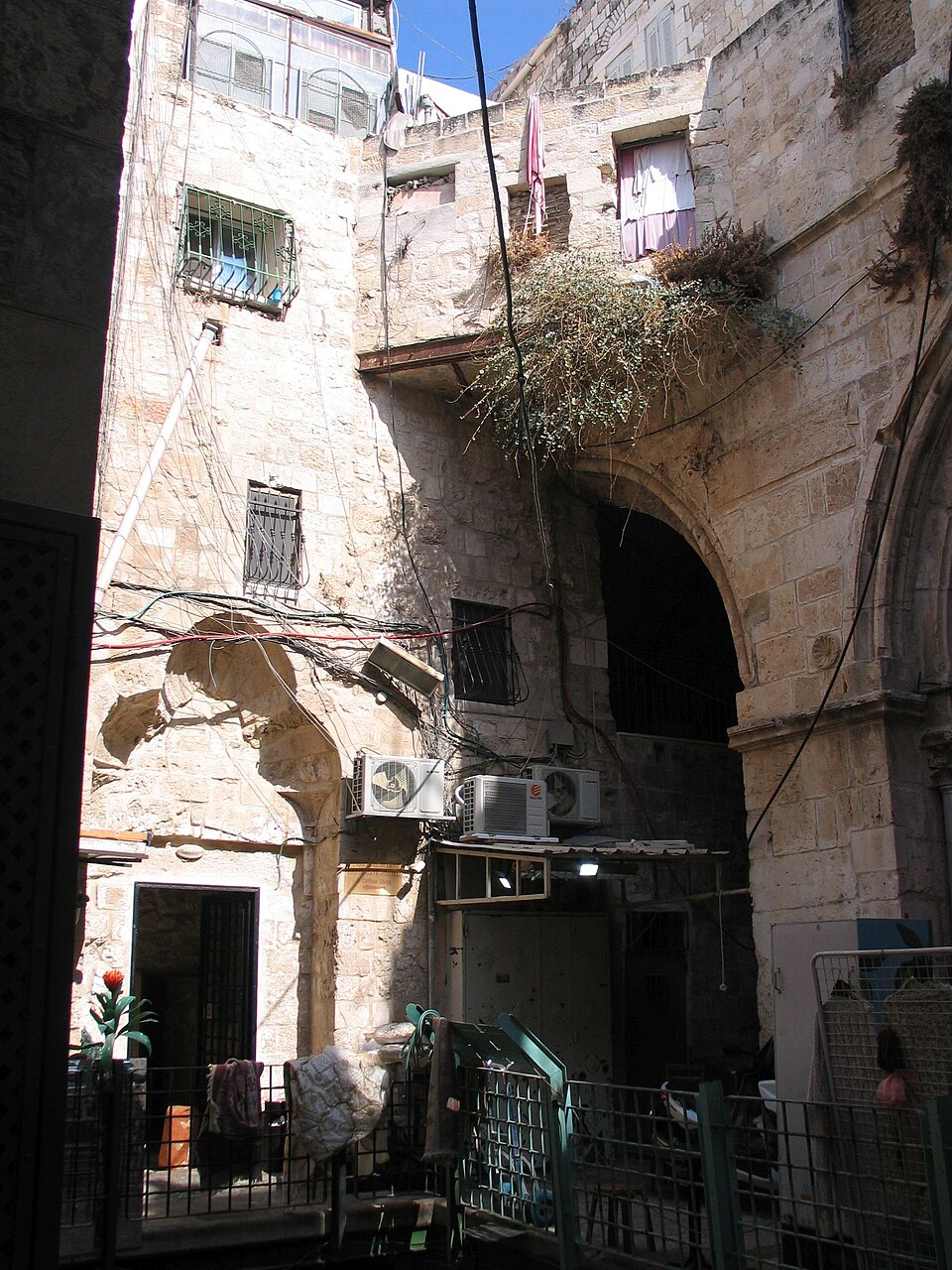
Ribat al-Nisa (رباط النساء) was endowed in 730 AH/1330 CE to house twelve poor women arriving in Jerusalem. Its founder was Amir Sayf al-Din Tankiz al-Nasiri,…
Ribat al-Nisa (رباط النساء) was endowed in 730 AH/1330 CE to house twelve poor women arriving in Jerusalem. Its founder was Amir Sayf al-Din Tankiz al-Nasiri, the Mamluk viceroy of al-Sham under Sultan al-Nasir Muhammad. Tankiz commissioned a broad programme of religious, educational and civic works in Jerusalem, including the Madrasa al-Tankiziyya facing the ribat across the square. A waqf for women beside al-Aqsa A ribat could provide lodging supported by a waqf, an endowment whose property and revenues were assigned to sustain a charitable institution. Here, that system gave women without sufficient means a designated residence close to Masjid al-Aqsa, placing their welfare within the same endowed landscape as madrasas, lodges, waterworks and accommodation for travellers. The institution occupied the north-western side of the small square before Bab al-Silsila and Bab al-Sakina, two adjoining gates on the western side of al-Aqsa. It was built beside the earlier Turba al-Sa‘diyya and before the Madrasa al-Baladiyya was established to its north later in the Mamluk period. Tankiz and Mamluk Jerusalem The ribat belonged to the major rebuilding of Tariq Bab al-Silsila, the street leading eastward to al-Aqsa. Under Mamluk patronage, this route gathered institutions for teaching, worship, commerce, water distribution and lodging immediately beside the sacred precinct. Unlike the monumental madrasa opposite it, Ribat al-Nisa had a specialised domestic purpose. Its surviving position records how the waqf system incorporated accommodation for poor women into the civic and religious life of fourteenth-century Jerusalem.