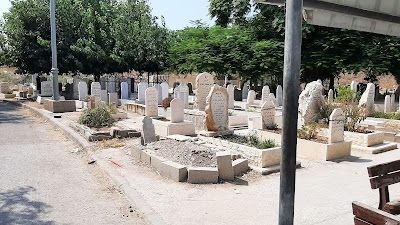
Akka’s historic Muslim graveyard preserves the graves of local scholars, civic leaders and families from the city’s Ottoman and Mandate-era history. Known…
Akka’s historic Muslim graveyard preserves the graves of local scholars, civic leaders and families from the city’s Ottoman and Mandate-era history. Known locally as Maqbarat al-Nabi Salih (مقبرة النبي صالح), it lies outside the historic walls on the eastern side of the old city. Within the graveyard stands the maqam of Nabi Salih (AS), and tradition holds that Nabi Salih (AS) is buried here. Nabi Salih (AS) was sent to the people of Thamud, calling them to worship Allah alone; the she-camel given to them as a sign became central to the Qur’anic account of their rejection and punishment. Graves from Akka’s public life Among those buried here is Shaykh As‘ad al-Shuqayri, born in Akka in 1860. He studied at al-Azhar, worked in the Islamic courts, entered the Ottoman parliament in 1908 and was appointed mufti of the Ottoman Fourth Army during the First World War. He died in 1940. The graveyard also contains the grave of Abd al-Fattah al-Sa‘di, an Akka notable who served in the Ottoman parliament and later as the city’s mayor. His public career continued into the British Mandate period, when he participated in Palestinian political congresses and served on the Arab Executive. These graves connect the site with the families who shaped Akka’s religious and civic life during the city’s final Ottoman decades and the early twentieth century.