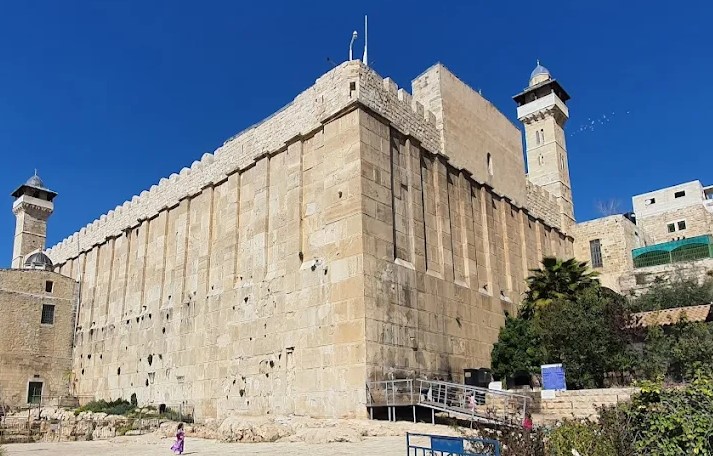
Masjid al-Ibrahimi in al-Khalil stands over the cave in which Prophet Ibrahim (AS) is buried, together with Prophets and mothers of his household. The city…
Masjid al-Ibrahimi in al-Khalil stands over the cave in which Prophet Ibrahim (AS) is buried, together with Prophets and mothers of his household. The city takes its Arabic name, al-Khalil, from his title Khalil al-Rahman, the intimate friend of the Most Merciful. From Iraq to the lands of Palestine Prophet Ibrahim (AS) was born in Iraq, in the land of Babil, and called its people away from the worship of idols to the worship of Allah alone. When they turned against him and cast him into the fire, from which Allah delivered him, he left that land altogether. He migrated westward with Sayyidah Sarah and his nephew Prophet Lut (AS), passing through Harran and Egypt before settling in the lands of Palestine. Al-Khalil is where that migration came to rest: the hills where he kept his hospitality and, in old age, bought a cave as a burial place for his family. This is why a town in Palestine carries the memory of a Prophet born in Iraq. The prophetic household Buried in the cave beneath the sanctuary are Prophet Ibrahim (AS) and Sayyidah Sarah, Prophet Ishaq (AS) and Sayyidah Rifqa, and Prophet Yaqub (AS) and Sayyidah Leah. Prophet Yusuf (AS) is buried here as well, his blessed body carried out of Egypt so that he would lie beside his fathers. The cave itself has been sealed for centuries. Inside the sanctuary above it, each burial is marked by a maqam, so that visitors stand over the graves rather than at them. Three generations of Prophets in one place make Masjid al-Ibrahimi one of the most revered sanctuaries in Palestine, and the reason al-Khalil became a station on the pilgrim road running south from Jerusalem. The building and its history The immense stone enclosure around the cave dates to the first century BC and is Herodian in construction, its walls raised from blocks several metres long and still standing after two thousand years. A church stood within it in the Byzantine period, and the enclosure became a mosque after the Muslim arrival in the seventh century. The Crusaders turned it back into a church until Salahuddin al-Ayubi recovered al-Khalil in 1187 and restored the sanctuary as a mosque. Under the Mamluks it was enlarged and endowed further, with minarets and buildings added in the fourteenth century by Amir Sanjar al-Jawali and Amir Tankiz al-Nasiri. The minbar of Asqalan Its most celebrated furnishing is the wooden minbar, commissioned in 484 AH / 1091 CE by the Fatimid vizier Badr al-Jamali for the mashhad of Sayyiduna al-Husayn (RA) in Asqalan. Salahuddin al-Ayubi had it moved to al-Khalil in 1191, rescuing it from the coast. Carved in interlocking geometry without nails, it is the oldest surviving minbar of its kind and the model for the minbar he later gave to Masjid al-Aqsa.