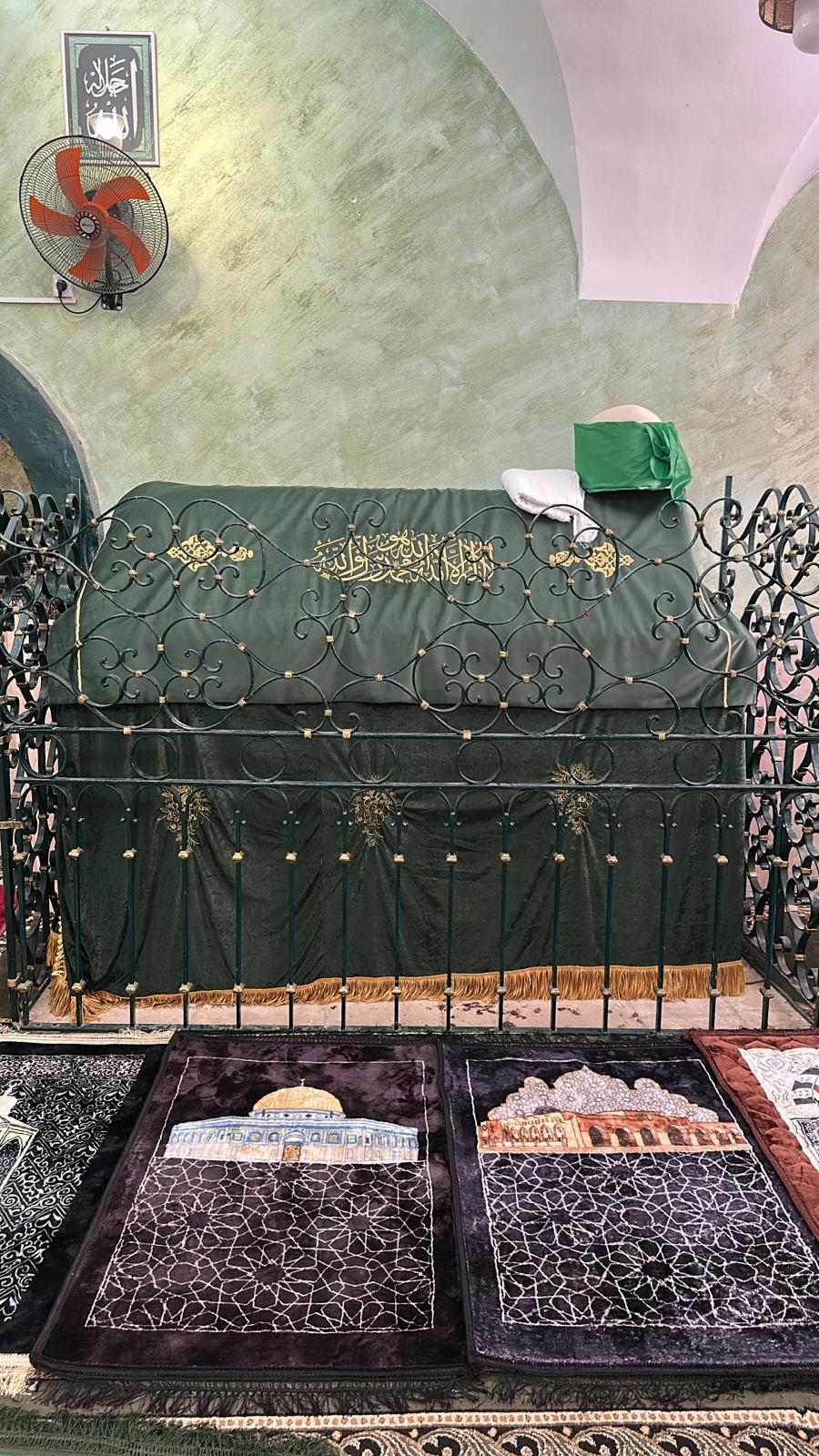
On the eastern side of the graveyard at al-Tur, on the Mount of Olives above Jerusalem, a maqam and adjoining mosque, مقام ومسجد سلمان الفارسي, keep the…
On the eastern side of the graveyard at al-Tur, on the Mount of Olives above Jerusalem, a maqam and adjoining mosque, مقام ومسجد سلمان الفارسي, keep the memory of Salman al-Farisi (RA), the Persian Companion of the Prophet Muhammad ﷺ who was raised in Isfahan, sold as a slave in Madinah, and became one of the closest of the Muhajirun. The Persian who searched until he found the Prophet ﷺ Salman al-Farisi (RA) came from Jayy, a settlement in the district of Isfahan in Persia. His own account, preserved at length in the seerah of Ibn Ishaq and in the Musnad of Imam Ahmad, describes a young man who left his home and his people's religion in search of the truth, attaching himself to one teacher after another across Sham — in Mosul, Nasibin and Ammuriyya — each of whom, at death, directed him to the next. The last of them told him that the time of a Prophet had drawn near, one who would emerge in a land of date palms and would accept a gift but not charity, and who carried the seal of prophethood between his shoulders. Travelling with a party of Arab traders, Salman (RA) was betrayed and sold into slavery, and passed from hand to hand until he was brought to Madinah. There he heard of the Prophet ﷺ who had arrived from Makkah, tested him against the three signs he had been given, and accepted Islam. The Prophet ﷺ directed the Companions to help him buy his freedom, and he was released. He was with the Prophet ﷺ when Surah al-Jumu'ah was revealed, and the Prophet ﷺ placed his hand on him: "If Faith were at the Pleiades, even then some men — or a man — from these people would attain it." Sahih al-Bukhari 4897 The trench at al-Khandaq In 5 AH the confederate armies advanced on Madinah. It was Salman al-Farisi (RA) who proposed digging a trench along the exposed northern approach, a Persian tactic unknown to the Arabs. The Prophet ﷺ accepted the counsel and dug alongside the Companions, and the siege broke without a general battle. When the Muhajirun and the Ansar each claimed him as their own, the Prophet ﷺ settled it by saying that Salman is of us, the People of the House. Why a Companion is remembered in Jerusalem Companions are commemorated across Palestine because of the conquest of Bilad al-Sham. In the years after the Prophet's ﷺ death the Muslim armies moved north from the Hijaz, and after the surrender of the city, Sayyiduna Umar ibn al-Khattab (RA) travelled to Bayt al-Maqdis in person to receive it and to grant its people the covenant that carries his name. Companions came with those armies and with the caliph, and many settled, were garrisoned or served as governors and judges in the towns of Sham. The maqams that bear their names across the country belong to that period. Salman al-Farisi (RA) himself was appointed governor of al-Mada'in in Iraq during the caliphate of Sayyiduna Umar (RA), and he is buried there. The structure at al-Tur is a commemorative maqam: a building raised to mark and honour his connection with Jerusalem, standing in the eastern part of the al-Tur graveyard on the Mount of Olives, with the mosque beside it in use for prayer.