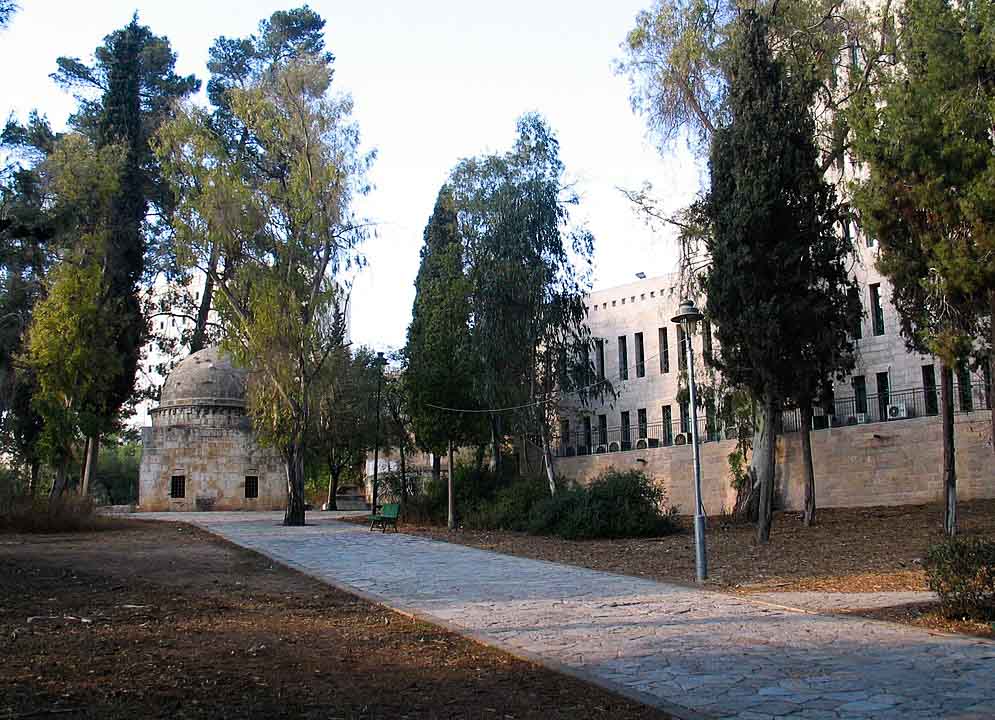
Mamilla Graveyard is Jerusalem’s largest historic Muslim graveyard, holding the graves of scholars, judges, governors, worshippers and defenders of al-Quds.…
Mamilla Graveyard is Jerusalem’s largest historic Muslim graveyard, holding the graves of scholars, judges, governors, worshippers and defenders of al-Quds. Known in Arabic as Ma’man Allah Graveyard (مقبرة مأمن الله) and in older chronicles as Mamilla, it lies west of the Old City walls, with the historic Mamilla Pool at its centre. Muslim writers recorded the graveyard by the early fifth century AH/11th century. It later became Jerusalem’s principal Muslim graveyard, particularly under Ayyubid and Mamluk rule, when leading members of the city’s religious, administrative and military life were buried here. The defenders of al-Quds Mamilla is closely tied to the recovery of Jerusalem by Sultan Salahuddin al-Ayubi in 583 AH/1187. Hundreds of his soldiers, together with commanders and officials who died in the struggle or later settled in the city, were buried in the graveyard. Their graves placed Mamilla within the history of the Ayyubid restoration of Muslim life in al-Quds after Crusader rule. Later burials included Jerusalemite families, judges, scholars and shaykhs connected with Masjid al-Aqsa. During the Mamluk period, Mamilla was the graveyard of many of the city’s prominent inhabitants; surviving inscriptions and earlier surveys preserve the names of governors, officials and learned figures buried within its grounds. The graves recorded by Mujir al-Din The Jerusalemite judge and historian Mujir al-Din al-Ulaymi documented Mamilla in al-Uns al-Jalil bi-Tarikh al-Quds wa al-Khalil . Among the figures associated with the graveyard was Shaykh Abu Abdullah Muhammad ibn Ibrahim al-Qurashi al-Hashimi, who travelled from al-Jazirah al-Khadra near Ceuta and died in Jerusalem in 599 AH/1202–03. Mujir al-Din also recorded the grave of Umar ibn Ibrahim al-Wasiti, who died in 684 AH/1285, and the nearby Kubakiyya, connected with the Mamluk amir Ala al-Din Aydughdi al-Kubaki, governor of Safad. His chronicle names further scholars and teachers buried at Mamilla, making it an important written record of Jerusalem’s learned society. The graveyard also contained the Qalandariyya zawiya, a lodge for worship, teaching and retreat. Sayyidah Tunshuq al-Muzaffariyya supported its community and commissioned a maqam there for her brother Bahadur during the late eighth century AH/14th century. The graveyard in modern Jerusalem Jerusalemites continued to bury their dead at Mamilla into the twentieth century. In 1927, the Supreme Muslim Council designated it a historic site and ended regular new burials; the British Mandate authorities later registered it as an antiquities site in 1944. After 1948, large sections of the waqf graveyard were incorporated into roads, public buildings and Independence Park. Many grave markers were removed or displaced, while a reduced section survives around Mamilla Pool. The remaining graves and inscriptions preserve names drawn from many periods of Jerusalem’s Islamic history.