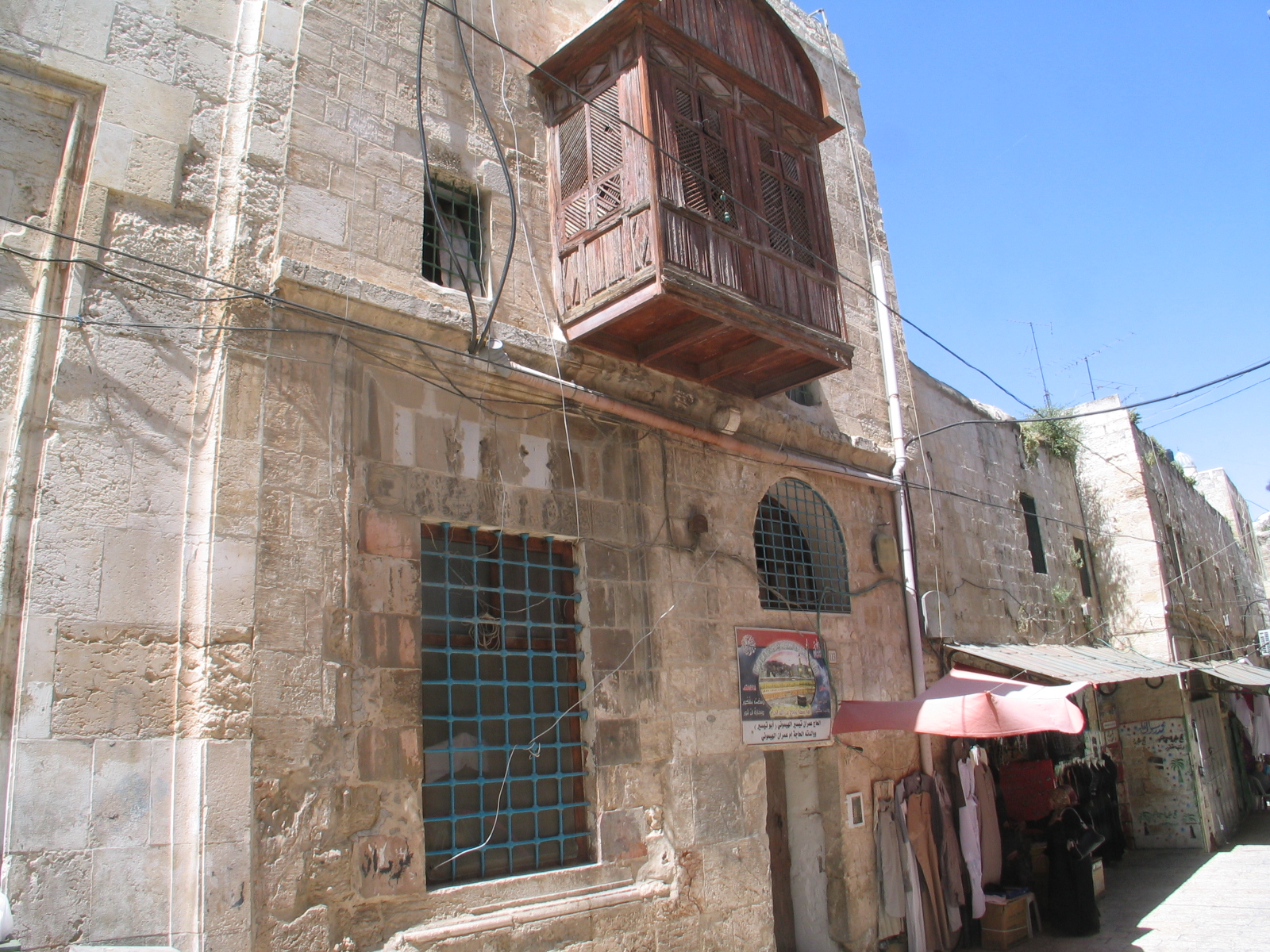
Madrasa al-Taziyya (المدرسة الطازية) is the Mamluk madrasa and funerary foundation of Amir Sayf al-Din Taz al-Nasiri, established beside Tariq Bab al-Silsila…
Madrasa al-Taziyya (المدرسة الطازية) is the Mamluk madrasa and funerary foundation of Amir Sayf al-Din Taz al-Nasiri, established beside Tariq Bab al-Silsila in Jerusalem in 763 AH/1361–62 CE. The complex stands on the north side of the street leading to Bab al-Silsila, one of the principal western entrances to al-Masjid al-Aqsa. The Jerusalem historian Mujir al-Din al-Ulaymi listed the Taziyya among the city’s madrasas and recorded it as the waqf, or charitable endowment, of Amir Taz. From the Mamluk court to Jerusalem Amir Taz began his career as a mamluk of Sultan al-Nasir Muhammad ibn Qalawun and rose to the highest ranks of the Mamluk state. He served as the sultan’s saqi, or cupbearer, and later became governor of Aleppo and a leading member of the ruling council in Cairo. Political conflict brought his career at court to an end. After imprisonment in Alexandria, Amir Taz was released and permitted to retire in Jerusalem shortly after Jumada al-Awwal 762 AH/March 1361 CE. Construction of the Taziyya appears to belong to this final period of his life, when the former court amir established a residence and religious foundation close to al-Masjid al-Aqsa. Amir Taz died in 763 AH/1361–62 CE. The inscription above the principal window identifies the chamber as his funerary foundation and records his name, titles and year of death. Cup emblems carved beside the inscription refer to his former office as saqi. The madrasa and its endowment The Taziyya combined a grave chamber with spaces used for teaching. Its waqf supported the institution through income-producing property, following the Mamluk practice of placing madrasas and other religious foundations on a permanent financial footing. The surviving lower level contains an entrance vestibule, staircase, passage and several vaulted chambers. Architectural study has identified parts of an earlier structure incorporated into the northern side of the complex. The upper residential rooms underwent later changes, including work during the Ottoman period. The street façade preserves the funerary inscription, carved cup emblems, a window with a metal grille and masonry formed from alternating stone courses. Together with the neighbouring Kilaniyya and other Mamluk foundations along Tariq Bab al-Silsila, the Taziyya belongs to the concentration of madrasas, graves and endowed institutions established beside the approaches to al-Masjid al-Aqsa during the eighth Islamic century.