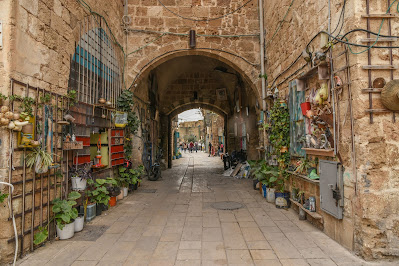
Khan al-Franj (خان الإفرنج) is Acre’s oldest surviving khan, established in the mid-16th century as a base for French merchants trading through the…
Khan al-Franj (خان الإفرنج) is Acre’s oldest surviving khan, established in the mid-16th century as a base for French merchants trading through the Palestinian port. The name means “Khan of the Franks,” using the Arabic term then applied broadly to western Europeans. A khan was an urban merchant inn combining accommodation, storage and commercial space, allowing traders to receive goods and conduct business close to a city’s markets and harbour. A European trading house in Ottoman Acre The khan was built during the early Ottoman period in the area that had formed the central courtyard of Acre’s Venetian quarter during the Crusader era. It became a residential warehouse used by European merchants, with French traders forming its most prominent community. By the late 17th century, Khan al-Franj also carried diplomatic weight. Records from 1696–1702 place it at the centre of a dispute over the appointment of an English vice-consul for Acre and neighbouring ports. European merchants and their consular representatives competed for recognition and commercial privileges within an Ottoman legal and administrative framework. During the early 18th century, Acre’s governor lived within the khan. His presence strengthened official supervision of the foreign merchants, their taxation and the movement of goods through the port. Cotton and the rise of Acre Acre expanded rapidly under Zahir al-Umar, who made the city his capital in the mid-18th century. Cotton grown across Galilee passed through its warehouses and harbour to European markets, shifting regional commerce northward from Sidon and making Acre one of the principal ports of the eastern Mediterranean. French mercantile activity at Khan al-Franj reached its height during this period. In 1791, Ahmad Pasha al-Jazzar expelled the French merchants and took control of the cotton trade they had dominated. The khan later acquired institutional and residential uses; part of the complex now houses the Terra Santa School.