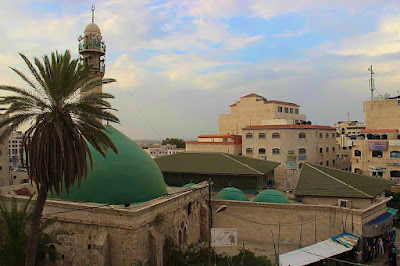
Sayyidah Fatima Khatun founded Jenin’s great Ottoman mosque in 974 AH/1566, establishing the institution that still bears her name in the centre of the city.…
Sayyidah Fatima Khatun founded Jenin’s great Ottoman mosque in 974 AH/1566, establishing the institution that still bears her name in the centre of the city. Known in Arabic as جامع جنين الكبير and جامع فاطمة خاتون, the mosque was built near the end of Sultan Suleiman the Magnificent’s reign. Sayyidah Fatima Khatun was the daughter of Abu al-Fadl Muhammad ibn Sultan Qansuh al-Ghuri and the wife of the Ottoman statesman Lala Mustafa Pasha. The foundation of Sayyidah Fatima Khatun Sayyidah Fatima Khatun encountered Jenin while travelling through the lands of Palestine. The town stood beside the fertile Marj ibn Amir and on routes linking Palestine with Damascus and the wider lands of al-Sham. She ordered the mosque’s construction and endowed property to support its work. The endowment extended beyond the prayer hall. Historical accounts record a public bath, bakery, water fountain and takiya, an institution that provided food and shelter, among the facilities connected with the foundation. Property in a number of towns and villages supplied income for the mosque and its staff. The grave of Ali Jawish, who supervised the mosque’s construction for Sayyidah Fatima Khatun, stands within its grounds. The neighbouring Fatima Khatun Girls’ School also preserves the founder’s name. War, earthquake and restoration During the French campaign of 1799, Jenin’s people confronted Napoleon Bonaparte’s forces in the fighting remembered as the Battle of the Marj. Artillery fire damaged the mosque’s eastern side, tying the building directly to one of the best-known episodes in the city’s resistance. An Islamic architectural heritage inventory records that Mustafa ibn Baqi restored the mosque in 1321 AH/1903, adding a new section and paving its courtyard. The Palestine earthquake of 1927 later damaged the mosque and its associated public bath. Municipal works during the 1950s enlarged and repaired the mosque, while the damaged bath was removed and its site became a public space, later used as a vegetable market. A further expansion was completed in 1998. The mosque remains in use at its historic site west of Jenin’s former al-Saraya building.