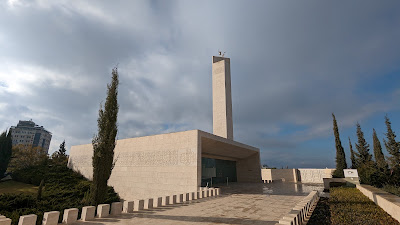
Yasser Arafat was buried in Ramallah’s al-Muqata’a compound on 12 November 2004, one day after his death in Paris. The grave, known in Arabic as قبر ياسر…
Yasser Arafat was buried in Ramallah’s al-Muqata’a compound on 12 November 2004, one day after his death in Paris. The grave, known in Arabic as قبر ياسر عرفات, occupies the headquarters where Arafat spent the final years of his life. After funeral prayers and a military ceremony in Cairo, his blessed body was flown to Ramallah and carried into al-Muqata’a amid a large public funeral. From Fatah to the Palestinian presidency Yasser Arafat, widely known by his kunya Abu Ammar, helped establish the Palestinian National Liberation Movement, Fatah, during the 1950s. He became chairman of the Executive Committee of the Palestine Liberation Organization in 1969 and represented the Palestinian national movement internationally for the next three decades. In 1974 he became the first representative of a non-governmental organization to address a plenary session of the United Nations General Assembly. He later led the PLO through the negotiations that produced the 1993 Oslo Accords and shared the 1994 Nobel Peace Prize with Yitzhak Rabin and Shimon Peres. Arafat was elected president of the Palestinian Authority in 1996. His final headquarters at al-Muqata’a Al-Muqata’a served as Arafat’s presidential headquarters in Ramallah. From 2002, Israeli forces confined him within the compound for nearly three years, and much of the surrounding complex was damaged during that period. He left in October 2004 for medical treatment in France and died on 11 November. The permanent grave complex was inaugurated in November 2007, on the third anniversary of his death. Designed by Palestinian architect Ja’far Touqan, it includes the grave chamber and an adjoining prayer pavilion. The chamber measures eleven metres on each side, marking the date 11 November. The museum beside the grave The Yasser Arafat Museum opened within al-Muqata’a in November 2016. Its exhibitions follow Arafat’s life alongside the history of the modern Palestinian national movement, while his former office, meeting room and living quarters have been preserved and connected to the museum building.