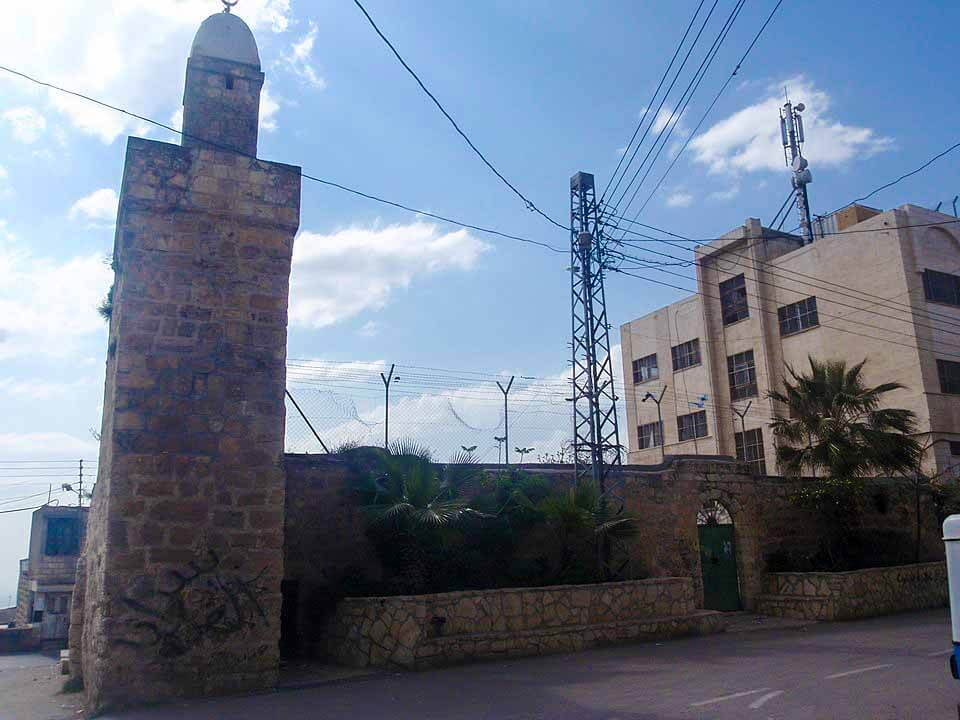
At Halhul, on the high ground north of al-Khalil, a maqam is honoured as the grave of Sayyiduna Matta, the father of Nabi Yunus (AS). Father and son are…
At Halhul, on the high ground north of al-Khalil, a maqam is honoured as the grave of Sayyiduna Matta, the father of Nabi Yunus (AS). Father and son are remembered together in this one hill town of the Palestinian highlands. Matta and his son The Islamic tradition names the Prophet as Yunus ibn Matta, and it is by his father's name that he is known in the Qur'an's telling and in the words of the Prophet Muhammad ﷺ, who said that no one should say he is better than Yunus ibn Matta. Matta's name is therefore carried in the Prophet's own name, and a father named beside his son in revelation and hadith holds a place few others do. The mission of Nabi Yunus His son was sent to the people of Nineveh in Iraq, a great city that turned away from his call. Nabi Yunus (AS) left before leave was given to him, boarded a ship, and when lots were cast he was thrown into the sea and swallowed by the fish. From within that darkness he called out: La ilaha illa anta, subhanaka, inni kuntu min al-zalimin — there is no god but You, glory be to You, I was among the wrongdoers (al-Anbiya 21:87). Allah answered him, delivered him onto the shore and caused a gourd plant to grow over him, and his people believed, so their punishment was lifted and they were given enjoyment for a time (Yunus 10:98). He is known also as Dhun-Nun and Sahib al-Hut. Halhul Halhul is an ancient town on the ridge road north of al-Khalil, at one of the highest points in the Palestinian hill country, set among vineyards and old terraces. The medieval travellers Ali al-Harawi and Yaqut al-Hamawi recorded the grave of Nabi Yunus (AS) here in the twelfth and thirteenth centuries, and the maqam of his father stands among the small maqams of these hills a short way from it, within the same locality that has carried the Prophet's name for centuries.