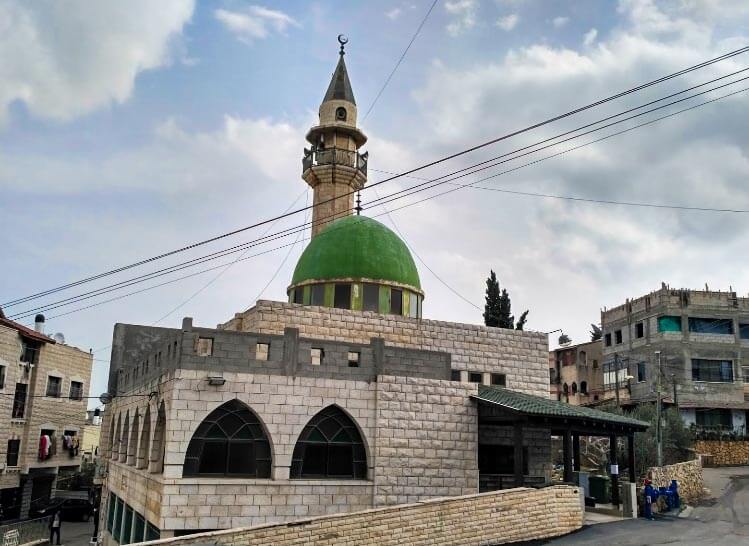
The grave of Nabi Yunus (AS) stands in Mashhad, a Palestinian town in the Galilee whose history and name are closely tied to his maqam. Known in Arabic as…
The grave of Nabi Yunus (AS) stands in Mashhad, a Palestinian town in the Galilee whose history and name are closely tied to his maqam. Known in Arabic as مقام النبي يونس, the site lies northeast of Nazareth and has long formed the centre of the old village. Nabi Yunus and the people of Nineveh Allah sent Nabi Yunus (AS) to the people of Nineveh in Iraq, calling them to worship Allah alone. After Nabi Yunus (AS) departed, his people turned to Allah in faith, and the punishment they feared was lifted from them. Nabi Yunus (AS) boarded a laden ship and was chosen by lot to be cast into the sea, where a great fish swallowed him. In the darkness, Nabi Yunus (AS) called upon Allah: “There is no god ˹worthy of worship˺ except You. Glory be to You! I have certainly done wrong.” Surah al-Anbiya 21:87 Allah answered Nabi Yunus (AS), delivered him from distress and caused him to be cast upon the open shore. The Qur’an later records that Nabi Yunus (AS) was sent to a people numbering one hundred thousand or more, who believed and were granted enjoyment for a time. Mashhad Yunis in the historical record The village appeared in Ottoman tax registers in 1004 AH/1596 under the name Mashhad Yunis. Its Muslim households cultivated grain, fruit trees and gardens, and the registered revenue was assigned to a waqf, an Islamic charitable endowment. The Damascene scholar and traveller Abd al-Ghani al-Nabulsi passed through in 1100 AH/1689 and recorded the village as Mashhad Nabi Yunus. A nineteenth-century survey likewise described Mashhad as a hilltop village gathered around the grave of Nabi Yunus (AS), confirming that the maqam already defined the settlement and its name.