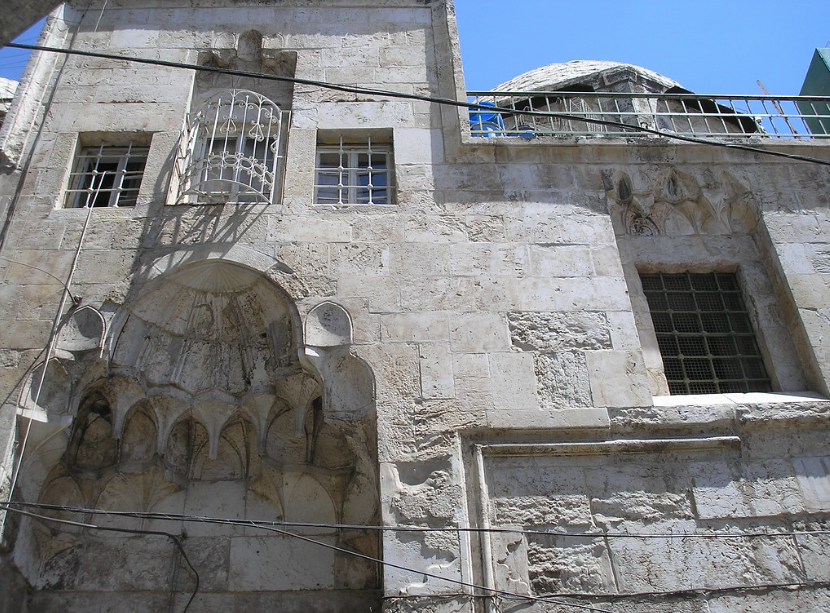
The al-Kilaniyya grave complex, التربة الكيلانية, was built in Jerusalem after 753 AH/1352 CE to receive the body of al-Hajj Jamal al-Din Pahlavan al-Kilani…
The al-Kilaniyya grave complex, التربة الكيلانية, was built in Jerusalem after 753 AH/1352 CE to receive the body of al-Hajj Jamal al-Din Pahlavan al-Kilani al-Lahiji. The Jerusalem chronicler Mujir al-Din al-Ulaymi records that Jamal al-Din was the son of Amir Shams al-Din Quradshah and was known as Ibn Sahib Kilan, “the son of the lord of Kilan.” His name links the family to Gilan, the region south of the Caspian Sea. Jamal al-Din’s will and burial in Jerusalem Jamal al-Din dated his will to 10 Sha‘ban 753 AH, corresponding to 21 September 1352. He directed his son, Amir Nizam al-Din Kehshirwan, to set aside one hundred thousand dirhams from a third of his estate and deliver the sum to his nephew, Amir Ala al-Din Ali, for the purchase of land and construction of a grave complex in Jerusalem. The instruction depended upon Jamal al-Din’s blessed body being carried to the city. Mujir al-Din records that the building was completed, the body was brought to Jerusalem as requested, and Jamal al-Din was buried here. The eastern grave chamber contains his grave; the corresponding western chamber was prepared within the original scheme but was not used for a burial. A Mamluk grave complex on Tariq Bab al-Silsila Al-Kilaniyya stands on the northern side of Tariq Bab al-Silsila, the historic street leading east towards Bab al-Silsila and al-Haram al-Sharif. It adjoins al-Taziyya and lies close to the grave complex of Amir Baraka Khan, now associated with the Khalidi Library. These foundations formed part of the dense group of madrasas, graves and charitable institutions established beside the approaches to al-Aqsa during the Mamluk period. The original arrangement comprises two domed grave chambers flanking an entrance vestibule, with an open courtyard behind them. An older barrel-vaulted hall at the north-western corner was incorporated into the complex. Later conversion for residential use added floors and rooms, altering parts of the internal vaulting while retaining the principal arrangement and street entrance. Recording and restoration The complex has no surviving foundation inscription, making Mujir al-Din’s account central to its identification and history. Ottoman documents from the sixteenth century also name al-Kilaniyya when defining neighbouring properties on this part of the street. The building was surveyed in detail during the architectural recording of Mamluk Jerusalem undertaken between 1968 and 1979. In July 1979, the Islamic Archaeology Department of the Jerusalem Islamic Waqf issued Yusuf Sa‘id al-Natsheh’s study of al-Kilaniyya, including an architectural account and documentation of its restoration.