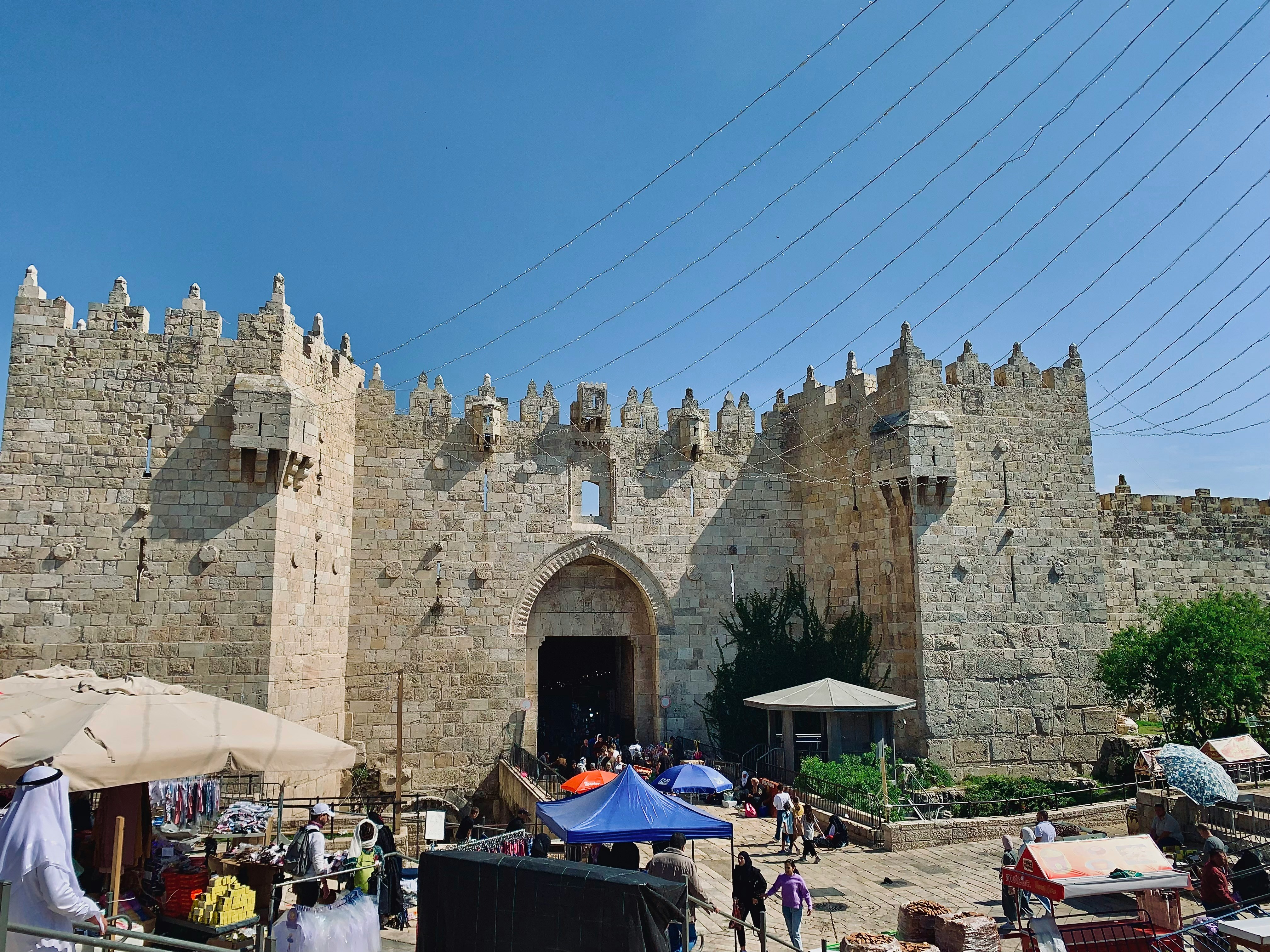
Bab al-Amud (باب العامود) is the principal northern gate of Jerusalem’s Old City, opening into the historic markets that descend towards al-Masjid al-Aqsa.…
Bab al-Amud (باب العامود) is the principal northern gate of Jerusalem’s Old City, opening into the historic markets that descend towards al-Masjid al-Aqsa. Its present form belongs to the rebuilding of the city walls ordered by the Ottoman Sultan Sulayman al-Qanuni in the 10th century AH/16th century CE. The gate stands at the head of al-Wad, the central valley running south through the Old City. Routes beyond the northern wall led towards Nablus and onward to Damascus, giving rise to the English name Damascus Gate and the older name Bab Nablus. The column remembered in its name Bab al-Amud means “Gate of the Column.” The name preserves the memory of a monumental Roman column that stood in the open space inside an earlier northern entrance. It marked the starting point from which road distances were measured, making the gate a geographic centre as well as an entrance to the city. The sixth-century Madaba mosaic map depicts the column beside Jerusalem’s northern gate. Centuries later, the Jerusalem-born Muslim geographer al-Muqaddasi included Bab al-Amud among the city’s gates in Ahsan al-Taqasim fi Ma‘rifat al-Aqalim , completed in the fourth century AH/10th century CE. The name therefore predates the present Ottoman structure and carries forward the memory of an older city plan. The Roman entrance beneath the Ottoman gate Excavations beneath Bab al-Amud uncovered part of a monumental gateway built when Roman Jerusalem was laid out as Aelia Capitolina in the second century CE. Its eastern opening, paving and adjoining plaza survive below the level of the present passage. The Roman city’s main colonnaded street began here and ran south through Jerusalem. The current gate was constructed in 944 AH/1537–38 CE during Sultan Sulayman al-Qanuni’s rebuilding of Jerusalem’s walls. An inscription above the entrance records the Ottoman work. The entrance turns within the gatehouse rather than passing directly through, a defensive arrangement used to prevent a straight assault into the city. From Bab al-Amud to al-Masjid al-Aqsa Inside the gate, the routes divide around the Old City’s long-established market streets. Tariq Khan al-Zeit continues south through the central suq, while Tariq al-Wad descends through the Muslim Quarter towards the western gates of al-Masjid al-Aqsa. Bab al-Amud thus joins Jerusalem’s northern approaches to the commercial streets and sacred centre of the walled city.