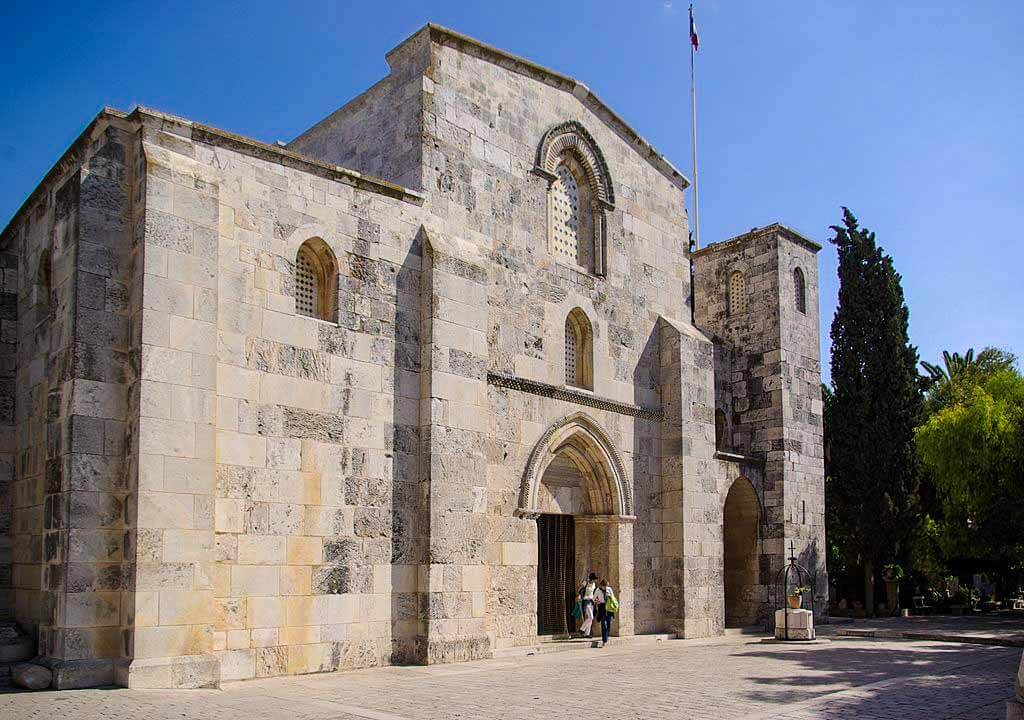
The cave beneath the Church of Saint Anne marks the birthplace of Sayyidah Maryam, mother of Nabi Isa (AS), near Bab al-Asbat in Jerusalem’s Old City. The…
The cave beneath the Church of Saint Anne marks the birthplace of Sayyidah Maryam, mother of Nabi Isa (AS), near Bab al-Asbat in Jerusalem’s Old City. The site is known in Arabic as كنيسة القديسة حنة والمدرسة الصلاحية, the Church of Saint Anne and al-Madrasa al-Salahiyya. It stands west of Bab al-Asbat, close to the northern side of Masjid al-Aqsa. The birth and upbringing of Sayyidah Maryam The Qur’an begins the story of Sayyidah Maryam before her birth. The wife of Imran dedicated the child in her womb to the service of Allah. When she gave birth to a daughter, she named her Maryam and sought Allah’s protection for her and her descendants. “˹Remember˺ when the wife of ’Imrân said, ‘My Lord! I dedicate what is in my womb entirely to Your service, so accept it from me. You ˹alone˺ are truly the All-Hearing, All-Knowing.’ When she delivered, she said, ‘My Lord! I have given birth to a girl,’—and Allah fully knew what she had delivered—‘and the male is not like the female. I have named her Mary, and I seek Your protection for her and her offspring from Satan, the accursed.’ So her Lord accepted her graciously and blessed her with a pleasant upbringing—entrusting her to the care of Zachariah.” Surah Ali ‘Imran 3:35–37 Nabi Zakariyya (AS) became the guardian of Sayyidah Maryam. Whenever Nabi Zakariyya (AS) entered her sanctuary, he found her supplied with provisions. Sayyidah Maryam later became the mother of Nabi Isa (AS), whom Allah created without a father. From church to al-Madrasa al-Salahiyya The present church was built during the Crusader period in the sixth Islamic century, corresponding to the twelfth century, above the cave associated with the birth of Sayyidah Maryam. Earlier religious buildings had occupied the wider site before the present structure was erected. After Salahuddin al-Ayubi liberated Jerusalem in 583 AH/1187, the building was converted in 588 AH/1192 into al-Madrasa al-Salahiyya, a madrasa for teaching Shafi‘i fiqh, one of the four principal schools of Sunni Islamic law. Its endowment formed part of Salahuddin al-Ayubi’s renewal of Islamic learning in Jerusalem following the city’s liberation. An Arabic foundation inscription above the entrance records the building’s life as al-Madrasa al-Salahiyya. The cave marking the birthplace of Sayyidah Maryam remained part of the site during the madrasa period. The complex was returned to church use in the nineteenth century and is now known as the Church of Saint Anne.