The Battle of Hattin was fought here on 4 July 1187, when Salahuddin al-Ayubi decisively defeated the main Crusader army and opened the road to the recovery…
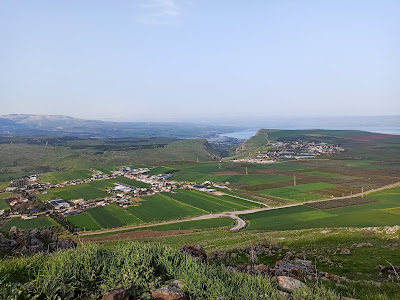
The Battle of Hattin was fought here on 4 July 1187, when Salahuddin al-Ayubi decisively defeated the main Crusader army and opened the road to the recovery of al-Quds. Known in Arabic as Ma‘rakat Hattin (معركة حطين), the battlefield lies west of Lake Tiberias among the hills and plains surrounding Hattin. The engagement takes its name from the nearby twin heights known as the Horns of Hattin. The march from Saffuriya By 583 AH, Salahuddin al-Ayubi had brought Egypt and much of Syria under Ayyubid rule, allowing Muslim forces from across his territories to campaign together. After he attacked Tiberias, Guy of Lusignan led the Crusader field army east from the well-watered camp at Saffuriya to relieve the city. Salahuddin al-Ayubi’s cavalry harassed the advancing columns and separated them from reliable water. Unable to reach Lake Tiberias, the Crusader army halted in the exposed country around Hattin. Contemporary accounts describe intense thirst, smoke from fires in the dry grass and repeated Muslim attacks as the army’s formation broke apart. The victory at Hattin On 25 Rabi al-Akhir 583 AH, corresponding to 4 July 1187, Salahuddin al-Ayubi’s forces surrounded and overwhelmed the Crusader army. Guy of Lusignan and many leading nobles were captured, while the relic known among the Crusaders as the True Cross was taken from the field. Among the captives was Reynald of Châtillon, whose attacks on caravans and violation of truces had made him a principal enemy of Salahuddin al-Ayubi. Salahuddin al-Ayubi spared Guy but killed Reynald after the battle. The road to al-Quds Hattin removed the principal Crusader field army from Palestine. In the following months, Salahuddin al-Ayubi recovered Tiberias, Acre, Nablus, Jaffa, Asqalan and other towns before al-Quds surrendered on 2 October 1187. Masjid al-Aqsa returned to Muslim worship nearly nine decades after the First Crusade had seized the city in 1099.