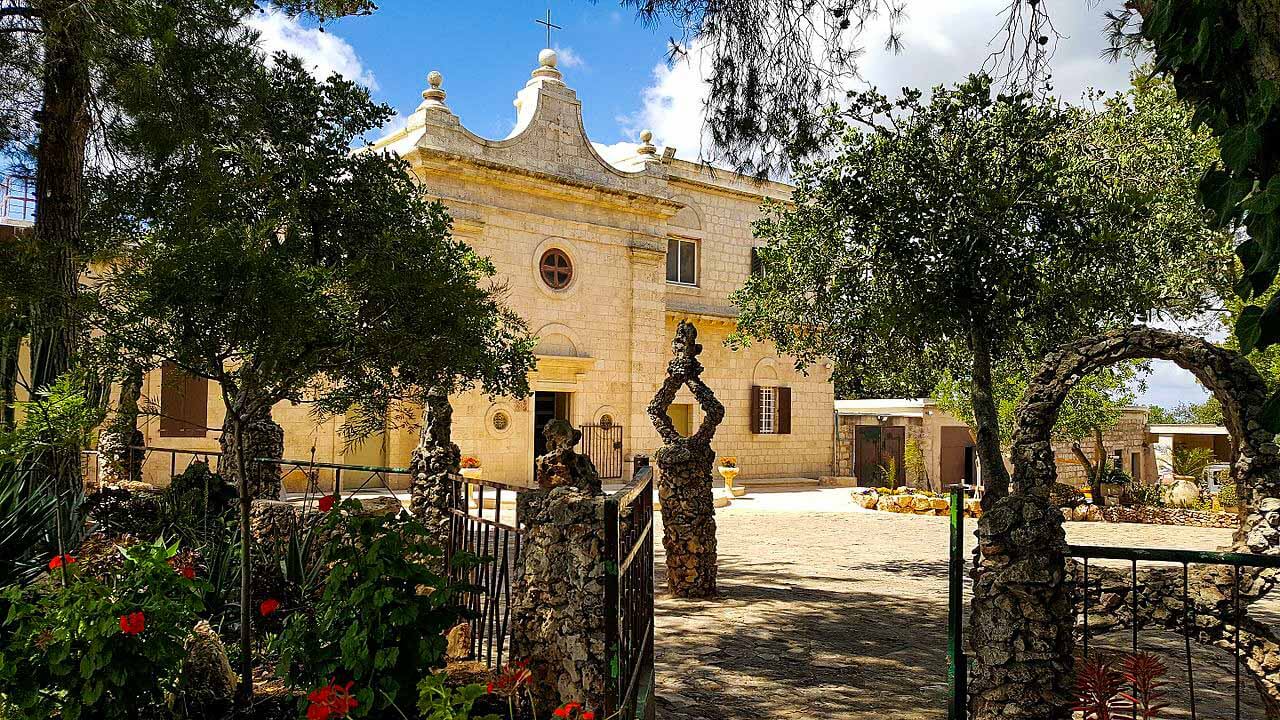
This is the Mount Carmel site where tradition places Nabi Ilyas’s (AS) confrontation with the priests of Baal and the descent of fire upon his offering. Known…
This is the Mount Carmel site where tradition places Nabi Ilyas’s (AS) confrontation with the priests of Baal and the descent of fire upon his offering. Known as al-Muhraqa (المحرقة), meaning “the place of burning,” it stands on the southeastern side of Mount Carmel near Daliyat al-Karmel in northern Palestine. A Carmelite monastery now marks the location. Nabi Ilyas and the call against Baal Nabi Ilyas (AS), known in English as Elijah, was one of the Prophets sent among Bani Isra’il. The Qur’an records his direct challenge to a people who had turned to Baal, calling them back to Allah, the Lord of their forefathers. “When he said to his people, ‘Will you not fear Allah? Do you call upon Ba’l and abandon the Best of Creators—Allah, your Lord and the Lord of your forefathers?’” Surah as-Saffat 37:124–126 The Qur’anic passage continues by describing how his people rejected him, while preserving peace and honour for Nabi Ilyas (AS) among later generations. The fire on Mount Carmel Christian tradition relates that Nabi Ilyas (AS) confronted the priests of Baal on Mount Carmel during the reign of King Ahab. Each side prepared an offering and called for fire to descend. The priests of Baal received no answer, while Nabi Ilyas (AS) repaired an altar, placed his offering upon it and had water poured around it. Fire then consumed the offering, establishing the truth of his call before those assembled. The present monastery dates from the nineteenth century. Its church contains an altar formed from twelve stones in memory of the event, while the site also preserves a cistern associated with the account. Carmelite records cite medieval pilgrims who found an altar here and described the place as honoured by Muslims, Christians and Jews in connection with Nabi Ilyas (AS) and his sacrifice.