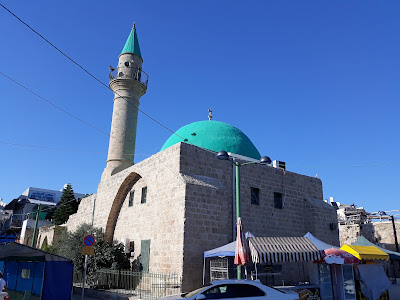
Built in 1158 AH (1745 CE) during the rule of Zahir al-Umar al-Zaydani, al-Zaytun Mosque (جامع الزيتونة) belongs to the Ottoman-period renewal of Muslim Acre.…
Built in 1158 AH (1745 CE) during the rule of Zahir al-Umar al-Zaydani, al-Zaytun Mosque (جامع الزيتونة) belongs to the Ottoman-period renewal of Muslim Acre. The mosque occupies the site of a church dedicated to Mary Magdalene during the Crusader period. Its name means “the Mosque of the Olive”. Local tradition connects it with olive trees that once grew in its courtyard, while another account links the name with the celebrated Zaytuna Mosque of Tunis. A mosque in Zahir al-Umar’s Acre Zahir al-Umar governed much of northern Palestine during the eighteenth century and made Acre the centre of his power. The city’s port, markets, fortifications and religious institutions expanded under his rule, establishing the urban framework later developed by successive Ottoman governors. The mosque stands in the southern part of Acre’s former Hospitaller quarter, south of the Shadhiliyya-Yashrutiyya Zawiya, a lodge for worship, teaching and retreat. It is also close to Hammam al-Basha and the historic route between that bathhouse and al-Jarina Square. Shaykh Ali Nur al-Din al-Yashruti During the nineteenth century, Shaykh Ali Nur al-Din al-Yashruti taught at al-Zaytun Mosque after settling in Acre. Born in Bizerte in Tunisia, he established the Yashrutiyya branch of the Shadhiliyya tradition in the city. His teaching at the mosque preceded the establishment of the nearby zawiya, which became the institution most closely associated with his life in Acre. The mosque was supported through a waqf, an endowed property established to fund a religious or charitable institution. Records connect its administration with the family of Shaykh Nur al-Sadiq around 1316–1323 AH (1898–1905 CE).