Baghdad
كان السيد الشيخ أبو عساف زوين العيثاوي الرفاعي الموسوي الحسيني شخصية دينية عراقية مرموقة ارتبطت بالبوعيثة، جنوب بغداد، في أواخر العهد العثماني. وتذكره مصادر…
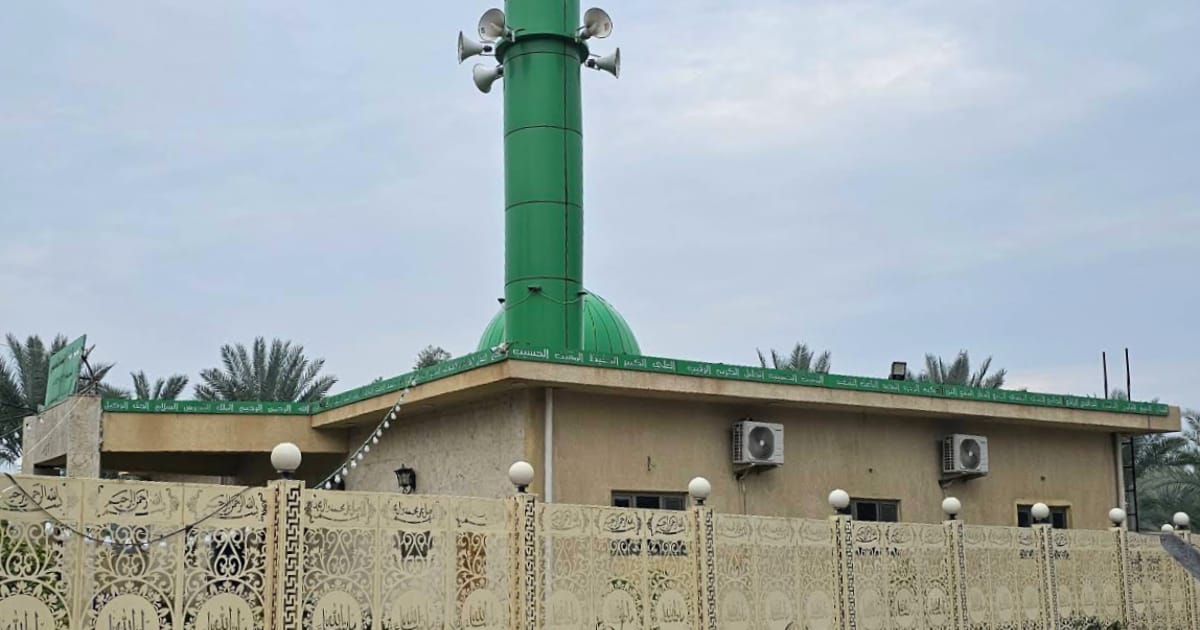
Sayyid Shaykh Abu 'Asaf Zuwayn al-'Aythawi al-Rifa'i al-Musawi al-Husayni was a respected Iraqi religious figure associated with al-Bu'aytha, south of Baghdad, during the late Ottoman period. Iraqi genealogical and local sources remember him as a man of religious learning, piety and spiritual standing, and his grave remains one of the best-known historic religious sites of the al-Bu'aytha community. Iraqi documentation of the graves of Baghdad describes him as a Shafi'i jurist and Rifa'i shaykh, and gives his death as 1316 AH / 1898 CE. Unlike figures from the early Islamic centuries, Zuwayn's life is not preserved in extensive classical biographical dictionaries. Much of what survives comes from Iraqi genealogical works, the traditions of the Sadah al-Bu'aytha, and records surrounding his grave and his descendants. His lineage His name is commonly given as Zuwayn ibn Zahir ibn 'Asaf, while family genealogical traditions preserve a longer ancestry connecting him with the religious household of Shaykh 'Abdullah, known as Mashyukh al-Natur. The al-Bu'aytha families traditionally identify themselves as Rifa'i, Musawi and Husayni sayyids, tracing their ancestry through Sayyid Ahmad al-Rifa'i and ultimately to the Ahl al-Bayt. This lineage continues to form an important part of the identity of Zuwayn's descendants and of the wider al-Bu'aytha community. A religious figure of al-Bu'aytha Zuwayn was remembered principally as a religious shaykh rather than a political figure. Local accounts describe him as a man of knowledge, worship and good character, and later generations commonly refer to him as al-wali al-salih, the righteous saint. That description is not limited to oral family tradition. The Iraqi genealogist Yunus al-Shaykh Ibrahim al-Samarra'i, writing on the Hashimi houses of Iraq, mentions Zuwayn directly when discussing the family: The righteous saint, Shaykh Zuwayn. Yunus al-Shaykh Ibrahim al-Samarra'i, Ansab al-Qaba'il wa'l-Buyutat al-Hashimiyyah fi al-'Iraq, p. 87 Al-Samarra'i also records that he was buried in one of the orchards of al-Dawrah beside the River Tigris, which gives an independent written Iraqi reference for both his reputation and his burial place. The Rifa'i tradition Zuwayn belonged to an environment strongly connected with the Rifa'i tradition associated with Sayyid Ahmad al-Rifa'i. His descendants and the Sadah al-Bu'aytha continue to identify their religious heritage with this lineage, and gatherings, dhikr and devotional poetry connected with the Rifa'i tradition are still held in places bearing his name. Later local descriptions therefore commonly give his full attribution as al-'Aythawi al-Rifa'i al-Musawi al-Husayni. His importance was not simply that of an individual teacher: he became one of the principal ancestral religious figures through whom later generations of the al-Bu'aytha community understood their spiritual and family heritage. His family and continuing influence The religious reputation associated with Zuwayn continued within his household. Local family accounts particularly remember his daughter Sayyidah Safrah, born in al-Bu'aytha in 1886, who is described as having grown up under her father's religious instruction. His descendants remained prominent among the Sadah al-Bu'aytha, and the names of later tribal and religious leaders continue to be given through him, such as Shaykh Hamid ibn Shaykh Zuwayn and those who came after him. The leadership and religious institutions of the community still invoke his name, showing how firmly his memory remains embedded in the identity of the tribe. Death and burial Shaykh Zuwayn is reported to have died in 1316 AH / 1898 CE. He was buried in the al-Bu'aytha area of al-Dawrah, south of Baghdad, close to the Tigris. The burial ground is today known as Maqbarat Umm al-'Asafir (مقبرة أم العصافير), and his grave is the principal one within it. Local documentation continues to identify the site explicitly as the grave of Shaykh Zuwayn al-'Aythawi, and it is formally mapped under his name in the al-Bu'aytha district of Baghdad. His legacy Shaykh Zuwayn al-'Aythawi is remembered as one of the principal religious ancestors of the Sadah al-Bu'aytha, a late Ottoman-era Iraqi shaykh whose standing rested on religious learning, piety and spiritual leadership. His historical footprint is more local than that of the great medieval scholars of Baghdad, and that is precisely what makes his grave significant. His memory has remained rooted in the same community in which he lived: his descendants carry his name, religious gatherings are still associated with him, and his grave remains in the orchards of southern Baghdad where Iraqi genealogical tradition recorded his burial. More than a century after his death he is still known by the title al-Samarra'i recorded, the righteous saint, Shaykh Zuwayn. Principal sources The most useful written reference located for Shaykh Zuwayn is Yunus al-Shaykh Ibrahim al-Samarra'i, Ansab al-Qaba'il wa'l-Buyutat al-Hashimiyyah fi al-'Iraq, p. 87, which identifies him as a righteous religious figure and records his burial near the Tigris in al-Dawrah. Further details concerning his lineage, Rifa'i affiliation, death in 1316 AH and the traditions surrounding his grave are preserved chiefly within Iraqi al-Bu'aytha genealogical and community records.