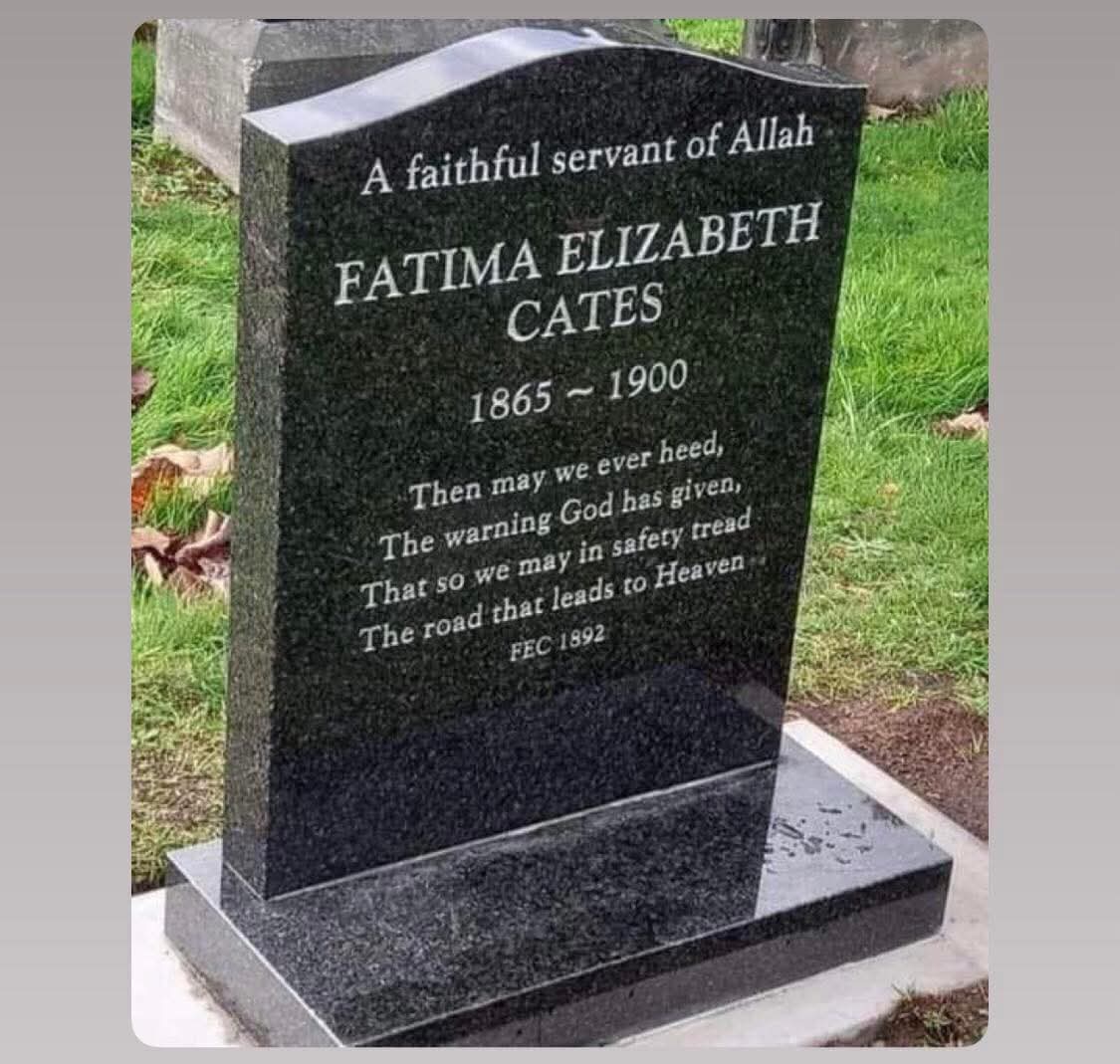
Early Life and Conversion Fatima Elizabeth Cates was born as Frances Elizabeth Murray on 5 January 1865 in Birkenhead, England. Raised in a Christian…
Early Life and Conversion Fatima Elizabeth Cates was born as Frances Elizabeth Murray on 5 January 1865 in Birkenhead, England. Raised in a Christian household, she later became involved in the Temperance Movement, working as secretary of the local Association for the Prohibition of Alcohol in Birkenhead. Around the age of 21, after attending a lecture by Abdullah Quilliam, she embraced Islam in 1887 and adopted the name Fatima. She continued her personal study of the Qur’an, guided by her own convictions. Role in the Liverpool Muslim Institute Shortly after her conversion, Fatima joined Abdullah Quilliam and fellow converts in establishing the Liverpool Muslim Institute — Britain’s first organized Muslim community. She was appointed its first treasurer and held that position for several years. Her dedication extended to founding and overseeing a Muslim day school for girls, and she served actively on the Institute’s Ladies Committee. Writings and Advocacy Fatima contributed to multiple publications, writing about Islam and the Institute’s activities. In 1892 she authored the poem “A Muslimah’s Prayer,” which was incorporated into the Institute’s hymnal. She also penned a dedication to Shah Jahan Begum of Bhopal and corresponded with Muslim activists on strategies for promoting Islam in Britain. Personal and Later Life She had one son, Hubert Haleem, born in 1896. Fatima’s health declined later in life; she fell ill in late October 1900 and passed away on 29 October 1900. Shortly before her death, she entrusted the care of her child and her funeral arrangements to Abdullah Quilliam. She was laid to rest in Anfield Graveyard, Liverpool. Fatima Elizabeth Cates remains an important figure in the early history of Islam in Britain — one of the first women to convert and the first to take on a formal leadership role in a mosque community. Her commitment to education, community-building, and writing continues to inspire scholars and civil society today.