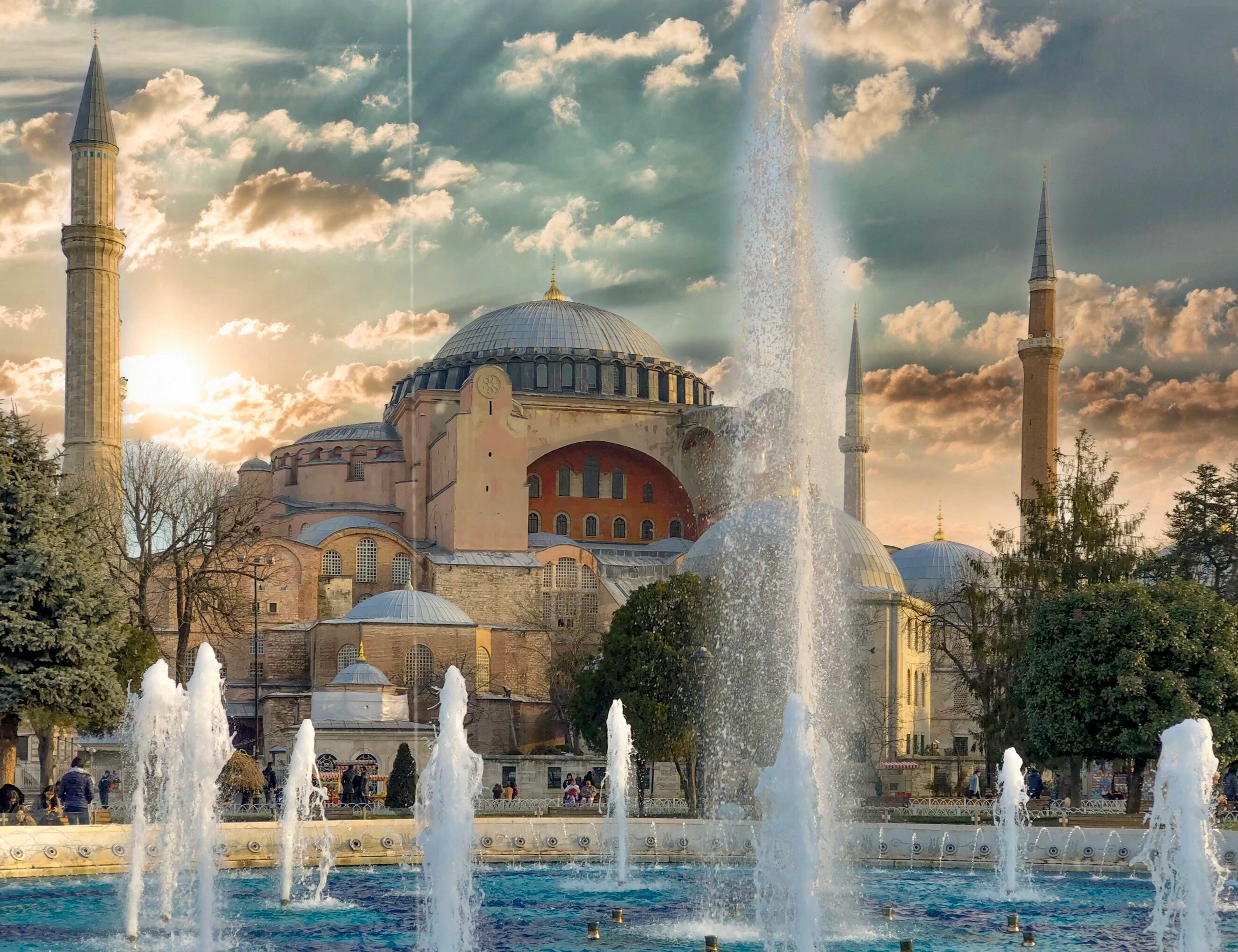
Hagia Sophia is one of the most iconic landmarks in the world and a symbol of the rich Islamic and civilisational history of Istanbul. Originally built as a…
Hagia Sophia is one of the most iconic landmarks in the world and a symbol of the rich Islamic and civilisational history of Istanbul. Originally built as a church in the 6th century during the Byzantine Empire, it was transformed into a mosque in 1453 after the conquest of Constantinople by Sultan Muhammad al-Fatih , fulfilling a prophecy long held by the Muslims of that time. For nearly 500 years, Hagia Sophia stood as a central masjid of the Ottoman Empire. It was honoured with the call to prayer, the Friday khutbah, and the footsteps of countless scholars, sultans, and worshippers. The great Ottoman architect Mimar Sinan even reinforced its structure, helping to preserve it for generations. Its vast dome, marble columns, and intricate Islamic calligraphy bearing the names of Allah , Muhammad ﷺ , and the Rightly Guided Caliphs remain powerful expressions of Islamic artistry and reverence. While Hagia Sophia was turned into a museum in the 20th century, it was officially restored as a mosque in 2020 , and prayers resumed within its walls. Salah is offered inside once again, continuing centuries of worship in this space. Hagia Sophia is more than just a historical building — it represents the legacy of Islamic civilisation, the fulfilment of a long-held dream, and the enduring presence of Islam in the heart of Istanbul. Its walls carry echoes of dhikr, Qur’an recitation, and the legacy of those who upheld the deen in every generation.
test
test 2