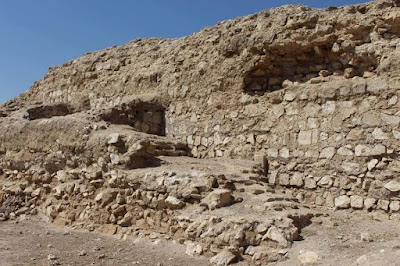
Located near the Euphrates River, Hergla Palace (Qasr Hergla) is one of the most important archaeological sites in the Raqqa region, believed to date back to…
Located near the Euphrates River, Hergla Palace (Qasr Hergla) is one of the most important archaeological sites in the Raqqa region, believed to date back to the Abbasid period, specifically the time of Caliph Harun al-Rashid. According to historical accounts, it was constructed to commemorate a major Abbasid victory over the Romans, and it remains one of the few sites in the region that retains its original name. The palace sits atop a raised platform in the form of a mastaba, with a square base flanked by four large circular towers. A circular defensive wall surrounds the palace, featuring four monumental gates aligned with the corners, each preceded by niches opening outward. The structural layout points to a blend of military and ceremonial use, reflective of the grandeur of Abbasid-era architecture. Within the palace complex are the remains of bathhouses and a limestone-built enclosure wall, thought to date to the late Roman–Byzantine period, revealing layers of continuous settlement and reuse over centuries. The construction materials used include baked brick, friable limestone, gypsum stone, river gravel, and plaster mortar. The gypsum stones, measuring 70–90 cm, were primarily used for gates and structural supports, while softer limestone, vulnerable to erosion, was used for the outer façades, towers, and iwans. Notably, the site is unique among Raqqa's ruins in preserving its ancient name, “Hergla,” and symbolises the historical identity of the region. Though partially eroded by natural elements, the palace stands as a rare example of Abbasid defensive architecture and its imperial presence in northern Syria.