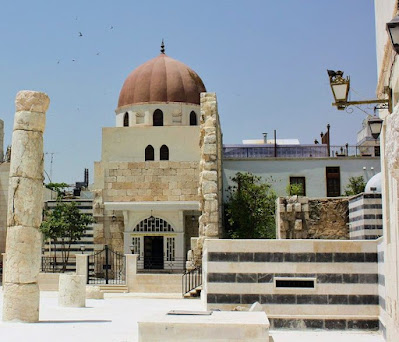
Sultan Ṣalāḥ al-Dīn Yūsuf ibn Ayyūb was born into a Kurdish family in Tikrit in approximately 532 AH/1137–1138 CE. He rose to prominence through the service…
Sultan Ṣalāḥ al-Dīn Yūsuf ibn Ayyūb was born into a Kurdish family in Tikrit in approximately 532 AH/1137–1138 CE. He rose to prominence through the service of Nur al-Din Zangi, later becoming ruler of Egypt, ending Fatimid rule and establishing the Ayyubid dynasty. He gradually united Egypt, Syria and neighbouring Muslim territories, recognising that political unity was essential to confronting the Crusader states. His greatest victory came at the Battle of Hattin in 583 AH/1187 CE, where the principal Crusader army was defeated. Soon afterwards, he restored Jerusalem to Muslim rule after approximately eighty-eight years of Crusader occupation. Masjid al-Aqsa was restored for Muslim worship, and the first Jumuʿah prayer following the victory was held at Masjid al-Aqsa. Ṣalāḥ al-Dīn also brought the magnificent wooden minbar commissioned by Nur al-Din Zangi from Aleppo and installed it inside Masjid al-Aqsa, where it remained until its destruction by fire in 1969. Ṣalāḥ al-Dīn is remembered not only for his military achievements but also for his courage, generosity, devotion and dignified treatment of defeated opponents. He died in Damascus in 589 AH/1193 CE and was first buried within the Citadel. His remains were later transferred to the present mausoleum beside the northern wall of the Umayyad Mosque, within the former al-ʿAziziyyah Madrasa established by his son. Inside the chamber stands his original carved walnut cenotaph, beside an empty marble cenotaph presented during the visit of German Emperor Wilhelm II in 1898. Within and around the mausoleum courtyard are several other graves, including those of the pioneering Ottoman aviators Fethi Bey, Ṣādık Bey and Nuri Bey, former Iraqi prime minister Yasin al-Hashimi, Syrian nationalist leader Dr ʿAbd al-Rahman al-Shahbandar, and the Syrian scholar Shaykh Muhammad Saʿid Ramadan al-Buti, who was buried beside the mausoleum in 2013.