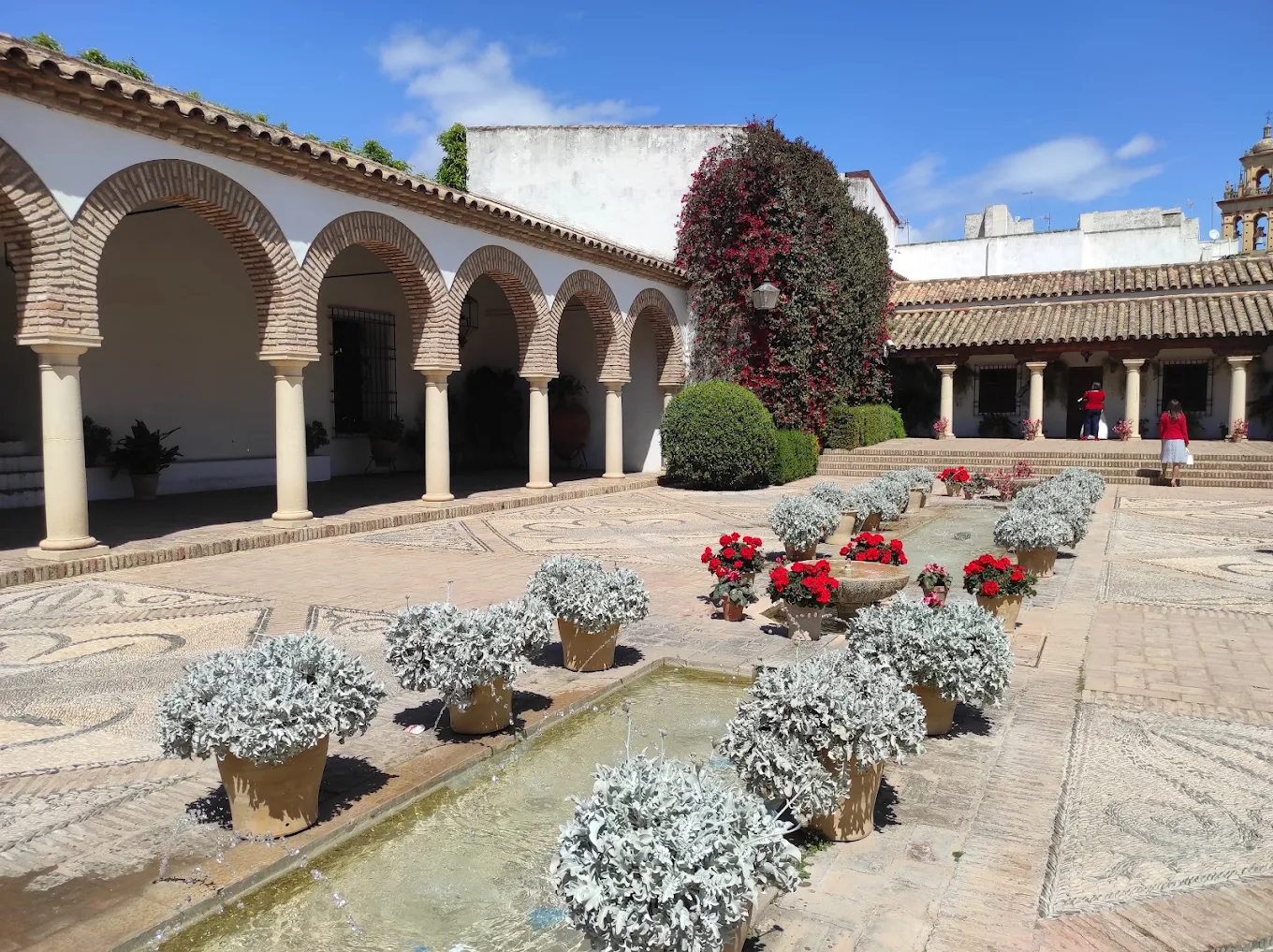
The Palacio de Viana is a stately palace in Córdoba, built in the 15th century and later expanded by Spanish noble families. While it is a post-Islamic…
The Palacio de Viana is a stately palace in Córdoba, built in the 15th century and later expanded by Spanish noble families. While it is a post-Islamic construction, its most celebrated feature—the twelve interconnected patios and lush garden—is deeply rooted in the Andalusī (Islamic) tradition of courtyard design. The palace’s courtyards are arranged around fountains, orange trees, and flowering plants, reflecting the Islamic legacy of Córdoba where the inward-facing patio served as the heart of domestic life. This style, developed under Muslim rule, fused the Roman impluvium with the Islamic vision of paradise gardens, creating intimate spaces of shade, water, and greenery. The Patio de los Naranjos (Courtyard of the Orange Trees) in particular mirrors the Muslim love of citrus gardens, echoing similar spaces in the Great Mosque of Córdoba and countless Andalusī homes. Although Muslims did not build the Palacio de Viana, its layout is a living continuation of the Islamic architectural language that defined Córdoba for centuries. The palace thus illustrates how Andalusī design principles endured beyond the Reconquista, influencing Christian and noble architecture well into the Renaissance and Baroque periods. Today, the palace is open to visitors, offering a unique opportunity to experience the legacy of Islamic Córdoba’s domestic architecture reframed in a later aristocratic context.