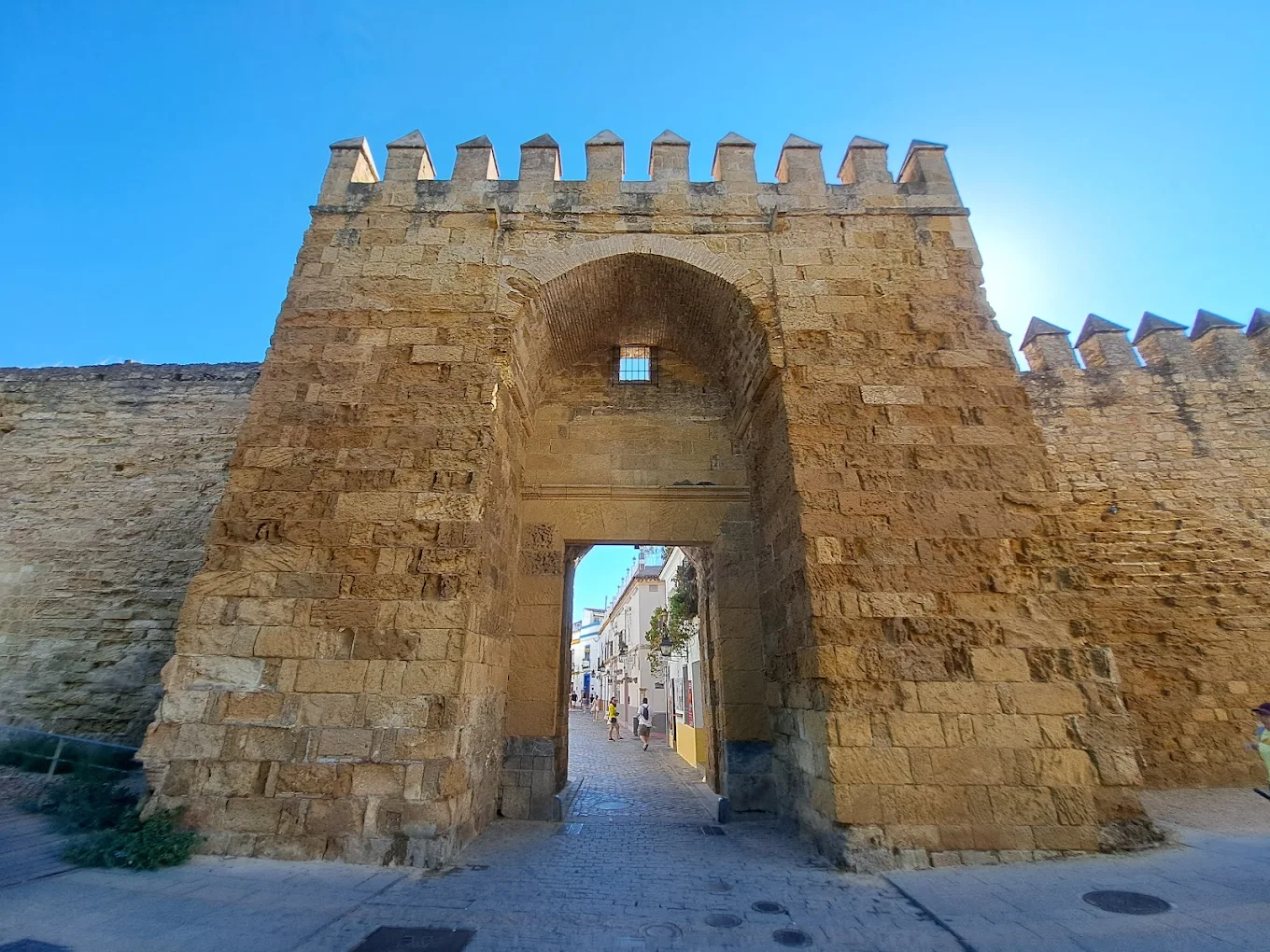
The Almodóvar Gate, set along the Muralla de la calle Cairuán, is one of the few surviving gateways of Córdoba’s Islamic city walls. Built during the Umayyad…
The Almodóvar Gate, set along the Muralla de la calle Cairuán, is one of the few surviving gateways of Córdoba’s Islamic city walls. Built during the Umayyad period and later reinforced in the Almohad era (12th century), it once controlled entry into the medina from the west. Originally known as Bāb al-Chawz (“Gate of the Walnut Tree”), it served as a key access point to the bustling heart of caliphal Córdoba. The gate consists of a robust stone archway flanked by towers, typical of Andalusī defensive architecture. Beyond its military function, it was also symbolic: passing through its arch marked the threshold from the open countryside into the protected, vibrant life of the Islamic city. After the Christian conquest of 1236, the gate was preserved and renamed Puerta de Almodóvar, after the road that led from Córdoba to the town of Almodóvar del Río. Today, it remains one of the most evocative vestiges of Córdoba’s Islamic fortifications, standing beside the leafy promenade of Cairuán Street. A statue of Averroes (Ibn Rushd) nearby recalls the scholars who once walked through this gate, linking the monument not only to Córdoba’s defensive past but also to its role as a city of learning.