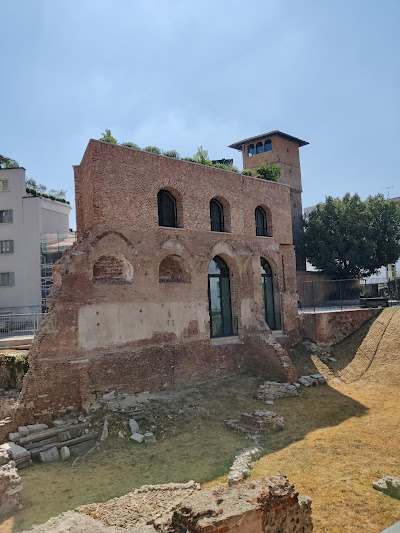
The Palacio del Emperador Maximiano Hercúleo, located at the Cercadilla archaeological site near Córdoba’s train station, is the ruined remains of a…
The Palacio del Emperador Maximiano Hercúleo, located at the Cercadilla archaeological site near Córdoba’s train station, is the ruined remains of a monumental Roman palace built at the end of the 3rd century CE. It dates from the time of Emperor Maximianus Herculeus, who visited Hispania between 296 and 297 AD, and served as one of the grandest imperial residences in Roman Spain. The palace was constructed on top of a suburban villa from the High Imperial period, reflecting Córdoba’s importance as an administrative centre of the Empire. Its complex design included audience halls, courtyards, baths, and living quarters, arranged to project imperial power and prestige. In the Visigothic period, the site was converted into the basilica of the martyr San Acisclo, one of Córdoba’s patron saints. Later, during the Islamic period, the area was absorbed into the expanding suburbs of the city, with parts of the Roman structures reused or built over. Rediscovered through modern excavations, the palace illustrates the continuity of Córdoba’s urban fabric—from Roman imperial power, through Visigothic Christian devotion, to the splendour of Umayyad Córdoba. Today, the site allows visitors to explore one of the city’s most important archaeological layers beneath its Islamic golden age.