Abu Sa'id Sa'd ibn Malik ibn Sinan al-Khazraji al-Khudri (RA) (d. 74 AH) was one of the youngest Companions of the Prophet ﷺ and one of the most prolific…
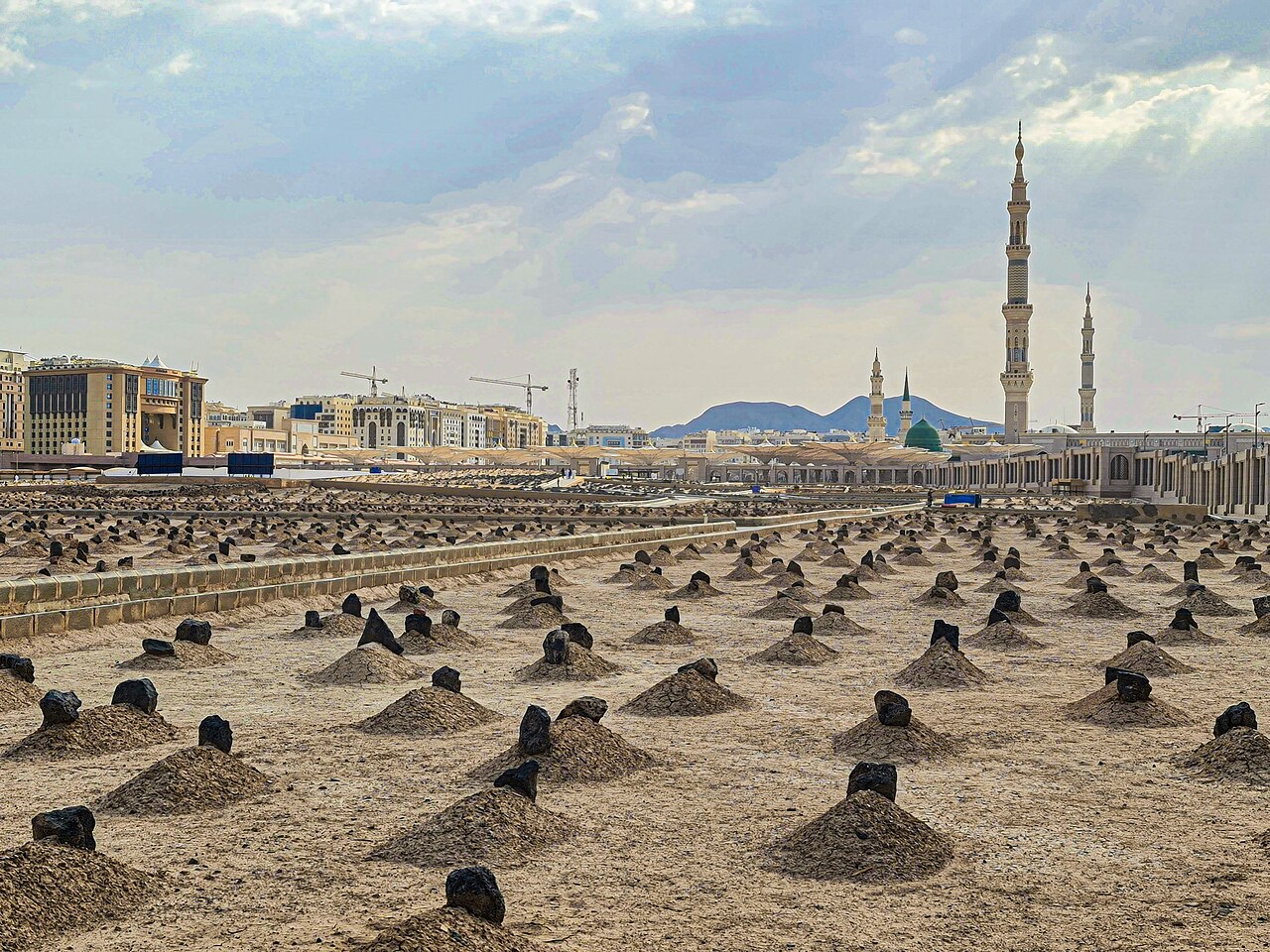
Abu Sa'id Sa'd ibn Malik ibn Sinan al-Khazraji al-Khudri (RA) (d. 74 AH) was one of the youngest Companions of the Prophet ﷺ and one of the most prolific narrators of hadith in Islam. His grave lies inside the Baqi graveyard in Madinah, near the boundary wall a considerable distance from the entrance. Turned back at Uhud He belonged to the Ansar, to the Banu Khudrah of the Khazraj, and took his teknonym from that clan. In 3 AH, aged about thirteen, he was brought before the Prophet ﷺ by his father Malik ibn Sinan (RA) to be enlisted for Uhud; the Prophet ﷺ looked him over and sent him home for his age. His father fought that day and was martyred. Abu Sa'id (RA) was accepted from the Battle of the Trench onwards and served in twelve expeditions. Hunger, and the words that shaped him The household was left poor after Uhud. He came to the Prophet ﷺ to ask for help, and was answered before he could speak: "Whoever seeks to abstain from asking, Allah will make him content; whoever seeks self-sufficiency, Allah will make him self-sufficient; and whoever seeks patience, Allah will grant him patience. No one is given a gift better or more far-reaching than patience." Sahih al-Bukhari 1469 He went back without asking. The years that followed were spent instead in the suffah , the shaded area of the Prophet's Mosque where the poor of the Companions sat and where the Prophet's ﷺ words were heard first-hand and committed to memory. A prolific narrator He transmits 1,170 hadith. Bukhari and Muslim both narrate 111 of them, with a further sixteen narrated by Bukhari alone and fifty-two by Muslim alone; his narrations run through all six of the canonical collections. Among what reaches us through him are some of the best-known reports in the religion, including: "Whoever among you sees an evil, let him change it with his hand; if he cannot, then with his tongue; and if he cannot, then with his heart — and that is the weakest of faith." Sahih Muslim 49 He narrated from the Prophet ﷺ, from Abu Bakr, Umar and Uthman (RA), from Zayd ibn Thabit (RA) and from his own father. Those who took from him include Ibn Abbas and Jabir ibn Abdillah (RA) among the Companions, and Sa'id ibn al-Musayyib, Ata ibn Abi Rabah, Nafi' and Abu Salama ibn Abd al-Rahman among the generation after them. The jurist of the young Companions His scholarly standing was recognised in his own lifetime, and he was counted among the jurists who gave verdicts in Madinah. Hanzala ibn Abi Sufyan al-Jumahi said of him: "There was none among the younger Companions of the Messenger of Allah ﷺ more learned in the religion than Abu Sa'id al-Khudri." Ibn Sa'd, al-Tabaqat al-Kubra; al-Dhahabi, Siyar A'lam al-Nubala He was known for how he received students. When young men came to him to learn he would greet them with the Prophet's ﷺ own charge concerning the seekers of knowledge, welcoming them as a trust left to him rather than as an interruption. Sunan Ibn Majah 247 The Battle of Harrah In 63 AH the Umayyad army entered Madinah and the fighting known as al-Harrah fell on the city. Abu Sa'id (RA), then an old man, withdrew into a cave to keep out of it. A soldier found him there; he neither resisted nor argued, and the man took what he had and left him. He had spent his youth defending the city in arms and his age refusing to raise them within it. His grave He died in Madinah in 74 AH and was buried in the Baqi graveyard. His resting place is towards the far side of the field, near the boundary wall and at some distance from the entrance. As with the whole of Baqi, the ground is unmarked and level.
This site is located within Jannat al-Baqi Graveyard.