Abu Sulayman Dawud ibn Nusayr al-Ta'i (أبو سليمان داود بن نصير الطائي) is remembered above all for a transformation: he walked out of one of the most…
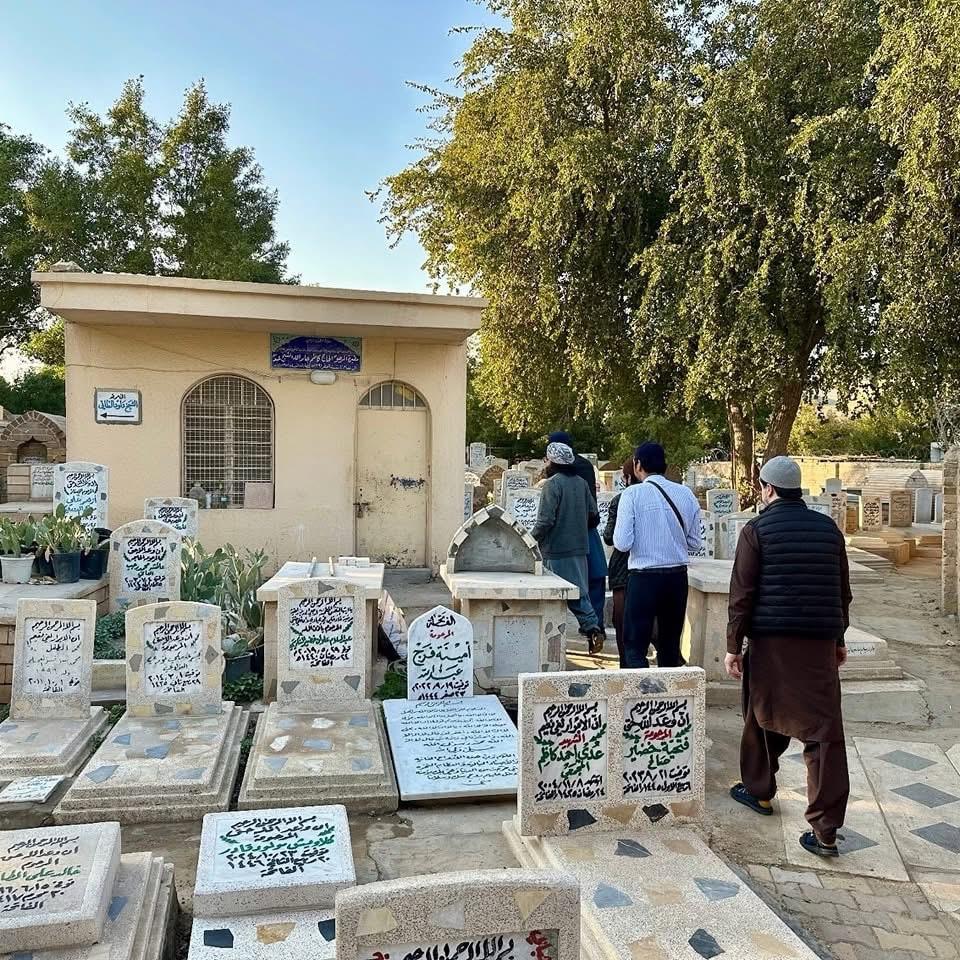
Abu Sulayman Dawud ibn Nusayr al-Ta'i (أبو سليمان داود بن نصير الطائي) is remembered above all for a transformation: he walked out of one of the most respected legal circles in Kufa and spent the rest of his life trying to make his knowledge real. He had been a formidable scholar, a master of Arabic and hadith, and a front-rank student of Imam Abu Hanifa. What made him famous, however, was not what he knew, but what he left behind once he decided that knowing was no longer enough. The scholar in Abu Hanifa's circle He was a formidable debater — quick, well armed, hard to beat in an argument. Abu Hanifa himself once reproved him that his tongue and his hand had gone further than they should. This was a man at the height of his standing, not someone leaving because he had failed. The sentence that turned him Abu Nu'aym preserves the exchange that changed his life. Dawud was still in the circle when his teacher spoke: "Abu Sulayman, we have now perfected the tools." "Then what remains?" "What remains is to act upon it." Abu Nu'aym al-Isfahani, Hilyat al-Awliya He heard it as an instruction. Years later he gave the same lesson in his own words, comparing a lifelong student to a soldier who spends his whole life collecting weapons and never goes out to fight. "Knowledge is the instrument of action. If a person spends his entire life acquiring it, when will he act?" Abu Nu'aym al-Isfahani, Hilyat al-Awliya A year of holding his tongue He did not leave immediately. First he tested himself. For a full year he kept attending the gatherings and refused to answer a single question. A legal problem would be raised, and he would want to speak, he said, more than a thirsty man wants water — and he would stay silent. Only when he was certain he could hold his tongue did he withdraw. His silence was a discipline chosen by a man who could out-argue the room. The most famous story about the break is that he put his books into the Euphrates. Sufyan ibn Uyaynah transmits it, and al-Dhahabi records it in careful phrasing. What is beyond doubt is the outcome: he abandoned disputation altogether and gave the remainder of his life to worship and seclusion. Thirty years on four hundred dirhams He inherited four hundred dirhams from his mother and lived on it for roughly thirty years. When it ran out, he began selling the timber out of his own roof. His house was a near-ruin with almost nothing in it, and when someone suggested he fit a door because the place looked frightening and lonely, he answered that once a man has thought about the loneliness of the grave, the loneliness of a house stops meaning anything. His neighbour Umm Sa'id, separated from him by a low wall, said she heard him weeping through much of the night, and that before dawn he recited the Qur'an so beautifully it seemed every delight had been gathered into his voice. Yet he timed his walk to the masjid to arrive as the prayer began and went straight home after it — solitary, but never cut off from the congregation. "Fast from the world" Asked for advice, he began with the two things he never let anyone skip: fear of Allah, and honouring one's parents, which he repeated several times over. Then came the counsel he is remembered for. "Fast from the world, and let your breaking of the fast be death." al-Qushayri, al-Risala al-Qushayriyya What his peers said of him Sufyan al-Thawri held him in awe, and Abd Allah ibn al-Mubarak — a scholar and ascetic of the first rank himself — asked simply: "Is the matter anything other than what Dawud is upon?" Sufyan ibn Uyaynah summed up the whole life in a sentence: he gained understanding, then he learned, then he acted. His own words carried the same economy. "Certainty is sufficient as renunciation; knowledge is sufficient as worship; and worship is sufficient occupation." al-Dhahabi, Siyar A'lam al-Nubala The funeral that broke the stretcher He spent one night repeating a verse about the Fire and was ill by morning; those who entered his house afterwards found him dead with his head resting on a brick. The man who had spent decades trying to disappear was carried out in front of crowds so dense that the stretcher broke and had to be replaced, one witness losing his sandals and having his cloak dragged from his shoulder. People had gathered for nights beforehand, afraid of missing it. Al-Dhahabi closes his biography by saying Kufa was left with no one like him. He died in 162 AH (c. 778 CE), with 165 AH also reported. The domed maqam in Karkh Al-Khatib al-Baghdadi records that Dawud came to Baghdad in the caliphate of al-Mahdi, and he is buried beneath the domed maqam that still carries his name on the Karkh side of the city. The large graveyard that grew up around it is known today as Bab al-Rahmah cemetery. The site marks a man whose legacy is not a school of law but a single, unforgettable turn from reputation toward solitude.