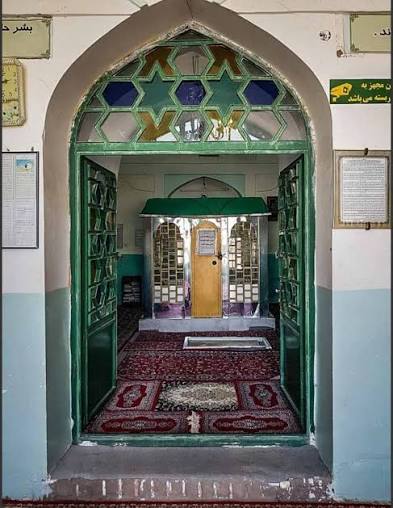
Abu Nasr Bishr ibn al-Harith al-Hafi (بشر الحافي) was born around 150–152 AH (767–769 CE) and became the barefoot ascetic of Abbasid Baghdad. He was a…
Abu Nasr Bishr ibn al-Harith al-Hafi (بشر الحافي) was born around 150–152 AH (767–769 CE) and became the barefoot ascetic of Abbasid Baghdad. He was a trustworthy transmitter of hadith who studied under Imam Malik ibn Anas, Abdullah ibn al-Mubarak and Fudayl ibn Iyad — and a man who spent the rest of his life trying not to be seen. The epithet al-Hafi , “the Barefoot”, is how the city still speaks of him. The paper bearing the name of Allah Early sources relate that in his youth Bishr found a discarded scrap of paper on the road bearing Bismillah al-Rahman al-Rahim . Out of reverence for the Name of Allah he picked it up, cleaned it, perfumed it with the little money he had, and put it somewhere safe. That night he was told in a dream that because he had honoured the Name of Allah, Allah would cause his own name to be honoured. Abu Nu‘aym preserves the account in Hilyat al-Awliya . “I found the name of my Lord in a filthy place, so I washed it and perfumed it. How then can I walk with a heart that contains His name through the filth of this world?” Ibn al-Jawzi, Sifat al-Safwa From that point he abandoned his former life for worship, knowledge and repentance. How Bishr became “the Barefoot” He walked without shoes as part of the severely simple life he chose. The biographers give an encounter with a cobbler: the strap of a sandal broke, and when Bishr asked for it to be mended the cobbler rebuked him — a man who claimed to rely on Allah should not burden people with his needs. Bishr threw both sandals away and walked barefoot through Baghdad for the rest of his life. Later accounts differ on how the practice began, but the barefoot figure became his permanent name in Muslim history. The scholar who stopped teaching Bishr had collected a large body of hadith from the leading scholars of his generation, and Sari al-Saqati — the teacher of Junayd al-Baghdadi — transmitted from him, as did Zuhayr ibn Harb and Abu Khaythama. Yet he steadily withdrew from public teaching, fearing that scholarship itself could become a source of reputation and pride. Knowledge, for him, was worth something only when it changed a person’s actions. “I desired to narrate hadith, so I left it. I made a covenant with Allah that I would leave everything I desired.” al-Dhahabi, Siyar A’lam al-Nubala Hide your good deeds as you hide your sins Sincerity — ikhlas — is the strongest theme in what survives of his speech. He feared not only open wrongdoing but the hidden appetite to be admired for righteousness, and spent much of his life concealing his worship. “Hide your good deeds as you hide your sins.” Abu Nu‘aym, Hilyat al-Awliya “The one who loves fame has not truly feared Allah.” al-Dhahabi, Siyar A’lam al-Nubala Control of the tongue The Baghdad scholar Ibrahim al-Harbi, who observed him for decades, praised his intelligence and his command of his own speech, and said that Bishr was never known to have backbitten another Muslim. “When speaking pleases you, remain silent; and when silence pleases you, speak.” al-Khatib al-Baghdadi, Tarikh Baghdad “You will not taste the sweetness of worship until you place a barrier between yourself and desires.” Abu Nu‘aym, Hilyat al-Awliya The three hardest deeds Imam al-Qushayri records in al-Risalah the saying that gathers his whole understanding of sincerity — that true character shows itself where there is no worldly profit in displaying it. “The hardest deeds are three: generosity while possessing little, scrupulousness when alone, and speaking the truth before someone whom you fear or from whom you hope for something.” al-Qushayri, al-Risalah What Ahmad ibn Hanbal said of him Imam Ahmad ibn Hanbal, his contemporary in Baghdad, was not generous with praise. Of Bishr he said: “I never saw anyone in Baghdad more pleasing to me than Bishr al-Hafi.” al-Dhahabi, Siyar A’lam al-Nubala When Bishr died, Imam Ahmad is reported to have said, “He has died and there was no one like him.” The piety ran through the household: Bishr’s sisters became known for their extreme caution over lawful earnings, and some of their questions were put to Imam Ahmad in person. The grave at Bab Harb Bishr al-Hafi died in Baghdad in 227 AH (841 CE). Despite a lifetime spent avoiding recognition, enormous crowds are said to have attended his funeral. Al-Khatib al-Baghdadi places his grave in the historic graveyard of Bab Harb on the western side of the city, and was later buried beside him; Ibn Battutah, visiting Baghdad in 727 AH (1327 CE), recorded the grave of Bishr al-Hafi among the celebrated graves visited there. The site that now carries his name in al-A‘zamiyah is a commemorative maqam. Local historian Walid al-A‘zami identified the grave there as that of Bishr al-Hanafi, a scholar buried in al-Khayzuran graveyard behind the mosque of Imam Abu Hanifa. The name of Bishr al-Hafi, however, remains attached to this place in the memory of the city. Principal sources: Abu Nu‘aym, Hilyat al-Awliya; al-Khatib al-Baghdadi, Tarikh Baghdad; al-Dhahabi, Siyar A’lam al-Nubala; al-Qushayri, al-Risalah; Ibn Kathir, al-Bidayah wa-l-Nihayah.