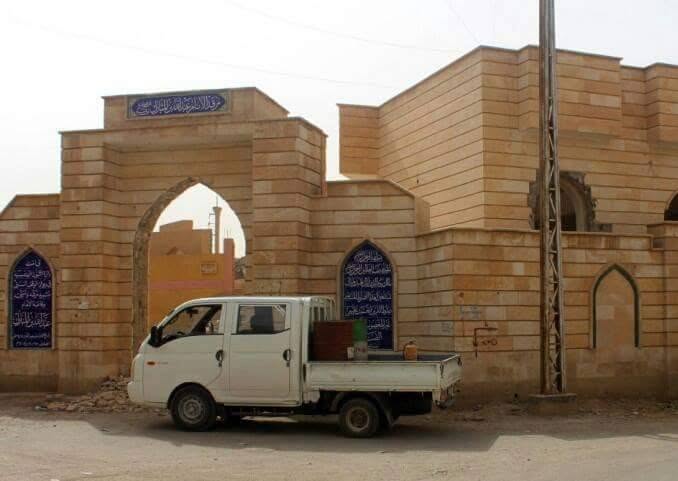
Abu 'Abd al-Rahman 'Abdullah ibn al-Mubarak ibn Wadih al-Hanzali al-Marwazi, born in Marw in Khurasan in 118 AH / 736 CE, was one of the great scholars of the…
Abu 'Abd al-Rahman 'Abdullah ibn al-Mubarak ibn Wadih al-Hanzali al-Marwazi, born in Marw in Khurasan in 118 AH / 736 CE, was one of the great scholars of the second Islamic century: a master of hadith, a jurist, a merchant, a poet, an ascetic and a man who spent long seasons guarding the frontier. Al-Dhahabi calls him "the Imam, Shaykh al-Islam, the scholar of his age". His grave is at Hit on the Euphrates, in Al-Anbar, Iraq. What his contemporaries found remarkable was the range gathered in one man — hadith, fiqh, Arabic, history, courage, generosity, trade and the affection of ordinary people. His life moved between study circles, marketplaces, pilgrimage routes and frontier towns without any one of them displacing the others. A life spent seeking knowledge He began seeking knowledge in earnest at about twenty and travelled for it across Khurasan, Iraq, the Hijaz, Syria and Egypt. Among his teachers were Abu Hanifa, Malik ibn Anas, Sufyan al-Thawri, al-Awza'i, Shu'ba ibn al-Hajjaj, Sufyan ibn 'Uyayna, al-A'mash and Hammad ibn Zayd. Some of those same teachers and contemporaries later narrated hadith from him. He was exacting about the adab owed to elders. Asked a legal question while Sufyan ibn 'Uyayna was sitting with him, he declined to answer, saying they had been taught not to speak in the presence of their seniors. Malik ibn Anas is said to have made room for him at his side and to have called him the jurist of Khurasan. One of the masters of hadith Among the hadith scholars of his generation he was reckoned an authority whose narration settled a matter. Sufyan al-Thawri said he wished he could live even three days at the level of 'Abdullah ibn al-Mubarak. His most quoted words are about how the teaching of Nabi Muhammad ﷺ is protected: The chain of transmission is part of the religion. Were it not for the chain of transmission, whoever wished could say whatever he wished. Muslim, Introduction to al-Sahih The sentence is preserved in the introduction to Sahih Muslim and became a founding principle of the entire science of hadith. Wealth held, not loved Unlike most of the famous ascetics, he was a working merchant. For him owning wealth and being attached to it were different things. When Fudayl ibn 'Iyad asked how a man who taught renunciation could trade so actively, he answered that he earned in order to keep his independence, guard his honour and spend in obedience to Allah. His generosity was proverbial. He supported hadith scholars financially so that poverty would not stop them teaching, and when questioned about sending money to scholars in distant lands he said that if such men were left in need their knowledge would die with them, whereas support let it reach the whole Ummah of Nabi Muhammad ﷺ. After prophethood, he said, he knew of little more virtuous than spreading sacred knowledge. He was also known for carrying companions with him on hajj at his own expense. Worship and intention For all his standing, he returned constantly to intention: How many a small deed is made great by its intention, and how many a great deed is made small by its intention. 'Abdullah ibn al-Mubarak, in al-Dhahabi, Siyar A'lam al-Nubala' He kept long periods of solitude. Asked whether he grew lonely at home, he replied: How can I be lonely when I am with Nabi Muhammad ﷺ and his Companions? 'Abdullah ibn al-Mubarak, in al-Dhahabi, Siyar A'lam al-Nubala' He meant the hours he spent with their hadith and their lives. From the study circle to the ribat He divided his years in a pattern the biographers set down plainly: one year for hajj, one year for trade, one year at the frontier. The frontier meant the Byzantine march in the north, and the towns along it — Tarsus above all — knew him as a returning face rather than a visitor. The biographers attach al-ghazi to his name as readily as al-muhaddith . He went armed and he went in earnest, and he wrote to those who stayed behind. His verses to Fudayl ibn 'Iyad, sent from the frontier to the sanctuary at Makkah, are the best-known lines he composed — the dust on a horse's neck set beside the perfume of a worshipper's sleeve, not to belittle worship but to say that the frontier also had a claim on the Ummah of Nabi Muhammad ﷺ. Fudayl is said to have wept when they were read to him in the Haram. He collected what he had learned there into Kitab al-Jihad , one of the earliest works on the conduct and ethics of frontier service, written by a man who had kept the watch himself; and beside it Kitab al-Zuhd wa'l-Raqa'iq , on detachment and the purification of the heart. The two books are the two halves of his life bound separately. How his contemporaries saw him Sufyan al-Thawri, Fudayl ibn 'Iyad, Sufyan ibn 'Uyayna, 'Abd al-Rahman ibn Mahdi and Yahya ibn Ma'in all spoke of his scholarship and his character. Isma'il ibn 'Ayyash, a contemporary from Hims, put it most strongly: I have not seen, since the Prophet ﷺ, anyone more complete in the qualities of good than Ibn al-Mubarak. Isma'il ibn 'Ayyash, in al-Dhahabi, Siyar A'lam al-Nubala' His standing rested on no single speciality: the hadith scholars respected his transmission, the jurists his understanding, the ascetics his worship, and ordinary people his open hand. His death and grave at Hit He died on the tenth of Ramadan 181 AH / 797 CE, aged about sixty-three, at Hit on the Euphrates while returning from the frontier. An eyewitness account preserved by al-Dhahabi records the date and ends simply with the statement that they buried him at Hit. His grave is still known at Hit today, and visitors continue to come to it. Few of the early scholars gathered so many parts of the religion into one life: travel for knowledge, mastery of hadith, a lawful trade, money spent on scholars and pilgrims, repeated hajj, plain living and seasons on the frontier. He is remembered not simply as a muhaddith or a jurist, but as a man in whom knowledge and action were held together.