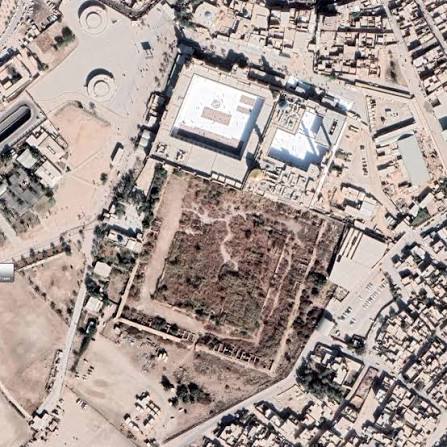
The Dār al-Imāra of Kufa is one of the most historically layered sites in early Islamic Iraq. It began in 638 CE when Saʿd ibn Abī Waqqāṣ founded Kufa on the…
The Dār al-Imāra of Kufa is one of the most historically layered sites in early Islamic Iraq. It began in 638 CE when Saʿd ibn Abī Waqqāṣ founded Kufa on the orders of Caliph ʿUmar ibn al-Khaṭṭāb and built the city's first governor's palace directly south of the Great Mosque — the two structures conceived as a single unified complex from the very beginning. This original palace served as the seat of Kufa's governors through the Rashidun period, and it was within this building or its immediate predecessor that ʿAlī ibn Abī Ṭālib conducted the affairs of the caliphate when he made Kufa his capital. In 670 CE the Umayyad governor Ziyād ibn Abīhi — who held effective viceregal authority over all of Iraq — undertook a complete reconstruction of both the Great Mosque and the palace simultaneously, transforming them into monuments of a far grander scale. His version, built in baked brick rather than the original mud brick, is what archaeologists have excavated and what survives in partial ruin today. It is this rebuilt structure that carries the name Dār al-Imāra in most historical and architectural literature, though it stands on the exact footprint of Saʿd ibn Abī Waqqāṣ's original palace. Architecturally it is considered one of the earliest purpose-built Islamic palatial complexes and the first to draw explicitly on Sasanian fortress design — with thick outer walls, semicircular towers, a central courtyard, and a characteristic triple-aisled throne hall with a domed rear chamber. Beyond its architectural significance, the site witnessed some of the most consequential moments of the first Islamic century — it was the seat of power from which the events surrounding Karbala were orchestrated, and the court to which the captives were brought afterwards. Its remains are still visible today, directly south of the Great Mosque of Kufa.