Who was Muhammad ibn al-Qasim? Why he went to Sindh, the fall of Debal and Raja Dahir, his rule from Debal to Multan, and the accounts of his death.
Muhammad ibn al-Qasim al-Thaqafi led the Umayyad campaign that brought Sindh, in the south of present-day Pakistan, into the Muslim world. He belonged to Thaqif, the tribe of Taif, and to its family of Abu Aqil, and al-Hajjaj ibn Yusuf, the governor of Iraq, was his father's first cousin and, according to Abd al-Hayy al-Hasani, also his father-in-law.123 He was serving al-Hajjaj in Fars when, in the reign of the caliph al-Walid ibn Abd al-Malik, he was given command of the Sindh frontier. A poet of the time praised him for leading armies at the age of seventeen.24
Between 711 and 714 he took the port of Debal, defeated Raja Dahir, the king of Sindh, and carried his campaign up the Indus as far as Multan. He governed the new province until the next caliph, Sulayman, had him recalled, and he died in prison at Wasit in Iraq in 96 AH (715), barely twenty years old.546
Muslim forces had raided the borders of Sindh since the time of Umar ibn al-Khattab, and Makran to its west had been held since the time of Muawiya, but Sindh itself remained outside Muslim rule.1 Under al-Hajjaj two grievances arose. In Makran, the Arab clan of the Allafis killed al-Hajjaj's governor, Sa'id ibn Aslam al-Kilabi, and when they were pursued they went over to Raja Dahir, who received them.173 Then the king of Sri Lanka, the island the Arabs called Jazirat al-Yaqut, sent al-Hajjaj a group of Muslim women, the daughters of Muslim merchants who had died there, and near Debal their ship was seized by Med pirates. One of the women cried out, "O Hajjaj!", and when the news reached him al-Hajjaj answered, "Here I am!" He asked Dahir to free them, and Dahir replied that they had been taken by robbers over whom he had no power.1
Al-Hajjaj sent two expeditions against Debal, under Ubaydullah ibn Nabhan and then Budayl ibn Tahfa al-Bajali, and both commanders were killed.1 The third expedition was entrusted to Muhammad ibn al-Qasim.
Al-Hajjaj gave Muhammad six thousand men from the army of Syria, with many others, and equipped him with everything he could need, down to the thread. He even had cotton soaked in strong vinegar and dried, so that the army, told that vinegar was scarce in Sindh, could soak it in water and cook with it.2 The army gathered at Shiraz and marched through Makran, and in the autumn of 711 Muhammad reached Debal, arriving on a Friday, while ships brought him men, weapons and siege engines by sea.28
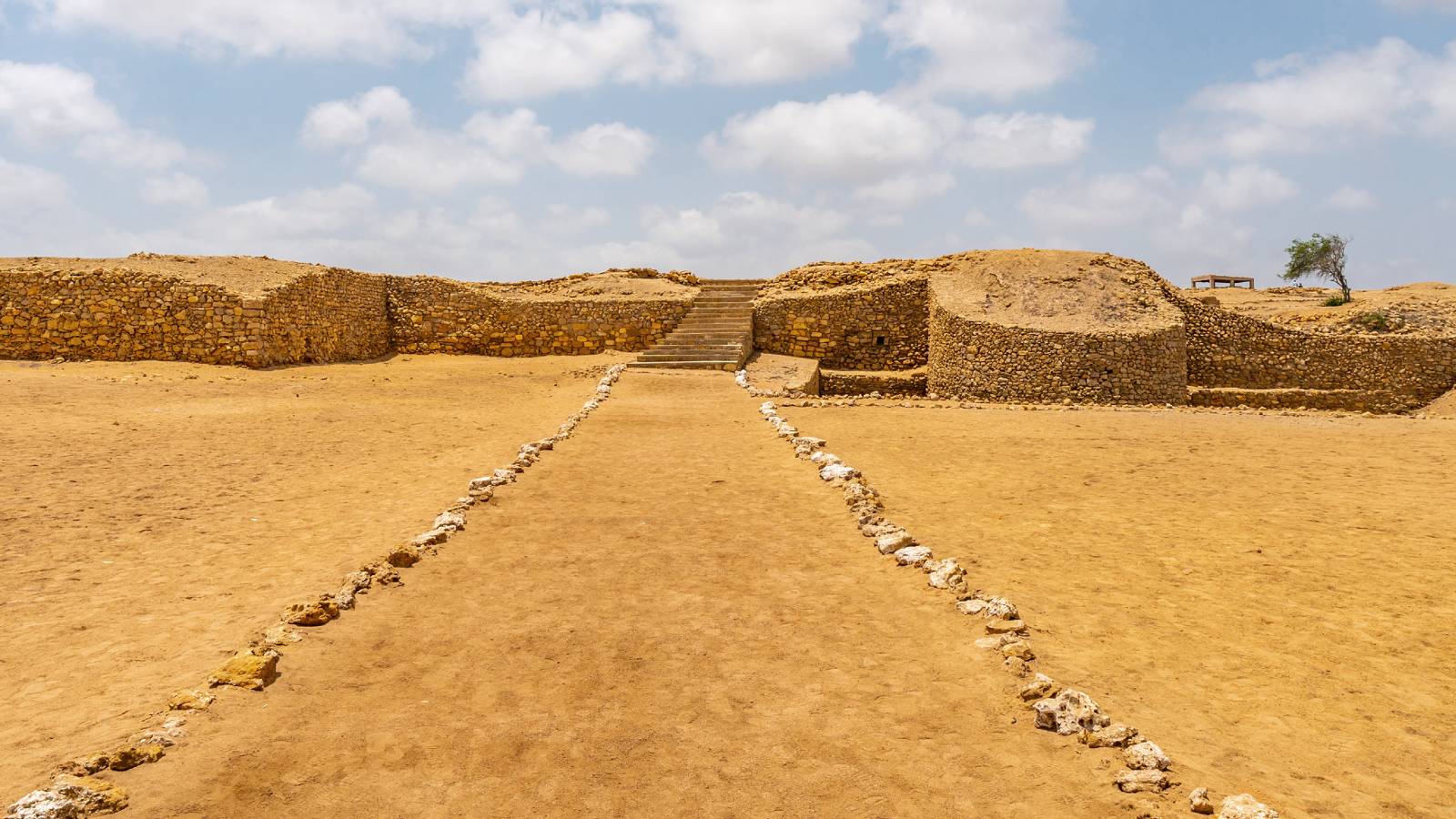
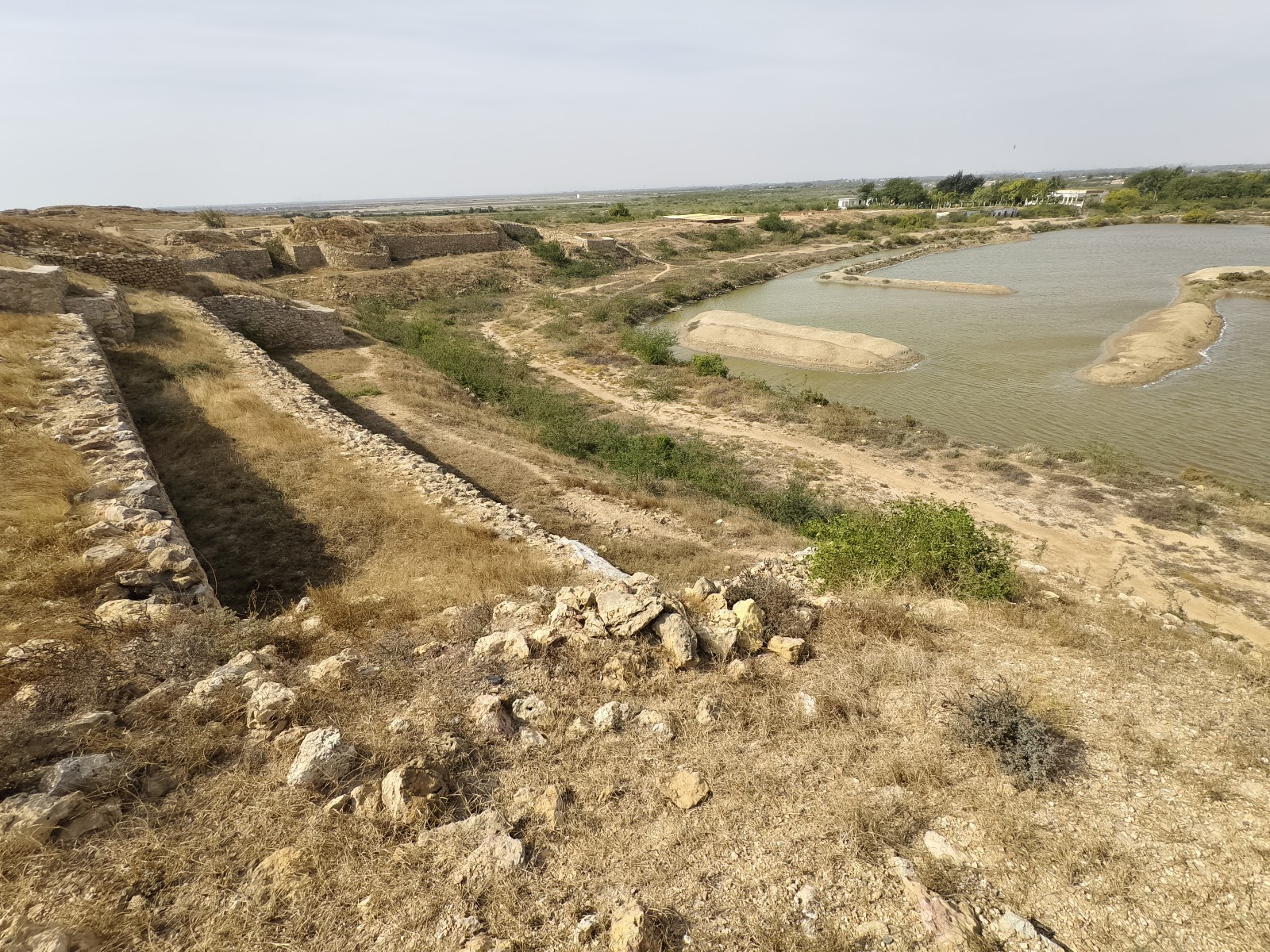
Debal stood on the coast near the mouth of the Indus, and its ruins are generally identified with Banbhore, east of Karachi. Muhammad set up a great catapult known as al-Arus, "the bride", which took five hundred men to work, and on al-Hajjaj's instruction aimed it at the tall mast with a red banner that rose above the city's great temple. When the mast was broken the defenders lost heart, the walls were scaled with ladders and Debal was taken by storm.25 Al-Baladhuri records that the killing in the city went on for three days. Muhammad then laid out a quarter for the Muslims, built a mosque and settled four thousand of them there.5 Visitors to Banbhore today can walk its walls beside Gharo creek and see the foundations of one of the earliest mosques known in South Asia, with the finds displayed in the Banbhore Museum.
From Debal Muhammad marched to Nirun, whose people had already sent Buddhist monks to make peace with al-Hajjaj. They supplied his army and opened their city to him, and he kept the agreement. Other towns came to terms or were taken as he advanced, and four thousand Jats joined his army.5
Dahir waited on the far side of the Indus, which the Arabs called the Mihran. Muhammad crossed it on a bridge he had built, and the two armies met in a fierce battle. Dahir fought from an elephant, with his war elephants and his Thakur cavalry around him, and at last came down, fought on foot and was killed towards evening.5 The Chach-nama dates the battle to Thursday, 10 Ramadan 93 AH (20 June 712).7
Muhammad next took the fortress of Rawar by storm. One of Dahir's wives was there, and rather than be captured she burned herself with her maidservants and all her wealth.5 The Chach-nama names her as Bai, Dahir's sister whom he had married, and says that another of his queens, Ladi, was captured at Brahmanabad and that Muhammad afterwards took her as his wife.7 Brahmanabad, where the remnant of Dahir's army had gathered, was also taken by storm, and al-Baladhuri gives the number killed as eight thousand, or by another report twenty-six thousand.5
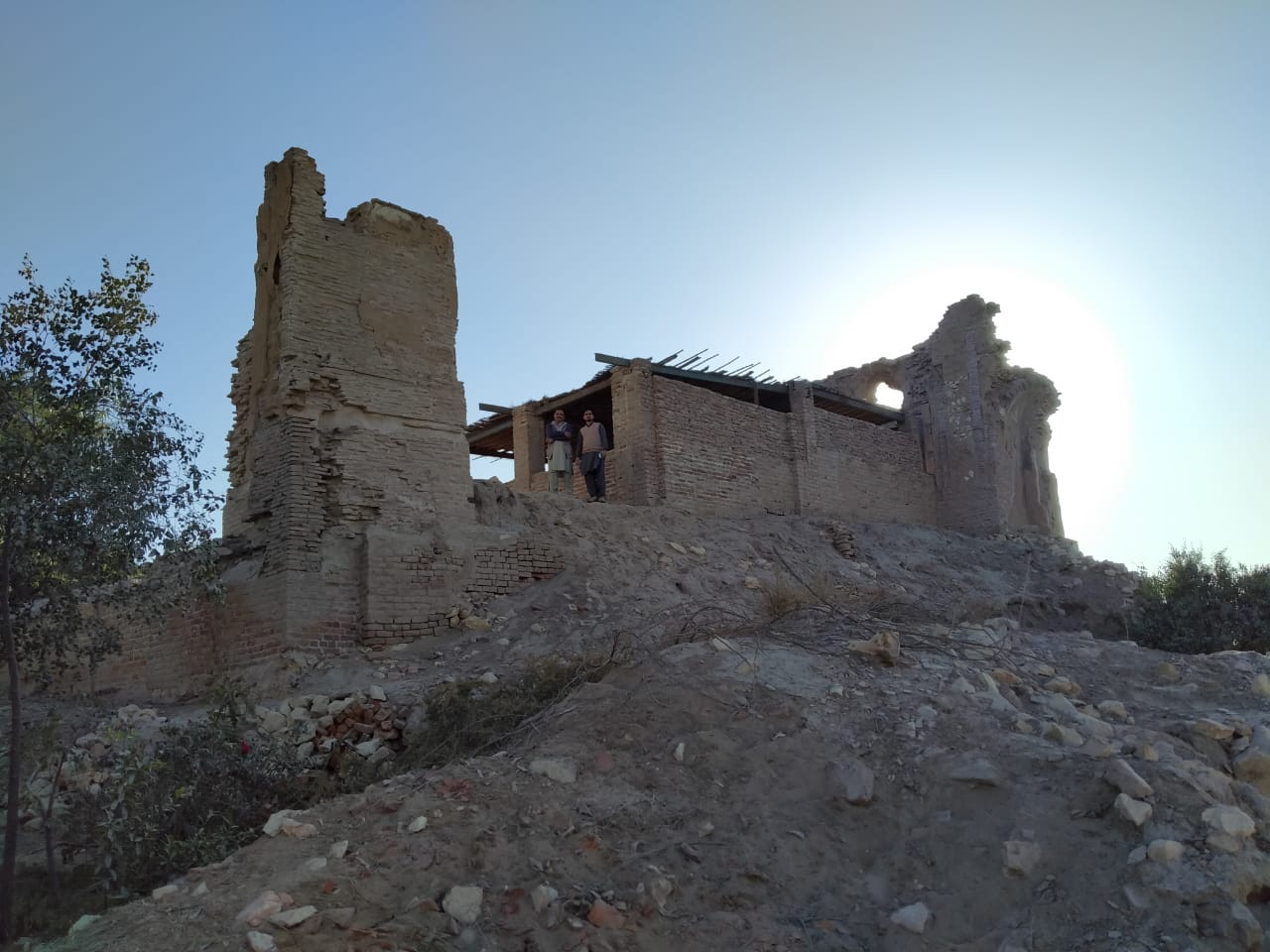
Aror, the capital of Sindh, stood on a hill near present-day Rohri. Muhammad besieged it for months and took it by agreement, on condition that he would not kill its people or touch their temple. Al-Baladhuri records his ruling that the temples of Sindh were to be treated like the churches of the Christians and Jews and the fire temples of the Magians. He set the tax and built a mosque in the city.5 The ruins of Aror can still be seen near Rohri, and the Mosque of Muhammad bin Qasim there is traditionally dated to his time.
From Aror Muhammad crossed the Beas and besieged Multan until the Muslims' supplies ran out and they were eating their donkeys. A man who came out under safe conduct showed them the channel that brought the city its water, and when it was cut the defenders surrendered. Al-Baladhuri records that the fighting men were put to death and their families taken captive, and that so much gold was found that Multan came to be called "the frontier of the house of gold".5 In the old city of Multan a small mosque carries his name today.
When al-Hajjaj reckoned the cost of the campaign, he found that he had spent sixty million dirhams on it and received twice as much in return.5 He died in 95 AH (714), while Muhammad was still at Multan. Muhammad returned to Aror, received the submission of al-Baylaman, made peace with the seafaring Meds of Surast and took al-Kiraj, and by then the whole of Sindh, from the coast to Multan, was a province of the caliphate.4
In 96 AH (715) al-Walid died and his brother Sulayman succeeded him. Sulayman put Salih ibn Abd al-Rahman in charge of the revenue of Iraq and sent Yazid ibn Abi Kabsha al-Saksaki to govern Sindh, and Muhammad was sent to Iraq in irons. As he was taken away he recited a famous line of verse: they had lost him, and what a young man they had lost, for a day of battle and the guarding of a frontier. Al-Baladhuri says that the people of Hind wept for him and made a likeness of him at al-Kiraj.4
Salih imprisoned him at Wasit, and then had him tortured to death together with other men of the family of Abu Aqil. Al-Baladhuri gives the reason: al-Hajjaj had put Salih's brother Adam to death for holding the views of the Kharijites.46 A few years later, in the caliphate of Umar ibn Abd al-Aziz, Dahir's son Hullisha, as al-Baladhuri names him, and other kings of Sindh accepted Islam and took Arab names.4
The best-known account of his death comes not from al-Baladhuri but from the Chach-nama, a Persian history of the conquest written in the early thirteenth century by Ali ibn Hamid al-Kufi, who said he had translated it from an older Arabic book.9 In its version, Muhammad sent two daughters of Dahir, Suryadevi and Parimaldevi, to the caliph al-Walid. The elder told the caliph that Muhammad had kept them for three days before sending them on, and in his anger the caliph ordered that Muhammad be sewn into a raw hide and sent to him. Muhammad obeyed and died on the way. When the caliph showed the sisters his body, they confessed that they had lied to avenge their father, and he had them walled up alive.7
Al-Baladhuri, writing more than three centuries earlier, has nothing of this. In his account Muhammad is recalled under Sulayman, not al-Walid, and dies at Wasit at the hands of Salih ibn Abd al-Rahman.4 The Chach-nama itself has the sisters sent to Baghdad, a city that was not founded until 762.7 Modern historians have questioned how far the Chach-nama preserves an early Arabic source and how far it reflects the romance and politics of the thirteenth century.9
Muhammad ibn al-Qasim's short governorship made Sindh a province of the Muslim world, and his family stayed tied to it. His son Amr served the later governor al-Hakam ibn Awana al-Kalbi, and it was Amr who built the city of al-Mansura, which became the seat of the governors of Sindh.10
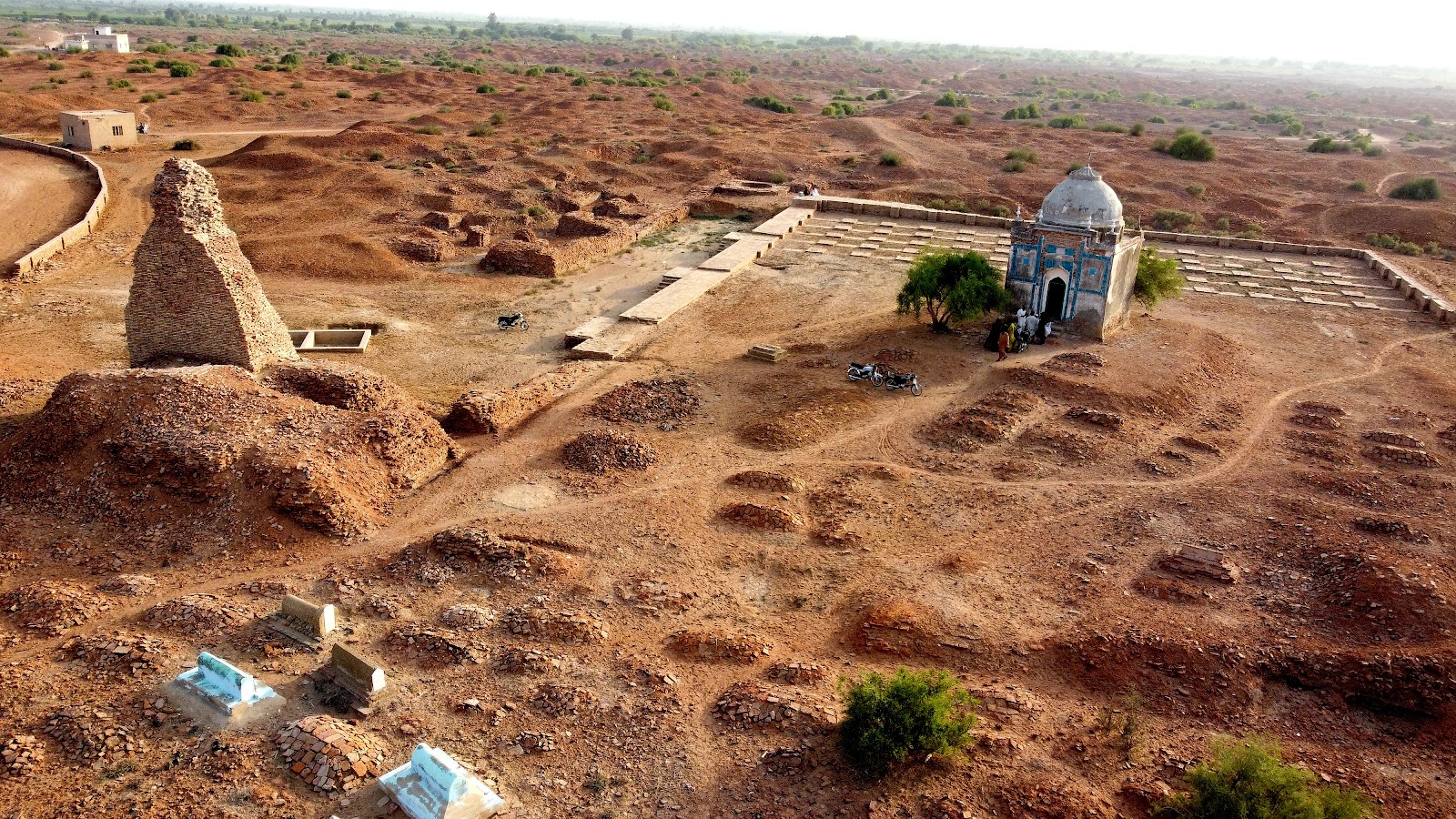
Several places connected with his campaign can be visited today. Banbhore, east of Karachi, is the site identified with Debal. At Aror near Rohri are the ruins of the old capital and the Mosque of Muhammad bin Qasim, and on a hilltop nearby stand the brick Graves of Suhagan & Duhagan, whose local story tells of two women from Arabia whose boat was attacked by robbers. Multan has a mosque named after him in its old city, the ruins of al-Mansura near Shahdadpur are the city his son founded, and in Karachi the park of Bagh Ibn-e-Qasim in Clifton is named after him.